7 Best Needle Felting Templates For Beginners
Master needle felting with our top 7 beginner templates. Learn essential techniques, shapes, and tools to create professional-looking projects with ease today.
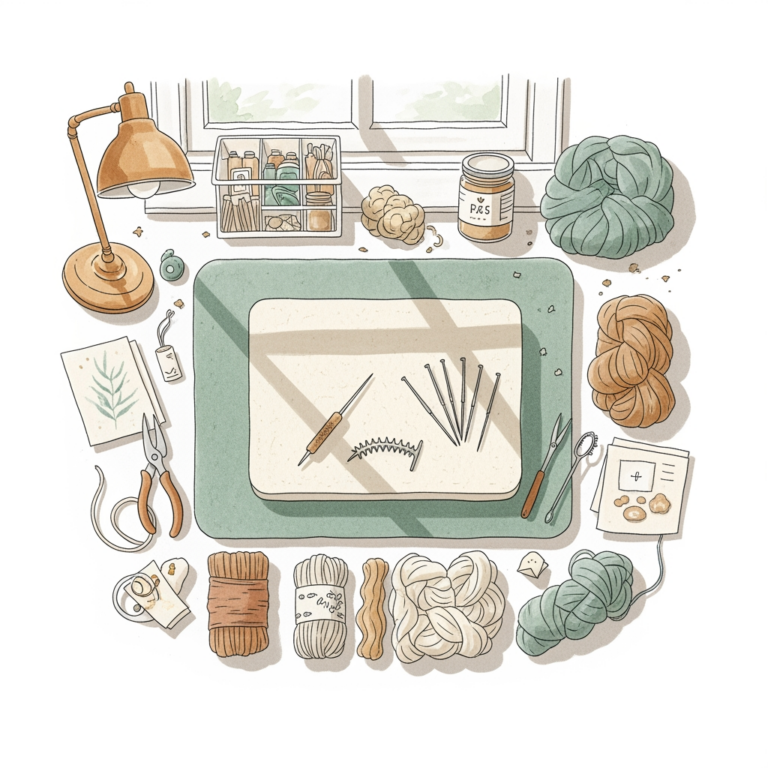
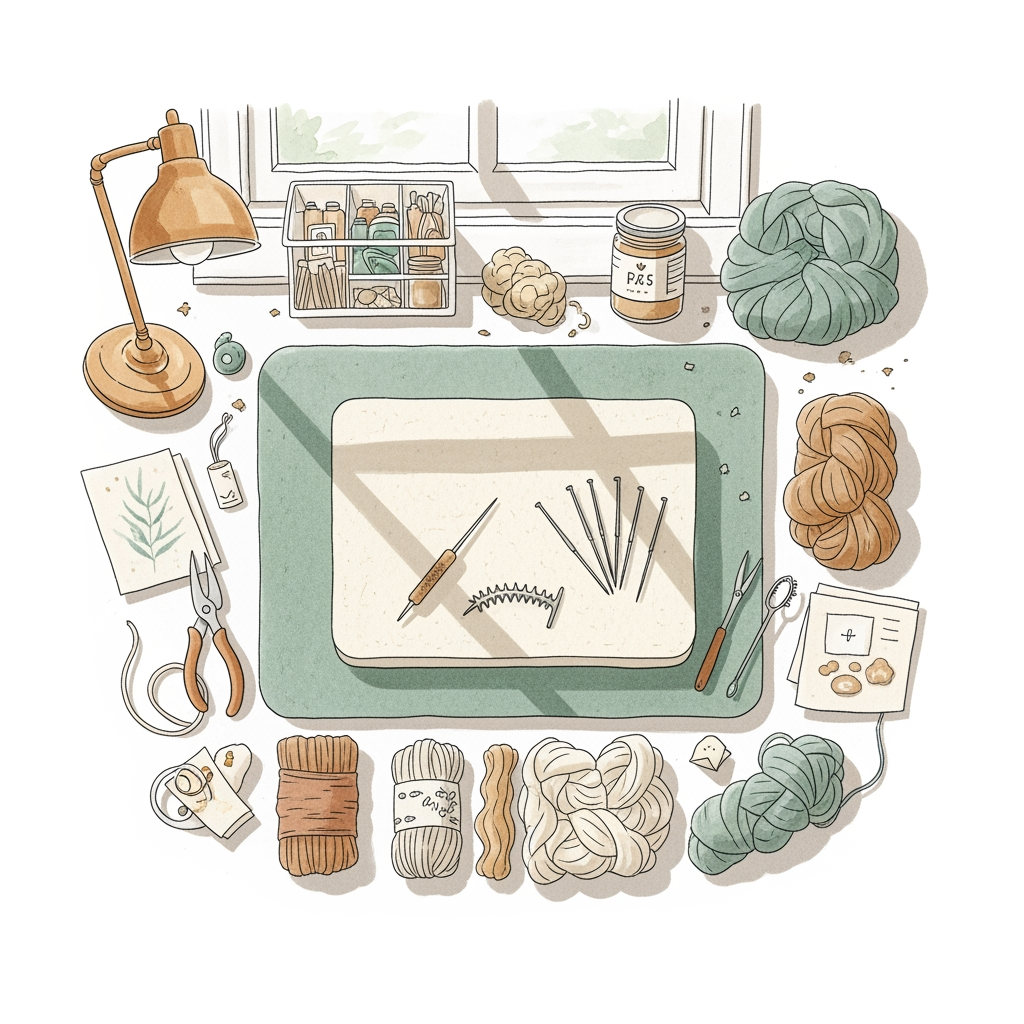
Stepping into the world of needle felting feels much like learning to handle double-pointed needles for the first time; it requires patience, the right touch, and reliable tools. While many beginners focus solely on the wool, the structural aids you use are what truly define the success of your project. These templates and pads provide the scaffolding necessary to transform loose roving into firm, sculptural art. Mastering these tools early will save you from the frustration of lopsided shapes and uneven density.
Clover Needle Felting Tool: Best Overall Starter


If you have ever struggled with the ergonomics of holding a single, tiny felting needle, the Clover tool will feel like a revelation. It functions much like a comfortable, ergonomic crochet hook, reducing hand fatigue during long sessions.
The beauty of this tool lies in its multi-needle head, which allows you to cover more surface area simultaneously. This is the equivalent of switching from individual needles to a circular needle for a large blanket; the efficiency gain is immediate.
However, be mindful that the needles are fixed in a specific configuration. If you are working on very fine details, you may find the broad head a bit cumbersome, much like trying to pick up stitches with a needle that is too thick for your yarn weight.
Dimensions Needle Felting Foam Pad: Best Surface

A sturdy foam pad is to needle felting what a good blocking mat is to lace knitting—it provides the necessary resistance to keep your work stable. The Dimensions pad is dense enough to prevent your needles from hitting the tabletop, which is the quickest way to snap a tip.
The surface texture is designed to hold the wool in place without snagging the fibers excessively. This balance is crucial, as you want the needle to penetrate smoothly while the foam provides enough friction to keep your project from sliding around.
Do not be fooled by its simple appearance; a high-quality foam pad is the foundation of your density control. If your surface is too soft, your wool will compress unevenly, leading to a "mushy" finish that lacks structural integrity.
Woolbuddy Felting Mat: Best Durable Workstation

The Woolbuddy mat is a favorite because it is constructed from natural materials, much like choosing a high-quality wool over an acrylic synthetic. It is significantly more durable than standard foam, meaning it won’t disintegrate into little bits after a few projects.
Because it is made of wool, it actually helps to "grab" the fibers you are working with. This creates a symbiotic relationship between your project and the mat, ensuring that your felted piece stays put while you sculpt.
While it is a higher initial investment, it lasts far longer than foam alternatives. Think of it as purchasing a set of high-quality stainless steel needles instead of cheap plastic ones; the longevity and performance are worth the extra cost.
Hamanaka Felting Molds: Best for Precise Shapes

When you need consistent shapes—like perfect spheres for a snowman or flat discs for an appliqué—Hamanaka molds are indispensable. They act as a physical guide, ensuring that your wool stays within the desired boundaries while you needle it into shape.
These are particularly helpful for beginners who struggle with gauge consistency in their felting. Much like using a template to ensure your sock heels are identical, these molds take the guesswork out of symmetry.
Remember that you still need to "overfill" the mold slightly to account for the shrinkage that occurs as the wool fibers interlock. If you don’t pack them firmly, you will end up with a loose, flimsy shape that won’t hold its form once removed.
Sarafina Fiber Art Stencil Set: Best for Detail

Sarafina stencils are the equivalent of a chart for stranded colorwork; they provide a clear visual path for your needlework. They are excellent for creating crisp, defined patterns on flat pieces, such as decorative patches or wall hangings.
The precision offered here allows for complex designs that would be nearly impossible to freehand. By pinning the stencil over your work, you create a hard edge that keeps your needle strokes focused and tight.
Be careful not to felt the stencil directly into your piece. Use a light touch to outline your design, then remove the stencil to finish the details, much like you would remove a stitch marker once you have established your pattern repeat.
Felted Sky Precision Templates: Best for Animals
If you are interested in sculpting creatures, Felted Sky templates are the gold standard for getting proportions correct. They provide the "skeleton" of shapes that help you build limbs and torsos that actually look like the animal you are intending to create.
These templates act as a blueprint. Just as you would measure your yarn usage for a sweater, these guides help you measure the amount of wool needed for each body part, preventing the common mistake of having one leg significantly longer than the other.
The learning curve is lower with these because they remove the intimidation factor of free-form sculpting. They allow you to focus on the surface texture and character of your animal rather than worrying about structural anatomy.
Bear Creek Felting Starter Kit: Best for Basics

The Bear Creek kit is the perfect entry point for someone who wants to learn the fundamentals without being overwhelmed by a dozen specialty tools. It provides the essential "needles and yarn" needed to get started, much like a beginner’s kit with a pair of bamboo needles and a ball of worsted wool.
The materials are selected for their ease of use, which is critical for those still developing their "felting tension." You need wool that is forgiving and tools that don’t require an expert’s touch to maneuver.
This kit focuses on the core techniques of firming up wool and creating basic shapes. Once you have mastered these, you will have the confidence to move on to more complex tools and templates.
How to Choose the Right Template for Your Project
Choosing a template depends entirely on the "final drape" or density you want for your piece. If you are making a delicate ornament, you need a precise mold that keeps your edges sharp and clean.
Consider the scale of your project before purchasing. A large-scale sculpture requires a sturdy, thick foam base, while small, intricate jewelry pieces benefit from fine-gauge needles and rigid plastic stencils.
Always ask yourself: does this project require a specific geometry? If you are knitting a sweater, you use a pattern; if you are felting a complex shape, you use a template. Do not feel that you must freehand everything; even professionals use guides to ensure accuracy.
Essential Tools to Pair With Your Felting Molds
A template is only as good as the needle you pair it with. For fine detail work within a stencil, always use a fine-gauge (38 or 40) needle to ensure you don’t tear the wool or create large, visible holes.
Invest in a good pair of sharp embroidery scissors for trimming stray fibers. Just as you would weave in ends neatly on a finished sweater, you must trim your felted creations to give them a professional, polished look.
Finger guards are also a non-negotiable addition. Even the most experienced felter will eventually slip, and a leather or silicone guard is the best insurance policy against a painful poke.
Maintenance Tips for Your Felting Pads and Tools
Your felting tools require the same level of care as your favorite wooden knitting needles. Keep your needles clean and free of rust by occasionally wiping them with a light oil, especially if you live in a humid climate.
For foam pads, use a lint roller or a piece of tape to lift out the excess wool fibers that get embedded during the felting process. This keeps the surface clean and prevents old fibers from getting worked into your new projects.
If you are using a wool mat, occasionally brush it out to keep the fibers standing upright. A well-maintained workstation is the mark of a serious maker, ensuring that your tools remain reliable for years of creative work.
Needle felting is a journey of tactile discovery, much like finding your favorite yarn weight or needle material. By choosing the right templates and maintaining your workstation, you remove the unnecessary hurdles that often discourage beginners. Take your time, experiment with different densities, and remember that every piece you felt is a lesson in fiber manipulation. With these tools in your kit, you are well on your way to creating beautiful, lasting fiber art.