6 Best Project Bins For Large Afghan Blankets
Storing bulky afghans requires space and protection. We review the 6 best project bins to keep your large blankets organized, dust-free, and easy to access.
Knitting a large afghan is a labor of love that often spans months or even years of dedicated stitching. Finding the right home for these bulky, WIP-heavy (Work-in-Progress) projects is essential to keeping your yarn clean and your motivation high. Without proper storage, your beautiful hand-knits can easily become dusty, tangled, or snagged. These six storage solutions offer the protection your heirloom-quality projects deserve.
Sterilite 66-Quart Latching Box: Best Overall Choice


The Sterilite 66-Quart Latching Box is a staple in my craft room for a reason: it strikes the perfect balance between volume and accessibility. When you are working on a queen-sized cabled blanket, you need a container that can hold the bulk of the fabric without crushing the stitch definition.
The latching mechanism is the real hero here. It provides enough tension to keep the lid secure during a move, yet it is easy to flip open when you have a spare ten minutes to work on a few rows. Because the plastic is clear, you can identify your project at a glance without having to dig through a stack of bins.
However, keep in mind that these are not airtight. If you live in an exceptionally humid climate, you may want to add a small desiccant packet to the bin. It is a reliable, no-nonsense choice that accommodates even the most voluminous wool-blend afghans.

IRIS USA 44-Quart Rolling Bin: Best Mobile Storage

If your knitting happens in the living room, the bedroom, and occasionally the porch, the IRIS USA 44-Quart Rolling Bin is your best friend. Lugging a heavy bag of yarn and needles across the house can be a recipe for back strain, especially after a long session of knitting.
The integrated wheels allow you to glide your project from room to room with ease. This is particularly helpful if you are working with heavy, worsted-weight wool that adds significant heft to your project bag. You can simply roll your "mobile studio" to your favorite armchair and start knitting immediately.
The trade-off is the height; these bins are often shallower than standard totes. They are excellent for projects that are currently being worked on, but they might not fit a fully finished, folded afghan as easily as a deeper box.
The Container Store Weathertight Tote: Best Seal
When you are working with precious fibers like hand-dyed merino or delicate alpaca, you cannot afford to take risks with dust or moths. The Container Store Weathertight Tote features a specialized silicone gasket that creates a true seal against the elements.
This is the gold standard for long-term storage or for keeping your yarn stash pristine in less-than-ideal environments, like a basement or an attic. The locking buckles are robust and provide a satisfying "snap" that ensures the lid is fully engaged.
While the price point is higher than standard bins, the peace of mind is worth it for high-end fiber. Just remember that because the seal is so tight, you should ensure your yarn is completely dry before sealing it away to prevent any trapped moisture.
Rubbermaid Roughneck Storage Bin: Most Durable Pick

The Rubbermaid Roughneck is virtually indestructible, making it the ideal choice for knitters who need to transport their projects to retreats or workshops. These bins are designed to withstand significant impact, so you never have to worry about your project being crushed under other luggage.
The material is thick and opaque, which has a hidden benefit: it protects your yarn from UV light. Prolonged exposure to sunlight can fade the vibrant colors of your hand-dyed yarns, so a solid-colored bin acts as a shield for your investment.
The downside is that you cannot see what is inside, so I recommend labeling the exterior clearly. If you are prone to having five or six blankets on the needles at once, a quick tag on the side will save you from opening the wrong bin.
Honey-Can-Do Foldable Fabric Bin: Best Soft Option
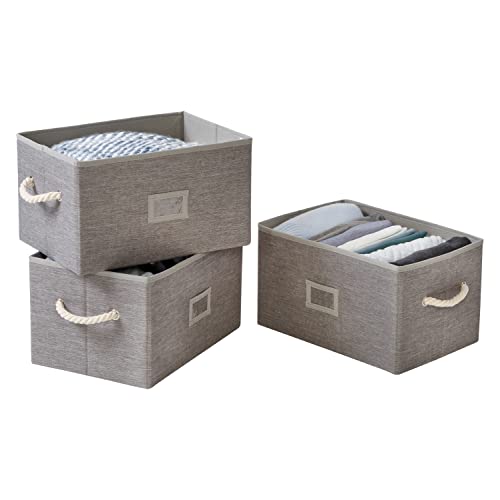
Sometimes you don’t need a heavy-duty plastic box, especially if your knitting space is small and you need to tuck your storage away when guests arrive. The Honey-Can-Do Foldable Fabric Bin is a soft-sided option that looks more like home decor than utility storage.
These bins are gentle on your finished edges, meaning you don’t have to worry about sharp plastic corners snagging your yarn. They are perfect for storing a blanket that is nearing completion and just needs a few final rounds of border work.
Because they are fabric, they offer no protection against moisture or pests. I suggest using these only for projects that are currently "in rotation" and kept in a clean, temperature-controlled living area.
Whitmor Clear View Zippered Bag: Best Value Choice

For knitters on a budget, the Whitmor Clear View Zippered Bag is an excellent, flexible solution. These bags are lightweight and allow you to see exactly which project is inside, which is ideal if you have a large collection of WIPs.
They are incredibly easy to store in tight spaces, as they can be squished into corners or stacked on shelves. They are particularly useful for keeping your yarn cakes and pattern printouts together in one neat, portable package.
The zipper is the weakest point, so be careful not to overstuff the bag. If you have a massive, heavy blanket, you might find that the handles aren’t quite strong enough for heavy lifting, so treat these as storage rather than transport bags.
Essential Features for Large Project Containers
When shopping for storage, prioritize the dimensions of your project over the capacity of the bin. A large afghan needs room to breathe; if you force it into a container that is too small, you risk creasing the fabric and distorting your stitch gauge.
Look for smooth interior walls to prevent snagging. Even a small burr on a cheap plastic bin can pull a strand of yarn and ruin an hour of work. I always run my hand along the inside of a new bin to ensure there are no sharp edges before I add my yarn.
Finally, consider the stackability. If you have limited floor space, you need bins that nest securely so they don’t tip over when you reach for a bin at the bottom of the stack.
How to Properly Store Your Afghan Yarn Stash
Before you put your afghan away for the season, ensure the project is clean and free of any debris. Even small bits of lint or food particles can attract pests, which are the absolute nightmare of any fiber artist.
I recommend storing your yarn in a cool, dry place. Avoid storing your project bins directly on concrete floors, as this can draw moisture into the bin, even if the lid is tight. Use a shelf or a wooden pallet to create a buffer between your yarn and the floor.
If you are storing a project for months, consider placing a small piece of cedar or a lavender sachet inside the bin. These natural deterrents keep your yarn smelling fresh and provide a layer of protection against moths.
Maximizing Closet Space for Bulky Knit Projects
The secret to maximizing closet space is to utilize vertical height. I prefer using clear, stackable bins that allow me to see the project inside while utilizing every inch of my shelf space.
If you have a very large afghan, try folding it loosely rather than rolling it tightly. This prevents deep creases that can be difficult to block out later. If you have the space, storing your finished blankets flat is always better than hanging them, as the weight of the fiber can cause the fabric to stretch and lose its shape.
If you are tight on space, you can use vacuum-seal bags inside your bins to compress the air out of the project. However, be careful with delicate fibers like angora or mohair; these fibers do not like being compressed for long periods and may lose their loft.
Protecting Hand-Knits from Pests and Humidity
Pests are attracted to the natural oils and proteins in animal fibers like wool, alpaca, and silk. To keep them away, your storage must be clean and sealed. A simple latching box is usually sufficient, but a weathertight seal is the gold standard for long-term storage.
Humidity is equally dangerous, as it can lead to mildew, which is nearly impossible to remove from delicate yarn. If you store your projects in a garage or basement, a dehumidifier in the room is a mandatory investment for any serious knitter.
Always avoid storing your projects in plastic bags that are not breathable if you live in a humid area. If you must use bags, ensure they are high-quality, archival-grade plastic that won’t degrade and stick to your yarn over time.
Investing in the right storage is just as important as choosing the right needles or high-quality yarn for your afghan. By keeping your projects protected, organized, and easily accessible, you ensure that your knitting journey remains a joy rather than a chore. Take the time to choose the container that fits your space and your fiber needs, and your hand-knits will stay beautiful for generations to come. Happy knitting, and may your WIPs always be well-cared for!