6 Best Yarn Winders For Preparing Bulky Wool
Preparing bulky wool requires durability. We review the six best yarn winders that handle thick fibers with ease, ensuring tangle-free, organized skeins.
Transitioning from a tangled, hand-wound hank to a neat, center-pull cake is one of the most satisfying rituals in a knitter’s studio. When working with bulky wool, however, standard plastic winders often struggle to manage the sheer volume of fiber without jamming or snapping. Choosing the right tool ensures your yarn stays lofty and un-stretched, preserving the integrity of the wool for your final garment. This guide explores the most reliable winders designed to handle the weight and diameter of your favorite chunky projects.
Stanwood Needlecraft Large Metal Yarn Ball Winder


This is the gold standard for many professional knitters who regularly work with heavy-weight yarns. Its heavy-duty metal gears provide a smooth, consistent rotation that plastic models simply cannot replicate when under the strain of a thick, 200-gram skein of wool.
The large capacity allows you to wind a full, bulky-weight skein without having to stop halfway through to clear the spindle. Because the gears are metal, you won’t experience the dreaded "gear stripping" that often happens when a plastic winder meets the resistance of a thick, sticky mohair-blend or a high-twist wool.
While it is a significant investment, the longevity of the metal construction makes it a "buy it once" tool. If you find yourself frequently working with super-bulky yarns for blankets or heavy sweaters, the initial cost is quickly justified by the time saved and the frustration avoided.
KnitPicks Yarn Winder: The Best Budget Option
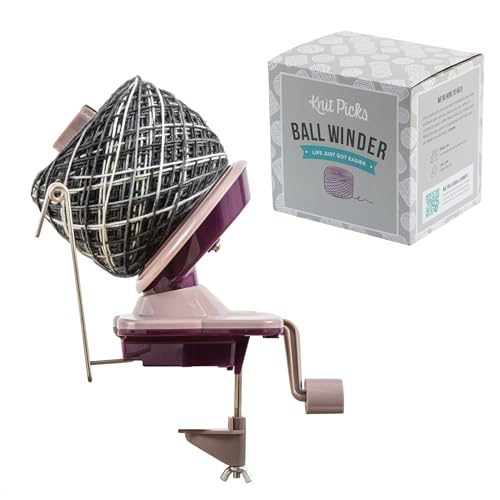
If you are just beginning your journey into stash management, the KnitPicks winder is a familiar entry point. It is lightweight, compact, and perfectly capable of handling medium-weight yarns with ease.
When it comes to bulky wool, however, you must exercise a bit of caution. While it can accommodate thicker fibers, it is best to wind at a slower, steadier pace to prevent the tension guide from bowing under the weight of the yarn.
This is an excellent choice for the knitter who works with bulky yarn only occasionally. It is easy to store, simple to set up, and performs reliably for smaller projects, provided you don’t overstuff the cake.
Nancy’s Knit Knacks Heavy Duty Yarn Winder
Nancy’s Knit Knacks is legendary for creating tools that feel like they belong in a professional textile mill. Their heavy-duty winder features a robust design that excels at handling uneven, hand-spun bulky yarns that might otherwise snag on a standard winder.
What sets this model apart is its superior tension control. When winding bulky wool, you want to maintain a loose, airy tension to avoid stretching the fiber; this winder allows for precise adjustments that keep the wool’s natural loft intact.
It is a bulkier, more industrial-looking piece of equipment, but it is built to last a lifetime. For those who invest in expensive, artisanal hand-dyed bulky wool, this winder is the best way to ensure your yarn remains in pristine condition.
Lacis Jumbo Yarn Winder for Bulky Skeins

The Lacis Jumbo lives up to its name, featuring an extra-large spindle designed specifically for those massive, 300-yard cakes of chunky yarn. If you are tired of having to split a single skein into two separate balls, this is your solution.
The wide base provides excellent stability, which is crucial when the winder is loaded with a heavy, bulky cake. Without a stable base, the vibrations from a heavy load can cause the winder to "walk" across your table, leading to uneven winding.
Because of its size, it does require a bit more table space than standard models. Ensure you have a sturdy, thick table edge to clamp onto, as the weight of the jumbo cake can create significant torque during operation.
U-nitt Large Capacity Metal Yarn Ball Winder
The U-nitt winder bridges the gap between high-end professional tools and consumer-grade equipment. It utilizes a metal frame and gears, offering a much higher degree of durability than entry-level plastic models.
I particularly appreciate the smoothness of the rotation; it allows for a rhythmic winding process that prevents the yarn from tangling. With bulky wool, consistency is key to a perfect center-pull, and this winder delivers that with minimal effort.
It is a fantastic workhorse for the intermediate knitter. It handles the weight of bulky wool without straining, making it a reliable middle-ground option for those who want quality without the price tag of a boutique industrial tool.
ChiaoGoo Hand-Operated Yarn Winder Review
ChiaoGoo is a brand synonymous with quality knitting needles, and their winder reflects that same attention to ergonomic detail. This is a hand-operated tool that feels incredibly sturdy in the hands, offering tactile feedback that helps you sense if the yarn is pulling too tightly.
Because it is hand-operated, you have total control over the speed. This is a massive advantage when winding delicate, bulky single-ply wool, where a high-speed machine might accidentally stretch or snap the yarn.
If you enjoy the "slow craft" aspect of knitting, you will appreciate the manual nature of this tool. It is quiet, portable, and requires no electricity, making it perfect for winding yarn while sitting on the porch or in a cozy corner of your studio.
Why Bulky Yarn Needs a High-Capacity Winder
Bulky yarn, by definition, has a larger diameter, which means it occupies more volume on the spindle. A standard winder will reach its capacity quickly, resulting in a "loose" cake that can collapse or tangle before you even finish your project.
Furthermore, bulky wool is often more susceptible to stretching. If you use a winder that is too small, the yarn is forced to wrap tightly around the spindle, which can permanently deform the fiber and ruin the gauge of your finished garment.
A high-capacity winder allows the yarn to sit comfortably on the spindle. This preserves the elasticity and loft of the wool, ensuring that your finished stitches have that beautiful, plump look that bulky yarn is known for.
Key Features to Seek in a Heavy-Duty Winder
When shopping for a winder to handle bulky wool, keep these criteria in mind to ensure you make a wise purchase:
- Metal Gears: Plastic gears will eventually strip when faced with the resistance of thick, fuzzy wool.
- Large Spindle Diameter: A wider spindle prevents the yarn from being wound too tightly at the core.
- Sturdy Clamping Mechanism: The winder must be able to anchor firmly to your table to handle the weight of a heavy cake.
- Adjustable Tension Guide: Being able to control the tension is essential for preventing the stretching of delicate fibers.
Prioritize these features over aesthetic design. A winder is a tool first and foremost, and its performance depends entirely on its mechanical integrity.
Proper Setup for Winding Thick Wool Skeins
The most common mistake knitters make is failing to use a swift. Never attempt to wind a bulky skein by hand; you will inevitably end up with a tangled mess that takes hours to fix.
Place your skein on a swift and ensure it is centered and spinning freely. If the skein is too tight on the swift, it will pull against the winder, creating unnecessary tension that can stretch your wool.
Before you start, pull about two feet of yarn from the skein and thread it through the winder’s guide. Use a slow, steady pace for the first few rotations to ensure the yarn is catching correctly on the spindle before you pick up speed.
Troubleshooting Common Yarn Winding Problems
If your yarn is constantly slipping off the top of the cake, you are likely winding too fast or the spindle is overfilled. Slow down your cranking speed and stop once the cake reaches the top of the spindle rather than forcing more yarn on.
If the yarn is tangling during the process, check your tension guide. Sometimes, the yarn will "jump" out of the guide if it is too thick; a quick fix is to use a small piece of painter’s tape to hold the yarn within the guide slot.
Finally, if the winder feels "heavy" or difficult to turn, stop immediately. Check for any debris in the gears or a snag in the skein on the swift; forcing a stuck winder is the fastest way to break the internal components.
Investing in a high-quality winder is one of the most practical upgrades you can make for your knitting practice. By choosing a tool that respects the volume and delicate nature of bulky wool, you protect your investment in high-quality fibers. Take your time during the setup process, prioritize steady tension, and enjoy the ease of working from a perfectly wound cake. Happy knitting, and may your yarn always flow smoothly from your swift to your needles.