7 Best Project Dividers For Organizing Sections Rated
Struggling to stay organized? We review the top 7 project dividers, evaluating durability and ease of use to help you streamline your workflow efficiently.
Stitch markers are the unsung heroes of the knitting world, acting as the silent guideposts that keep your lace patterns and cable repeats on track. Without these essential dividers, even a simple sweater project can quickly spiral into a counting nightmare. Choosing the right marker is about more than just color; it is about finding a tool that moves fluidly with your yarn without snagging or falling out. This guide breaks down the best options to help you maintain your rhythm and sanity at the needles.
Cocoknits Colored Stitch Markers: Best Overall


These nylon-coated steel markers are the gold standard for a reason. Their smooth finish ensures they glide over bamboo and metal needles alike without catching on your stitches.
Because they are magnetic, they pair perfectly with a magnetic bracelet or bowl, keeping your workspace tidy. This is a game-changer when you are working on a complex project and need to drop your markers quickly without losing them in the couch cushions.
The biggest advantage here is the wide range of sizes and colors. Whether you are working with bulky wool or fine lace-weight yarn, there is a size that won’t distort your gauge.
Clover Locking Stitch Markers: Best for Beginners
If you are just starting your knitting journey, you need a marker that won’t slip off your needle when you inevitably fumble your tension. These locking markers function like a safety pin, securely anchoring themselves into the fabric itself.
They are incredibly versatile for marking the beginning of a round or identifying a specific increase point in a raglan sleeve. You can leave them in your work for weeks, and they won’t pop open or snag your yarn.
The trade-off is the slight bulk they add to your project. If you are working with very delicate, thin fibers, these can occasionally leave a tiny dimple in the yarn, so use them primarily for worsted weight or heavier.
Tulip Heart-Shaped Markers: Best for Delicate Yarn
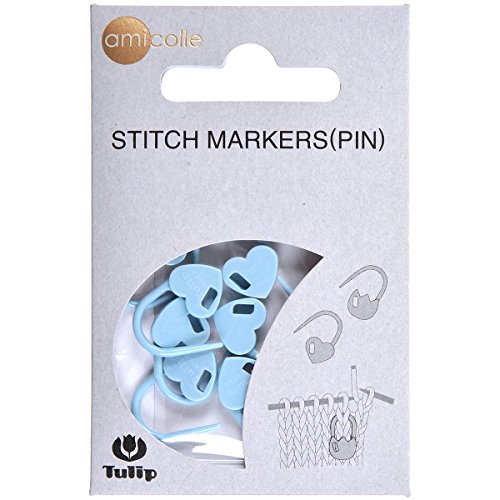
When you are working with luxury fibers like silk, alpaca, or cashmere, you need a marker that is as gentle as the yarn itself. These heart-shaped markers have a seamless, rounded design that prevents the dreaded "yarn split."
Because they are lightweight, they won’t pull on your stitches or cause uneven tension in your fabric. This is critical when you are knitting a delicate lace shawl where every stitch must be perfectly uniform.
They are undeniably beautiful, but they can be a bit pricier than standard plastic rings. Think of them as a treat for your favorite high-end projects where comfort and fiber preservation are the top priorities.
Katrinkles Wooden Progress Keepers: Best for Style
Sometimes, knitting is about the experience as much as the finished garment. These laser-cut wooden markers add a touch of personality to your needles while serving as functional progress keepers.
They are perfect for marking how many inches you have completed on a long-term project like a blanket or a sweater sleeve. Seeing a beautiful, custom marker can provide that extra bit of motivation to finish one more row.
Keep in mind that wood can occasionally have a slight texture that might grab onto very sticky fibers like mohair. They are best suited for smooth, plied wools where they can slide freely without friction.
Dritz Assorted Safety Pins: Best Budget Option

You likely already have a box of these in your sewing kit, and they are surprisingly effective for knitting. They are the ultimate "use what you have" tool for marking increases, decreases, or the start of a round.
They are incredibly durable and can be used on almost any project weight. If you lose one, you won’t be heartbroken, making them ideal for travel knitting or projects where your notions bag might get tossed around.
The downside is that the metal can be a bit sharp if you aren’t careful. Always ensure the clasp is fully closed, or you might find yourself accidentally snagging a strand of your precious hand-dyed yarn.
Knitter’s Pride Ring Markers: Best for Comfort

If you spend hours knitting on circular needles, you know the frustration of markers that constantly get hung up at the join. These ring markers are designed with a smooth, snag-free transition that keeps your knitting flow uninterrupted.
They come in various colors, allowing you to color-code your pattern repeats. This is particularly helpful for stranded colorwork where you need to track different motifs across the row.
Because they are simple rings, they are best for markers you leave on the needle. If you need to move them frequently into the fabric, you might find a locking style more efficient.
Susan Bates Split Ring Markers: Best for Utility

These are the classic "workhorse" markers that every knitter should have in their stash. The split-ring design allows you to easily slide them onto your needle or insert them into a stitch mid-row.
They are simple, effective, and nearly impossible to break. Their distinct shape makes them easy to find by touch, which is a lifesaver when you are knitting in low light or while watching a movie.
While they lack the aesthetic appeal of wooden or heart-shaped markers, they win on pure functionality. They are the reliable choice for everyday knitting where you just need the job done without any fuss.
How to Choose the Right Markers for Your Projects
Choosing the right marker starts with understanding your yarn weight and needle material. If you are using slippery metal needles, avoid heavy metal markers that might slide off too easily.
For lace projects, always prioritize a smooth, snag-free surface to protect your yarn. For heavy-duty projects like cables or bulky sweaters, a locking marker is often better to ensure you don’t lose your place.
Consider the size of the marker relative to your needle. A marker that is too small will cause your stitches to bunch up, while one that is too large can distort your tension and make your knitting feel awkward.
Essential Tips for Organizing Your Knitting Notions
The best way to keep your markers organized is to have a dedicated, small container for each type. I recommend keeping a "travel kit" in your project bag so you are never caught without the right tool.
Try using a magnetic tin to store your steel markers; it prevents them from rolling off the table and getting lost in the carpet. Label your containers clearly so you can grab exactly what you need without digging.
If you find yourself frequently losing markers, try keeping a small bowl on your side table specifically for "retired" markers. This prevents them from cluttering up your workspace and keeps your current project area clear.
Common Mistakes When Using Stitch Dividers Daily
The most common mistake is using a marker that is too thick for your yarn, which creates a noticeable gap in your stitches. Always test your marker on a small swatch if you are working with fine, expensive fibers to ensure it doesn’t leave a mark.
Another frequent error is forgetting to remove markers before you reach a bind-off or a complex decorative edge. This can lead to a marker being permanently knitted into your garment, which is a headache to fix later.
Finally, don’t over-rely on markers to the point where you stop reading your knitting. Use them as an aid, but always keep an eye on your stitch count to ensure you haven’t accidentally dropped or added a stitch between your markers.
Finding the perfect stitch marker is a journey of trial and error that evolves alongside your knitting skills. Whether you prefer the functional reliability of a simple split ring or the aesthetic charm of a wooden progress keeper, the right tool should always enhance your rhythm. Remember that your choice of marker can significantly impact your tension and the final look of your fabric, so choose wisely. Happy knitting, and may your rows always be perfectly counted.