6 Best Canvas Sewing Needles For Thick Fabric Attachments
Selecting the right needle is vital for heavy-duty projects. Explore our top six canvas sewing needle picks, chosen for their durability and fabric penetration.
Working with heavy-duty canvas requires a shift in mindset from delicate knitting, as the density of the fabric demands tools that can withstand significant mechanical stress. Just as you wouldn’t use a fragile lace needle for chunky wool, you cannot rely on standard sewing needles for structural canvas projects. Selecting the right needle ensures your seams are secure and your hands remain fatigue-free during long sessions. This guide explores the best options for piercing thick materials without compromising the integrity of your work.
Singer Heavy Duty Needles: Best Overall Choice
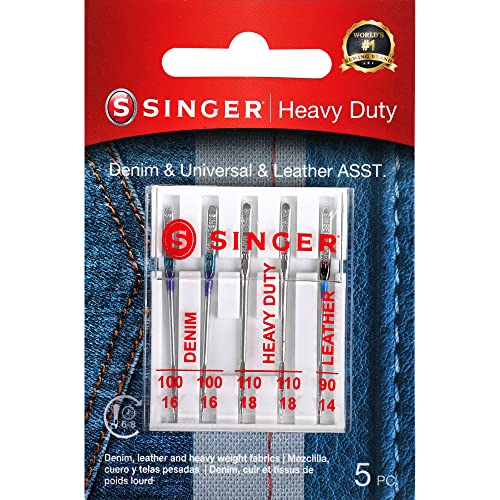

When you are transitioning from knitting heavy, worsted-weight wools to constructing canvas bags or gear, these needles are your reliable workhorse. They are engineered with a reinforced shank that resists bending, even when you are pushing through multiple layers of dense, treated canvas.
The standout feature here is the sharp, specialized point designed to penetrate tightly woven fibers without pushing them aside or causing snagging. They behave much like a high-quality nickel-plated knitting needle—slick enough to move through the material, but sturdy enough to handle the tension.
If you are working on a project that requires structural integrity, such as a heavy-duty tote, these are the gold standard. They provide the consistency you need to keep your stitch length uniform across every inch of the seam.
Dritz Home Curved Needles for Upholstery

Curved needles are a game-changer when you are working on items where you cannot easily access the back of the fabric, such as closing a stuffed canvas cushion. They allow for a smooth, rocking motion that mimics the rhythm of a knitting needle picking up stitches in a tight bind-off.
Because they are designed for upholstery, they are inherently robust and resistant to snapping under pressure. The curve allows you to maintain a consistent angle of entry, which is critical when working with thick materials that are prone to shifting.
Keep in mind that these require a bit of practice to master the hand-positioning. Start with a slow, deliberate pace, much like learning to hold your yarn for the first time, to ensure your tension remains even throughout the curve.
Bohin Extra Fine Canvas Needles for Precision
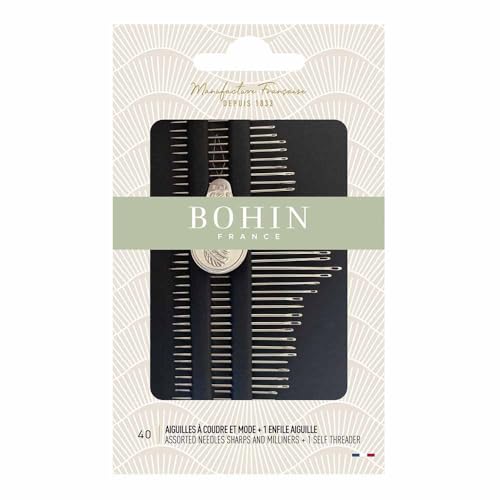
Sometimes, you need a needle that provides the strength of a heavy-duty tool but with a profile that won’t leave massive holes in your fabric. Bohin needles are known for their exceptional finish, which reduces drag as you pull the thread through the dense weave.
These are ideal for fine-tuning details or attaching hardware to canvas where a thicker needle might cause the fabric to fray or pucker. They offer a level of finesse that is often missing from industrial-grade options.
If you are working with a canvas that has a higher thread count, these needles will glide through with significantly less resistance. They are the "bamboo" of the canvas world: smooth, reliable, and incredibly pleasant to use for extended periods.
John James Saddlers Harness Needles Review

Saddlers harness needles are built for heavy-duty stitching, specifically designed for use with thick waxed thread. They feature a blunt, rounded point that is meant to slide between the fibers of the fabric rather than piercing them directly.
This is a vital distinction if you are working with high-end canvas where you want to avoid damaging the weave. It acts similarly to a tapestry needle in knitting, which is designed to weave in ends without splitting the yarn plies.
Because they are extremely rigid, they are excellent for projects involving leather accents or multi-layered webbing. However, because they are blunt, they are not suitable for lightweight canvas; they will simply bounce off the surface rather than penetrating.
Clover Chibi Bent Tip Needles for Canvas

The bent tip on these needles is an ergonomic marvel for anyone who struggles with hand fatigue. By angling the tip, you can pick up stitches or navigate tight corners without having to contort your wrist into awkward positions.
Think of these as the ergonomic crochet hook of the sewing world. They allow for a more natural hand movement, which is essential if you are prone to repetitive strain after hours of crafting.
They are particularly effective for "sewing in the round" or working on curved edges where a straight needle would be cumbersome. While they aren’t the strongest option for industrial-grade canvas, they are perfect for medium-weight projects that require precision and comfort.
Osborne Heavy Duty Sailmaker Needles Guide
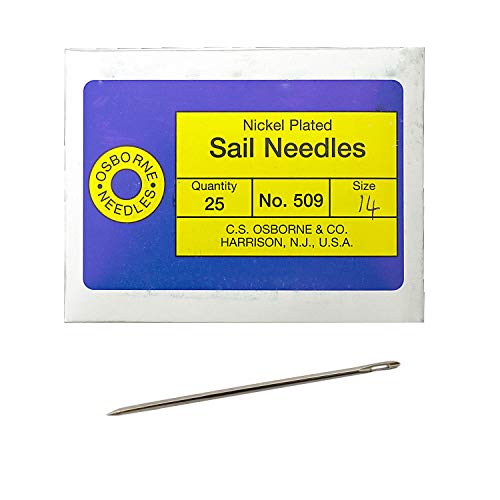
When you are dealing with professional-grade, heavy-weight canvas, you need a needle that is essentially a tool of war. Osborne sailmaker needles are triangular in shape, which allows them to slice through thick, multi-layered fabric with ease.
The triangular point is the key to their performance; it creates a clean, intentional incision rather than forcing the needle through the weave. This is the heavy-duty equivalent of using a rigid, metal needle for a dense, cables-heavy project.
These needles are not for the faint of heart or for delicate fabrics. Use them only when you are working with heavy-duty sailcloth or double-layered canvas, as they will leave significant holes in thinner material.
How to Select Needle Size for Thick Fabrics
Choosing the right needle size is just as important as choosing the right yarn weight for your project. A needle that is too thin will bend or break under the tension of thick canvas, while a needle that is too thick will leave unsightly holes that weaken the seam.
- Weight of Fabric: Match the needle gauge to the thickness of your canvas.
- Thread Thickness: Ensure the needle eye is large enough to accommodate your thread without fraying it.
- Layer Count: If you are sewing through four or more layers, always size up to a more robust needle.
Consider the "tension" of your sewing project just like you would gauge in knitting. If the needle is struggling to pass through, you are likely using a needle that is too small for the density of the fabric.
Understanding Point Types for Canvas Projects
The point of the needle dictates how it interacts with the fabric, which is the most critical factor in preventing damage. A sharp point is designed for piercing, while a blunt point is designed for navigating.
- Sharp Points: Best for dense, tightly woven canvas where you need to pierce the fabric cleanly.
- Triangular Points: Best for heavy-duty, multi-layered materials that require slicing.
- Blunt/Rounded Points: Best for avoiding fiber damage in high-quality or delicate canvas weaves.
Just as you choose a blunt tapestry needle to avoid splitting your wool, choose a rounded point for canvas that is prone to fraying. Using the wrong point can lead to "runs" or structural failures in your finished piece.
Techniques for Piercing Dense Canvas Layers
Piercing dense canvas is all about leverage and angles. If you find yourself pushing with all your might, stop and reassess your technique to avoid injury.
Use a thimble to protect your finger, as you would use a needle pad for comfort during long knitting sessions. Position the needle at a slight angle rather than pushing straight down, which allows the point to engage with the fabric weave more effectively.
If you are struggling, try a "rocking" motion to get the needle through. If that fails, the needle may be too dull or the wrong type for the thickness of the canvas you are working with.
Essential Safety Tips for Heavy Duty Sewing
Sewing with heavy-duty needles carries a higher risk of injury due to the force required to drive the needle through the fabric. Always keep your fingers away from the path of the needle, and never force a needle if it feels stuck.
Keep your workspace well-lit and clear of clutter, just as you would organize your knitting notions to prevent losing a stitch marker. If a needle becomes bent or dull, discard it immediately in a safe container—never try to straighten a heavy-duty needle.
Remember that canvas projects are endurance tasks. If your hands start to ache, take a break, stretch your wrists, and come back to it later, just as you would when working on a large-scale blanket project.
Mastering the art of canvas sewing requires the same patience and attention to detail that you apply to your most intricate knitting patterns. By choosing the right needle for your specific fabric weight and project goals, you ensure that your gear is as durable as it is beautiful. Don’t be afraid to experiment with different point types and sizes until you find the perfect match for your hand. With the right tools in your kit, you will find that working with heavy fabrics is just as rewarding as casting on a new project.