7 Best Crochet Hooks For Pre-stringing Beads To Try
Discover the 7 best crochet hooks for effortless bead stringing. This guide evaluates grip, tip precision, and material to enhance your jewelry-making flow.
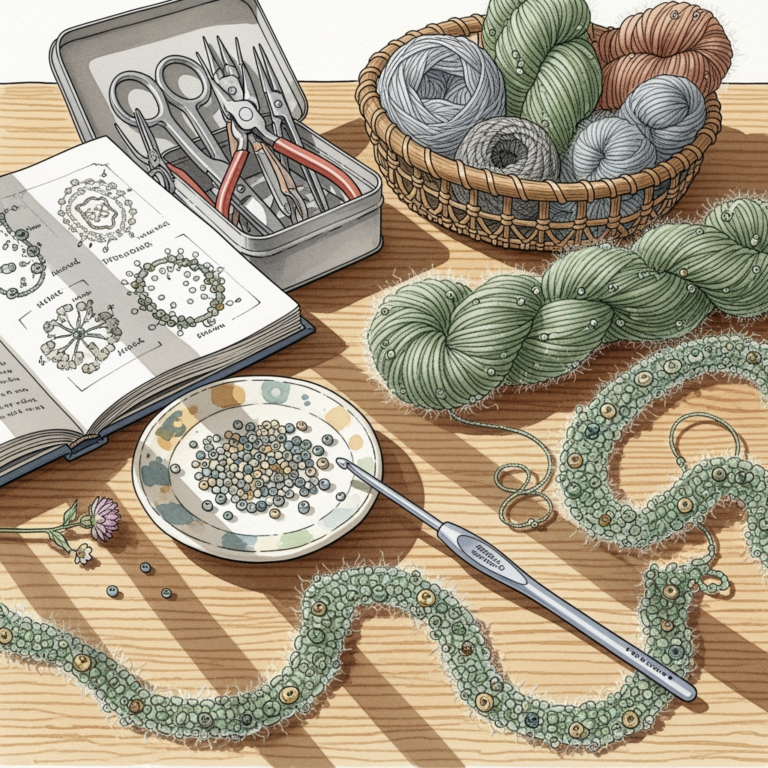
Adding beads to a knitted lace shawl or a pair of beaded socks adds an undeniable touch of luxury and weight to your finished fabric. However, the process of pre-stringing those tiny glass or metal beads onto your working yarn can be incredibly tedious if you aren’t using the right tool. A high-quality steel crochet hook acts as your primary bridge between the bead and the fiber, ensuring the transfer is smooth and snag-free. Finding the perfect hook can transform this chore from a frustrating bottleneck into a seamless part of your creative workflow.
Clover Amour Steel Crochet Hooks: Best Overall


Clover Amour hooks are the gold standard for a reason: they offer a perfect balance between a smooth, polished finish and a comfortable, ergonomic grip. When you are pre-stringing hundreds of beads for a complex lace project, the last thing you want is a hook that drags against the yarn or causes your fingers to cramp.
The hook head is uniquely shaped to glide through the center of even the smallest seed beads without catching on the edges. Because the steel is high-quality and finely finished, it won’t fray delicate silk or fine-gauge wool yarns as you pull them through the bead hole.
If you are working on a multi-day project, the soft-touch handle provides just enough cushioning to prevent fatigue. While they are a bit of an investment, the durability of the tip ensures they will remain in your kit for decades.
Tulip Etimo Steel Crochet Hook: Best Ergonomics

If you suffer from hand fatigue or have sensitive joints, the Tulip Etimo series is practically a medical necessity. The handle is designed with a specific contour that encourages a relaxed grip, which is vital when you are repeating the same motion for hours on end.
The steel hook itself is exceptionally smooth, featuring a tapered throat that makes catching the yarn loop and pulling it through the bead effortless. Unlike cheaper hooks that might have a slight burr on the metal, these are polished to a mirror finish.
The trade-off here is the price point, which is higher than most other options on the market. However, for a knitter who prioritizes physical comfort above all else, the ergonomic design pays for itself in reduced strain.
Susan Bates Silvalume Steel Hooks: Best Value

Susan Bates hooks feature an inline head design, which is a departure from the tapered style found in most ergonomic brands. This design is excellent for beginners because the deep, sharp throat grabs the yarn securely, preventing it from slipping off while you are navigating the bead.
Because they are made of lightweight aluminum or steel, they are incredibly affordable and easy to find in any craft store. If you are just starting to experiment with beaded knitting and aren’t sure if you want to commit to a high-end tool, this is the perfect place to start.
Keep in mind that the lack of an ergonomic handle means you might feel some tension in your hand during long sessions. For occasional use, however, they are reliable, sturdy, and get the job done without any fuss.
Boye Steel Crochet Hooks: Best For Beginners
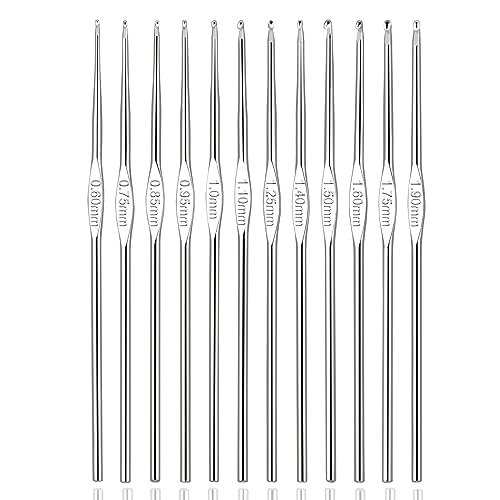
Boye hooks are the classic choice for a reason; their tapered throat design is very forgiving and helps the yarn slide off the hook easily. This is particularly helpful when you are first learning the mechanics of pulling a loop through a bead hole.
The simplicity of these hooks means there is nothing to break or wear down over time. They are straightforward, no-nonsense tools that provide a consistent experience every time you sit down to work.
While they lack the bells and whistles of high-end ergonomic hooks, they are perfect for keeping in your travel knitting bag. If you lose one, it’s not a financial tragedy, making them a great "beater" hook for your everyday projects.
Addi Swing Steel Crochet Hooks: Best For Comfort

The Addi Swing hooks are instantly recognizable by their unique, curved, and weighted handle. This design is intended to balance the weight of the hook in your hand, reducing the amount of force you need to apply to maintain control.
The steel tip is exceptionally strong and precise, making it ideal for the smallest beads that require a very thin gauge. The handle’s shape forces you to hold it in a way that minimizes repetitive stress, which is a game-changer for knitters prone to tendonitis.
The unusual shape can take a few minutes of getting used to, especially if you are accustomed to straight hooks. Once you adjust, the comfort level is unmatched, especially when working with heavy yarn or large amounts of beads.
Lacis Steel Crochet Hooks: Best For Fine Beads

When you move into the world of micro-beading or using ultra-fine lace weight yarns, standard hooks are often too thick to fit through the bead. Lacis specializes in fine-gauge tools, often offering sizes that are much smaller than the standard craft store variety.
These hooks are engineered for precision, allowing you to manipulate tiny beads that would otherwise be impossible to thread. They are essential for intricate projects where the bead-to-yarn ratio is very tight.
Because these hooks are so fine, they are inherently more delicate than larger hooks. You must be careful not to bend the tip, as the thin steel can be prone to warping if you apply too much pressure.
Prym Ergonomic Steel Hooks: Best For Hand Strain
Prym has taken a modern approach to crochet hook design by using high-performance synthetic materials for the handle while keeping the hook itself made of high-quality steel. The handle is remarkably lightweight and flexible, which helps absorb some of the vibration and tension from your hand.
The hook head is perfectly shaped to prevent the yarn from snagging, which is a common frustration when working with high-twist yarns. The smooth transition between the metal and the handle ensures that nothing catches as you pull the yarn through.
These are an excellent middle-ground option for knitters who want ergonomic benefits without the weight of a metal or heavy rubber handle. They are particularly good for knitters who prefer a lighter tool in their hands.
How To Select The Correct Hook Size For Your Beads
Selecting the right hook size is a matter of physics: the hook must be small enough to pass through the bead’s hole while still being able to catch and hold your yarn. If the hook is too large, it won’t enter the bead; if it’s too small, the yarn may slip off before you can pull it through.
- Check the bead hole: Always test your hook inside the bead without yarn first.
- Gauge your yarn: A lighter weight yarn (like cobweb or lace weight) requires a finer hook than a fingering weight yarn.
- The "Goldilocks" rule: You want a hook that fits snugly into the bead hole but allows the yarn to sit securely in the throat.
If you find yourself struggling to pull the yarn through, don’t force it. You are likely better off switching to a slightly smaller hook or a thinner strand of yarn to avoid snapping your fiber.
Essential Tips For Pre-Stringing Beads Efficiently
Pre-stringing is a time-consuming but necessary step, so efficiency is key. Use a small, shallow tray or a bead mat to keep your beads contained so they don’t roll away across your workspace.
Always string your beads in the exact order of your pattern, starting from the last bead needed for the project and working backward to the first. This ensures that when you begin knitting, your beads are waiting for you in the correct sequence on the yarn.
If you are stringing a large quantity, consider using a bead spinner to speed up the process. This tool allows you to load beads onto your needle or hook much faster than picking them up one by one.
Troubleshooting Common Bead Stringing Difficulties
If you find that your yarn is fraying as you pass it through the bead, check the bead hole for sharp edges. Some lower-quality glass beads have "flashing" or rough seams that act like a knife against your yarn.
If the yarn keeps slipping out of the hook’s throat, try using a slightly deeper hook or a "hook-style" needle that has a more pronounced catch. Sometimes, simply twisting the hook slightly as you pull it through the bead can help lock the yarn in place.
Lastly, if your hand starts to cramp, stop immediately. Take a break, stretch your fingers, and ensure your lighting is adequate; often, we strain because we are squinting or holding our hands in unnatural positions to see the tiny beads.
Mastering the art of pre-stringing beads is a skill that opens up a whole new world of texture and sparkle in your knitting projects. By choosing a high-quality steel hook that suits your grip and the size of your beads, you can minimize frustration and maximize your creative output. Remember that the right tool is an investment in your comfort, allowing you to focus on the beauty of the lace rather than the mechanics of the bead. Happy knitting, and may your stitches and beads always align perfectly.