6 Best Swivel Cord Connectors For Interchangeable Sets
Discover the top 6 swivel cord connectors for interchangeable knitting sets. Learn how these essential tools prevent twisting for a seamless crafting flow.
The frustration of fighting a twisted, coiling cable while trying to maintain a steady rhythm is a universal experience for every knitter. Swivel cord technology has revolutionized the interchangeable needle market by allowing the needle tip to rotate independently of the cable, virtually eliminating the "spring-back" effect. Choosing the right swivel system depends heavily on your personal tension, the weight of your project, and your preferred needle material. This guide explores the top swivel options to help you find the perfect match for your knitting style.
ChiaoGoo TWIST Red Lace Swivel Connectors


ChiaoGoo has long been the gold standard for serious knitters, and their TWIST swivel cables are a masterclass in engineering. These cables are made from a multi-strand steel core coated in nylon, which provides enough memory-free flexibility to make magic loop knitting a breeze.

The swivel mechanism is tucked discreetly into the join, allowing your needle tips to rotate freely as you work. This is a game-changer for those who tend to twist their wrists while knitting, as the cable stays stationary while the needle moves.
Be aware that these cables are quite thin and have a distinct "stiff" feel compared to silicone-based options. If you are working on a heavy, cabled sweater, the sturdiness of the steel core is an asset, but it might feel overkill for delicate, lace-weight mohair projects.
Knitter’s Pride Mindful Swivel Cords

The Mindful Collection focuses on the meditative aspect of knitting, and their swivel cords are designed to be as unobtrusive as possible. These cables feature a smooth, stainless steel swivel joint that feels incredibly secure and durable.
What sets these apart is the color-coded sizing, which is a massive help when you have multiple projects on the needles at once. You can instantly identify if you are grabbing a 24-inch or a 32-inch cord without fumbling for a tape measure.
The cable itself is coated in a soft, matte finish that doesn’t catch on fibers. It is slightly more pliable than the ChiaoGoo steel, making it a favorite for knitters who prefer a "softer" feel in their hands during long knitting sessions.
HiyaHiya Swivel Interchangeable Cables
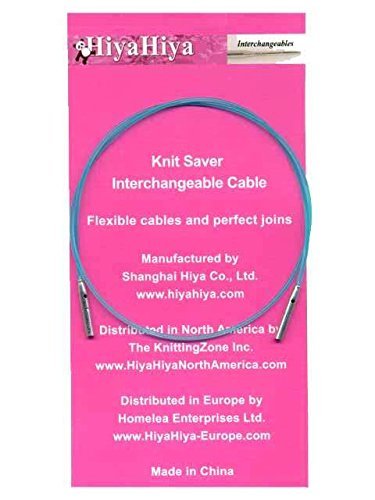
HiyaHiya is famous for their incredibly sharp, slick stainless steel tips, and their swivel cables are designed to complement that speed. The swivel mechanism is integrated directly into the cable end, creating a seamless transition from the metal join to the cord.
If you are a speed knitter, the lack of friction at the join is a significant benefit. These cables are exceptionally flexible, which makes them ideal for small-circumference knitting like sleeves or hats using the magic loop method.
One important tradeoff is the proprietary nature of the threading; ensure you are buying the correct "size" (Small vs. Large) to match your needle tips. They are arguably the most "invisible" swivel system, as the join is very compact and snag-free.
Addi Click SOS Swivel Cord System

Addi is unique because they use a "click-in" mechanism rather than a screw-on thread, which is a massive relief for knitters with arthritis. The SOS swivel cords add a brilliant feature: a tiny hole in the cable near the join that allows you to thread a lifeline through your stitches.
The swivel action is smooth and reliable, though the "click" mechanism can feel a bit bulkier than traditional screw-in systems. This is a small price to pay for the security of knowing your needles won’t unscrew mid-row.
These cables are perfect for complex lace projects where a mistake could be catastrophic. The ability to insert a lifeline automatically while you knit is a feature that once you use, you will never want to give up.
Lykke Interchangeable Swivel Cables

Lykke is best known for their beautiful driftwood and bamboo needles, and their swivel cables are designed to match that aesthetic. These cables are soft, pliable, and have a "memory-free" quality that is rare in non-steel cables.
The swivel joint is robust, making these an excellent choice for knitters who use heavier yarns like wool-blend worsted or chunky weight. They don’t have that "springy" resistance that causes your work to fight back against you.
While they are excellent for most projects, the swivel mechanism can occasionally feel slightly "looser" than the steel-based competitors. Always use the provided tightening key to ensure the join is flush, especially when working with slippery, high-twist yarns.
Seeknit Koshitsu Swivel Cord Options
Seeknit offers a unique approach with their Koshitsu cables, which are designed to pair with their premium Japanese bamboo needles. These cables are exceptionally lightweight, making them the top choice for knitters who experience hand fatigue.
The swivel mechanism is very fluid, allowing for a natural, ergonomic hand position. Because bamboo needles are naturally grippier than metal, the smooth rotation of the cable helps maintain a consistent gauge across the row.
These are not the most durable option for heavy-duty, industrial-style knitting, but they are unmatched for comfort. If you are knitting a delicate, long-term project, the lightweight nature of these cables will keep your hands feeling fresh for hours.
Why Swivel Cords Improve Your Knitting Flow
The primary benefit of a swivel cord is the reduction of torque on your wrists. When a cable is fixed, every stitch you knit forces the cable to twist, which eventually causes the cord to coil up like a spring.
This coiling creates tension in your hands and shoulders, leading to fatigue and uneven stitches. By allowing the needle to rotate, the cable remains relaxed, allowing your yarn to glide smoothly without fighting the physical memory of the cord.
- Ergonomics: Reduces repetitive strain on the wrists.
- Consistency: Prevents the "tug" that leads to tight stitches.
- Speed: Minimizes the need to stop and untwist your work.
How to Properly Tighten Your Cable Joints
Even with the best swivel system, a loose connection is the most common cause of "snagging" and lost stitches. Always use the tightening key provided with your set, and apply a gentle, firm pressure to ensure the threads are fully seated.
Do not over-tighten, as this can strip the threads on aluminum or bamboo needles. A simple "snug" fit is sufficient; if you find yourself constantly tightening, check the threads for any stray bits of fiber or debris that might be preventing a flush connection.
- Check the join: Ensure the needle and cable are perfectly flush.
- Use the hole: Always use the key in the provided hole, not the cable itself.
- Clear debris: Use a soft cloth to wipe threads clean before assembly.
Troubleshooting Common Swivel Cord Issues
If your swivel cord stops spinning, the most common culprit is yarn fiber buildup inside the joint. Over time, tiny bits of wool or mohair can get trapped in the rotating mechanism; a quick blast of canned air or a gentle cleaning with a soft brush usually clears it up.
If the cable feels "kinky," soak it in warm (not boiling) water for a few minutes and hang it with a light weight attached. This relaxes the nylon or plastic memory, restoring the cable to its original, supple state.
If you experience "unscrewing," it is usually due to the way you hold your needles. If you have a tight grip, you may be inadvertently twisting the needle head; try to relax your hold and let the swivel do the work for you.
Choosing the Right Cable Length for Projects
The rule of thumb is that your cable should always be slightly shorter than the circumference of your project. For a hat that is 20 inches in circumference, a 16-inch or 20-inch cable is ideal to keep the stitches under tension without overstretching the fabric.
If you are using the magic loop method, you generally want a longer cable, typically 32 inches or 40 inches. This provides enough slack to create the large loops necessary to reach around the needle tips without distorting your gauge.
- Small circumferences: Use 16-inch cables or long cords for magic loop.
- Garment bodies: Use 24-inch or 32-inch cords to accommodate the weight.
- Large shawls: Use 40-inch or longer cords to allow for spreading the stitches during blocking.
Investing in high-quality swivel cords is one of the most effective ways to upgrade your knitting experience and protect your physical health. By eliminating cable twist and reducing hand fatigue, these tools allow you to focus entirely on the rhythm of your stitches and the beauty of your yarn. Whether you prefer the industrial strength of ChiaoGoo or the ergonomic lightness of Seeknit, there is a perfect system waiting to improve your craft. Choose the cable that matches your specific project needs, and enjoy a smoother, more meditative knitting journey.