7 Best Stitch Rings For Circular Knitting To Try
Discover the 7 best stitch rings for circular knitting. This guide reviews top markers to help you track rounds and improve your knitting precision effortlessly.
Finding the right stitch marker is often the difference between a meditative knitting rhythm and a frustrating session of constant snagging. These small tools act as the anchors of your project, marking transitions, increases, or the start of a round. While they may seem like simple accessories, the material and shape you choose significantly impact your tension and speed. Let’s explore the best options to keep your circular knitting flowing smoothly.
Cocoknits Colorful Nylon Stitch Markers
These markers are a staple for a reason: they are incredibly lightweight and flexible. Because they are made of nylon, they don’t clatter against your needles like metal rings, which is a blessing if you knit in quiet environments or during long sessions.
The nylon construction means they won’t scratch your needles, regardless of whether you are using nickel-plated or wooden tips. They come in a variety of sizes and colors, allowing you to color-code your pattern repeats or distinguish between the start of a round and a decrease point.
The only real downside is that they can be slightly difficult to pick up if you have limited dexterity, as they are very thin. However, for most knitters, their ability to lay flat against the fabric without creating unwanted ladders or tension issues makes them a top-tier choice.
Clover Locking Stitch Marker Assortment


If you are working on a complex lace shawl or a garment that requires frequent pattern adjustments, locking markers are indispensable. Clover’s assortment is the gold standard for durability and ease of use.
These markers function like tiny safety pins, allowing you to attach them directly into a stitch rather than just sliding them onto the needle. This is essential for marking your place in a chart or identifying a specific row where you need to perform a cable cross.
Be aware that because they have a "locking" mechanism, they can occasionally catch on mohair or highly textured, fuzzy yarns. If you are working with a delicate, haloed fiber, proceed with caution to avoid pulling the fibers.
Knitter’s Pride Smooth Metal Ring Markers

When you are knitting with slick needles, you want a marker that moves with the same speed. These metal rings are polished to a high sheen, ensuring they glide over joins in circular needles without catching.
The weight of these markers is a significant benefit for many knitters. Because they are slightly heavier than plastic, they tend to hang straight down, making it very easy to see exactly where your round begins or ends.
One trade-off is the sound; if you are a fast knitter, you will hear a distinct "clinking" sound as they hit your needle tips. If you find the noise distracting, you might prefer a coated or plastic alternative for long-term projects.
Tulip Heart-Shaped Stitch Ring Markers
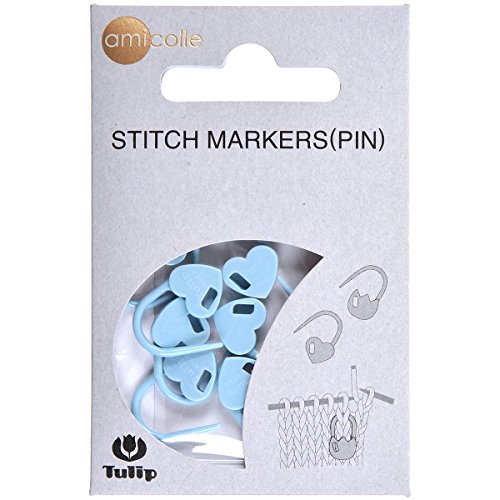
Tulip is renowned for their high-quality manufacturing, and these heart-shaped markers are as functional as they are charming. The unique shape isn’t just for aesthetics; it helps the marker sit comfortably in the hand and prevents it from rolling away when you set your work down.
The smooth, rounded edges are specifically designed to prevent snagging on your yarn. This is particularly useful when working with multi-ply wools that are prone to splitting, as the marker won’t catch on the individual strands.
Because they are slightly thicker than basic nylon rings, they are best suited for needles up to a certain size. Always check the diameter to ensure they won’t make your stitches feel tight or crowded as you move them from needle to needle.
Susan Bates Split Ring Stitch Markers

Split rings are the "quick-grab" solution for knitters who need to move markers frequently. They are essentially a simple "C" shape, allowing you to slide them onto the needle or into a stitch without having to open a clasp.
These are excellent for beginners who are still learning to identify their stitches. You can easily pop one into a stitch to mark a mistake or a point of interest without disrupting your knitting flow.
The trade-off is that because they are "split," they can occasionally fall out if you are working with very slippery yarn or if the marker is slightly too large for your needle size. They are best used when you are actively watching your work, rather than for long-term placement.
DPN-Friendly Coil-Less Safety Pin Markers

If you are working on double-pointed needles (DPNs) or small-circumference projects like socks, traditional ring markers can be bulky and awkward. Coil-less safety pins are the perfect solution because they don’t have that little spring loop that yarn loves to get stuck in.
These markers are incredibly low-profile. They won’t distort your gauge or create a "ladder" effect, which is a common problem when using large, rigid markers on small-diameter circular projects.
Because they are made of metal, they are very sturdy and won’t bend out of shape over time. Just ensure you are using a high-quality brand that has a smooth finish, as a burr on the metal could snag your yarn.
Brittany Birch Wood Stitch Ring Markers

For those who love the feel of natural materials, birch wood markers are a dream. They are warm to the touch and provide a gentle friction that prevents them from sliding around too much if you are working on a complex pattern.
These are particularly well-suited for wooden or bamboo needles, as they won’t create the harsh clatter associated with metal rings. They feel like an extension of your needles, creating a cohesive, tactile experience.
The one thing to keep in mind is that wood can be slightly more fragile than nylon or metal. Avoid sitting on them or storing them in a tight bag where they might get crushed, as they can snap under pressure.
How to Choose the Right Size for Your Needles
Choosing a marker that is too small for your needle is a recipe for frustration. If the ring is too tight, it will stretch your stitches, potentially leading to uneven tension or "ladders" at the start of your round.
A good rule of thumb is to choose a marker that is roughly 1-2mm larger than your needle diameter. This allows the marker to move freely without being so large that it gets in the way of your fingers or the yarn path.
- Small needles (2.0mm–3.5mm): Use thin, flexible nylon rings or coil-less pins.
- Medium needles (4.0mm–5.5mm): Standard metal or wooden rings work perfectly.
- Large needles (6.0mm+): Larger, sturdier markers are necessary to avoid them getting lost in the fabric.
Why Use Removable Versus Closed Ring Markers
Closed ring markers are best for "set it and forget it" scenarios, such as marking the beginning of a round in a hat or a sweater body. They are secure, won’t fall out, and are generally the most unobtrusive option.
Removable markers, on the other hand, are your best friends when you need to track decreases, increases, or specific pattern repeats. They offer the versatility to be moved, removed, or repositioned without having to re-knit a section of your work.
If you are a beginner, I recommend starting with a set of locking or split markers. They provide the most flexibility as you learn to read your knitting and understand where your markers are most useful.
Tips for Preventing Snags While Knitting in Round
The most common cause of snagging is the transition point between the needle tip and the cable. Always check that your marker is not being caught in this gap as you move it from the left to the right needle.
If you find that your marker is constantly snagging, try a different material. If you are using metal markers on metal needles, the friction can sometimes cause them to stick; switching to a nylon or wooden marker often solves the problem instantly.
Finally, keep your marker count to a minimum. Using too many markers can clutter your workspace and increase the likelihood of catching a loop of yarn. Only use what is absolutely necessary to keep your pattern on track.
Choosing the right stitch marker is a small investment that pays off in a much smoother, more enjoyable knitting experience. Whether you prefer the silent glide of nylon or the tactile warmth of wood, the best marker is the one that disappears into your rhythm. Experiment with a few different types to see what suits your specific tension and project needs. Happy knitting, and may your rounds always be perfectly marked.