6 Best Felting Needles For Adding Decorative Details
Discover the 6 best felting needles for intricate details. Learn which gauges and styles provide the precision needed to elevate your fiber art projects today.
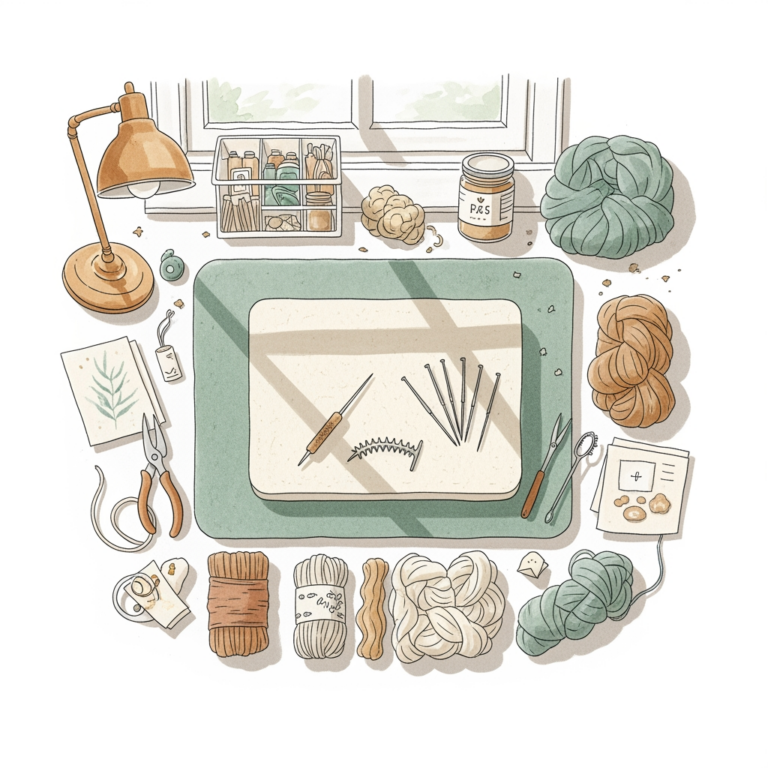
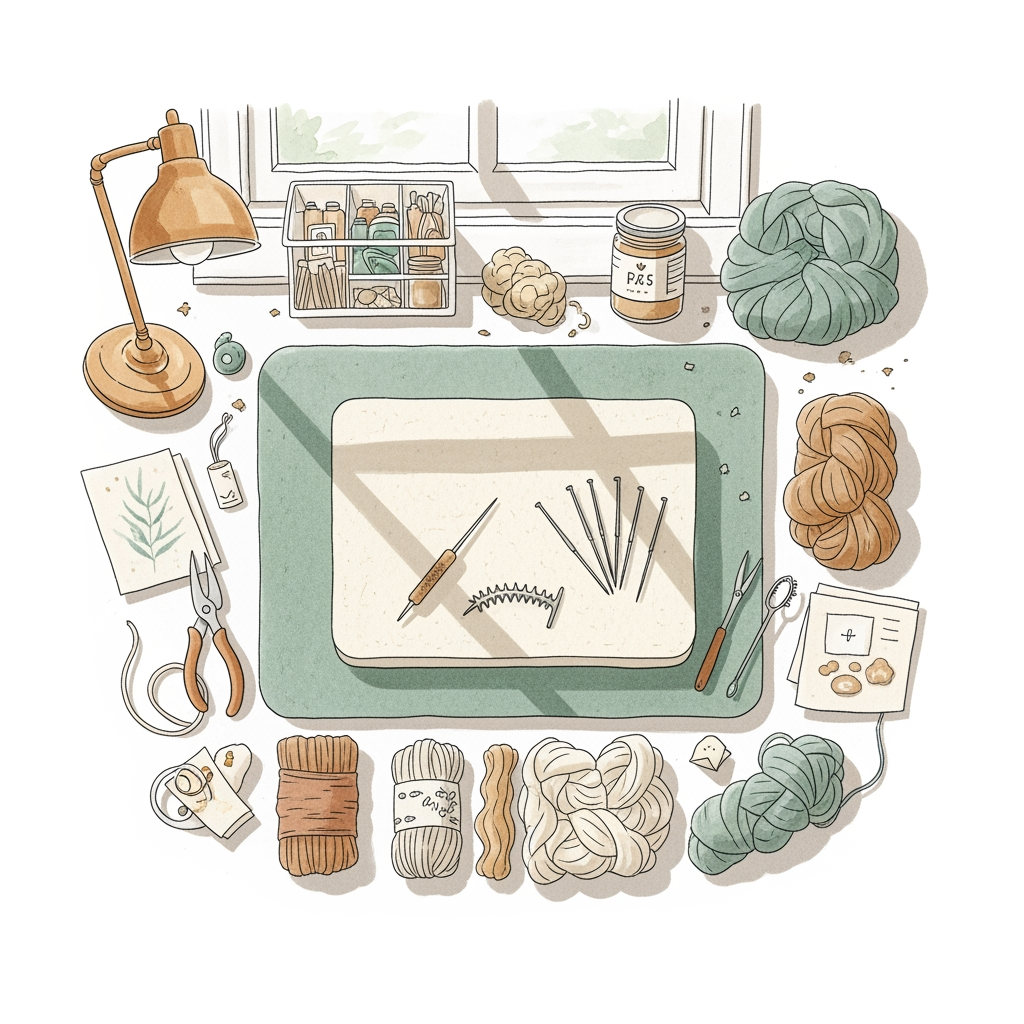
Needle felting is the quiet, meditative cousin to knitting that allows you to sculpt raw wool into intricate embellishments. Just as you wouldn’t use a size 10 needle for lace-weight mohair, choosing the right felting needle is the difference between a smooth finish and a shredded fiber mess. Mastering these tools will turn your flat knitted swatches into textured, three-dimensional works of art. Let’s dive into the essential tools that will elevate your fiber craft.
Clover Pen Style Needle Tool: Best For Precision


When you are adding a tiny, delicate eye to a knitted creature or a small floral detail to a sweater, you need control that feels like holding a fine-point pen. The Clover Pen Style tool offers an ergonomic grip that prevents hand fatigue during long sessions of surface detailing.
Because it mimics the weight and balance of a writing instrument, it is exceptionally easy to guide for fine-line work. You aren’t just stabbing; you are drawing with wool. This is the tool I reach for when I’m working on small-scale surface embroidery on finished garments.
The primary trade-off is that it is not designed for heavy-duty structural felting. If you try to build a thick, dense core, you will likely snap the needles. Stick to surface detailing and delicate appliques for the best experience with this tool.
Groz-Beckert Felting Needles: The Pro Standard

In the world of fiber arts, Groz-Beckert is the gold standard for a reason. These needles are crafted with precision-engineered barbs that catch and lock fibers with incredible efficiency, minimizing the number of pokes required to achieve a dense felt.
If you have ever felt like your project is taking forever to "firm up," it is likely because your needles are dull or poorly designed. These needles maintain their sharpness longer than generic alternatives, which saves your hands from unnecessary strain.
They are an investment, but they are worth every penny for the professional finish they provide. Always keep a variety of gauges on hand to transition from structural work to fine surface finishing.
Hamanaka Felt Needle Set: Best For Beginners

Starting out in needle felting can be intimidating, especially when you are staring at a wall of different needle gauges. Hamanaka sets take the guesswork out of the process by providing a curated range of needles that cover most standard project needs.

These needles are forgiving, which is exactly what a beginner needs while developing their muscle memory. They are sturdy enough to handle the inevitable "oops" moments where you might hit your foam mat at a slightly awkward angle.
Do not be tempted to buy a massive, unbranded bulk pack online; you will often end up with brittle, low-quality steel. Start with a reputable brand like Hamanaka to ensure your first projects don’t end in frustration.
Ashford Felting Needle Variety: Best For Bulk

When you are working on a large-scale project, such as a full-sized needle-felted landscape or a heavy wool sculpture, you need needles that can move fiber quickly. Ashford needles are designed for high-volume work where speed and coverage are the priorities.
These needles are robust and reliable, making them perfect for "blocking out" your shapes. They aren’t intended for the fine, delicate work of adding an eyebrow to a doll, but they are unmatched for building the base of your project.
I recommend keeping a dedicated "bulk" needle separate from your "detail" needles. Don’t use your heavy-duty needles for fine finishing, as they will leave visible, large holes in your work.
Sarafina Fiber Art Star Needles: Best Detail
Star needles are a game-changer for those who want a smooth, professional surface with minimal texture. The star-shaped cross-section has barbs on all four sides, allowing it to felt fibers from multiple angles simultaneously.
This design is particularly brilliant for working with fine wools or delicate fibers that tend to fray when poked with a traditional triangular needle. It creates a very tight, clean finish that looks almost like it was woven into the fabric.
If you are a perfectionist about the surface of your work, the star needle is your best friend. Use these for the final pass over your project to smooth out any lingering stray fibers.
Dimensions Felting Needle Tool: Best Comfort

If you suffer from arthritis or simply find that holding a thin needle causes cramping, the Dimensions tool is a lifesaver. The handle is thick and comfortable, allowing for a relaxed grip that doesn’t require constant, tight tension.
This tool is particularly useful for longer sessions where you are working on intricate colorwork or complex patterns. It keeps your hand in a neutral position, which helps prevent the repetitive strain injuries that can plague avid knitters and felters alike.
While the handle is the star, the needles are also quite serviceable for general tasks. Prioritize comfort over everything else if you plan on felting for more than twenty minutes at a time.
Understanding Felting Needle Gauge Differences
The gauge of a felting needle refers to the thickness of the shaft and the size of the barbs. Generally, a higher number indicates a thinner needle, while a lower number indicates a thicker, heavier-duty needle.
- 32-36 Gauge: Heavy-duty, fast felting for core building.
- 38-40 Gauge: Medium, all-purpose work for shaping and joining.
- 42+ Gauge: Fine, delicate work for surface details and finishing.
Think of this like your knitting needle sizes: you wouldn’t use a size 15 needle to knit a pair of delicate lace socks. Using a 32-gauge needle on a fine-gauge knit fabric will leave massive, irreparable holes.
How to Match Needle Sizes to Your Wool Fiber
Matching your needle to your fiber is just as critical as matching your yarn weight to your knitting needle size. Coarse, long-staple wools like Corriedale or Lincoln handle thicker needles well, as they have the structural integrity to withstand the larger barbs.
Conversely, fine, short-staple fibers like Merino or Angora require a finer needle. If you use a heavy needle on fine wool, you will simply shred the delicate fibers rather than felting them into the fabric.
Always test on a scrap piece of the same fiber and base fabric before diving into your main project. If the fiber is dragging or tearing, size down your needle.
Essential Safety Tips for Needle Felting Work
Needle felting is inherently sharp, and those barbs are designed to catch anything they touch—including your fingers. Always work on a dense foam mat or a brush mat to ensure the needle passes through the fiber and into a safe landing zone.
Never hold the item you are felting in your hand while you work, no matter how small it is. Use a pair of tweezers or a small tool to stabilize the piece if you need to keep your fingers out of the danger zone.
If you are prone to distraction, set your needles down when you look away. A moment of lost focus can lead to a painful puncture.
Troubleshooting Common Needle Felting Mistakes
The most common mistake is over-felting, which makes the wool brittle and hard. If your piece feels like a rock, you have likely destroyed the fiber structure by over-compressing it.
Another frequent issue is "surface pitting," where the needle leaves visible holes. This usually happens because you are using a needle that is too large for the project, or you are poking too deeply into the base layer.
Finally, if your added details are falling off, you haven’t felted the connection point deep enough. Ensure you are anchoring your decorative fibers into the core of your base piece rather than just skimming the surface.
Needle felting is a skill that rewards patience, experimentation, and the right equipment. By understanding the relationship between needle gauge, fiber type, and your desired outcome, you can transform your knitting projects into unique, textured masterpieces. Treat your needles with care, keep your fingers safe, and enjoy the tactile magic of sculpting with wool. Happy crafting!