6 Best Circular Needle Sets for Beginner Knitters
Discover the top 6 circular needle sets for beginners. We compare materials, cable flexibility, and ergonomics to help you start your knitting journey easily.
Choosing your first set of interchangeable circular needles is a rite of passage that bridges the gap between casual hobbyist and dedicated maker. While the sheer variety of materials and brands can feel overwhelming, focusing on the quality of the join and the tip profile will save you years of frustration. These six sets represent the gold standard for beginners looking to invest in tools that will grow alongside their skills. Finding the right pair is less about "the best" and more about matching the tool to your unique tension and the fibers you love to knit.
ChiaoGoo Twist Red Lace: Best Overall Choice
The ChiaoGoo Twist Red Lace set is widely considered the industry benchmark for a reason. These needles feature a surgical-grade stainless steel finish that offers the perfect balance of slickness without being overly slippery.
The standout feature is the memory-free cable, which never kinks or coils during your project. This is a massive advantage when you are working on a large sweater or a circular project where a stubborn cable can fight against your hands.
If you are a beginner who struggles with stitch definition, the sharp lace tips are a godsend. They make picking up stitches during complex increases or decreases much easier, though you should be careful if you have a very tight grip, as the tips can be quite pointy.
Bottom line: If you want one set to last a lifetime of knitting, this is the investment that pays for itself.
KnitPicks Options Nickel Plated: Best Value Set
For the knitter on a budget, the KnitPicks Options Nickel Plated set offers incredible functionality without the premium price tag. These needles are smooth and provide a consistent glide that helps beginners develop a rhythmic, even tension.
The nickel plating is durable and resists the tarnish that can occur with cheaper, lower-quality metals. Because they are metal, they work beautifully with a wide variety of fibers, from sticky wools to slippery acrylics.
However, be aware that the nickel plating can wear down over years of heavy use, revealing the brass core underneath. This is a minor cosmetic issue, but it is a trade-off for the lower entry price point.
Bottom line: This is the most practical choice for a student or someone just starting out who wants a full range of sizes without breaking the bank.
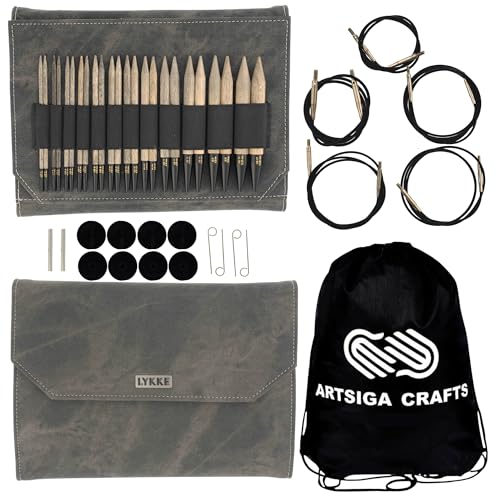
Lykke Driftwood Interchangeable: Best Wood Set
Lykke Driftwood needles are crafted from strong birch wood, providing a warm, tactile experience that metal needles simply cannot replicate. They are exceptionally smooth, yet they offer just enough "bite" to keep your stitches from sliding off accidentally.
New knitters often find that wooden needles are more forgiving. If you are prone to dropping stitches, the gentle grip of the birch will hold your work securely while you learn to manage your tension.
These needles are also incredibly lightweight, which makes them ideal for knitters who suffer from hand fatigue or joint pain. If you plan on knitting for hours at a time, the ergonomic lightness of wood will be a welcome relief.
Bottom line: If you prefer a quiet, comfortable knitting experience, the Lykke Driftwood set is an unmatched choice.

HiyaHiya Steel Interchangeable: Best for Speed
HiyaHiya Steel needles are engineered for the knitter who wants to move fast. The high-quality stainless steel is polished to a high sheen, allowing stitches to glide off the needle with almost zero resistance.
The join between the needle and the cable is famously seamless, which prevents your yarn from snagging—a common annoyance for beginners using cheaper needles. This smoothness is essential when working with fine, multi-ply yarns that tend to catch on even the smallest burr.
Because these needles are so slick, they are best suited for knitters who have already developed a moderate, consistent tension. If you are still a very loose knitter, you might find that your stitches slide off the needles too easily.
Bottom line: Choose HiyaHiya if you want a professional-grade tool that facilitates speed and prevents snagging.
Knitter’s Pride Ginger Set: Best Ergonomics

The Knitter’s Pride Ginger set is a masterclass in thoughtful design, featuring a unique, tapered shape that feels natural in the hand. The warm, laminated birch wood is finished with a smooth surface that feels luxurious and prevents yarn drag.
These needles are specifically designed to reduce hand strain during long sessions. The transition from the needle body to the tip is gradual, which helps maintain a uniform gauge even if your hands get tired.
The aesthetic of the Ginger set is also a major draw, with its rich, dark wood tones. While beauty doesn’t change your gauge, enjoying the look and feel of your tools is a vital part of the creative process.
Bottom line: If comfort is your primary concern, the ergonomic design of the Ginger set is worth every penny.
Clover Takumi Interchangeable: Best for Grip
Clover Takumi needles are made from bamboo, which provides the most grip of any material on this list. This makes them the ultimate "training wheels" for a beginner who is terrified of losing stitches.
Because bamboo is a natural fiber, it has a slight texture that keeps your yarn exactly where you want it. This is particularly helpful when you are working with slippery materials like silk or superwash merino that can be difficult to control on metal needles.
The tradeoff is that the tips are not as sharp as the ChiaoGoo or HiyaHiya sets. You may find them slightly more difficult to use for complex lace patterns or intricate cabling where precision tip work is required.
Bottom line: If you are struggling to control your yarn, the grip of Clover Takumi will provide the stability you need to gain confidence.
Understanding Interchangeable Needle Systems
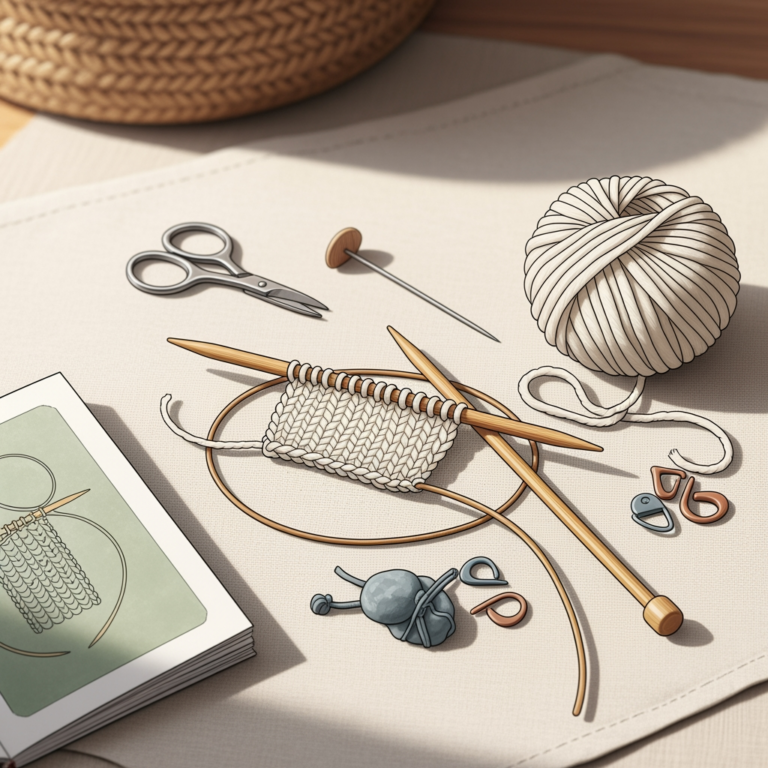
An interchangeable system consists of needle tips that screw onto flexible cables, allowing you to customize your needle length for any project. This is a massive upgrade from buying fixed circular needles, as you only need to own one set of tips to cover almost any gauge.
The key to success is the "key"—a small metal pin used to tighten the connection between the tip and the cable. Always ensure the connection is fully tightened, or you risk the needle unscrewing mid-row, which can lead to dropped stitches.
Think of your set as a modular toolkit. You can mix and match tip sizes and cable lengths to create anything from a small hat to a massive, wide-bottomed blanket.
Why Material Choice Matters for New Knitters
Your choice of material directly affects how your yarn interacts with your tools. Metal needles are generally faster and better for sticky fibers like mohair or unspun wool, while wooden needles provide grip for slippery yarns.
If you are a beginner, you are likely still developing your "muscle memory" for tension. A material that is too slick can lead to runaway stitches, while a material that is too grippy might make you feel like you are wrestling with your work.
Consider your personal knitting style: are you a "flicker" who moves fast, or a "thrower" who takes deliberate, measured stitches? A thrower often benefits from the grip of wood, while a flicker will appreciate the speed of metal.
Key Differences Between Wood and Metal Needles
Metal needles are durable, sharp, and consistent, but they can be cold to the touch and slippery. They are the standard for professional knitters who need speed and precision for intricate work.
Wooden needles are warm, quiet, and offer a tactile, organic feel. They are excellent for beginners because they prevent the yarn from sliding off, but they can be more fragile and prone to snapping if you are a very tight knitter.
If you find that your stitches are consistently too tight, try switching to a slicker metal needle to help your yarn move more freely. Conversely, if your stitches are too loose, a wooden needle can help you maintain better control over your tension.
Essential Tips for Maintaining Your Needle Set
Always store your needles in their designated case to prevent the tips from being damaged or scratched. A scratched needle tip can snag your yarn, which is a constant source of frustration during a project.
Periodically check the cable connections for any buildup of fiber or dust. A clean connection ensures a smooth transition as your stitches move from the cable onto the needle.
Finally, treat your cables with care by avoiding extreme heat or sharp objects. If your cable does become kinked, a quick soak in warm water can often help straighten it out and restore its original flexibility.
Investing in a high-quality interchangeable needle set is the single most effective way to improve your knitting experience. Whether you choose the speed of steel or the comfort of birch, remember that the best needles are the ones that make you want to pick up your project again tomorrow. Start with a set that matches your current tension, and don’t be afraid to experiment with different materials as your skills evolve. Happy knitting, and may your stitches always remain even and your cables forever tangle-free.