7 Best Replacement Felting Needles For Detail Work
Master intricate needle felting with our top 7 replacement needles. Discover the best tools for precision, texture, and detail in your next fiber art project.
Needle felting is the sculptural cousin of knitting, requiring the same patience and eye for detail that you would bring to a complex cable pattern. While your choice of wool roving sets the texture, the needle you select determines the precision of your final form. Finding the right tool can turn a frustrating, snag-prone project into a seamless experience. These seven needle types represent the gold standard for crafters looking to elevate their fiber sculpting.
Clover Felting Needle Tool: Best for Precision Work


The Clover tool is a staple in many studios because it mimics the ergonomic comfort of a well-balanced knitting needle. Its multi-needle configuration allows you to cover large surface areas quickly, but the real magic lies in its ability to be customized.
For those working on intricate 3D figures, the ability to swap individual needles is a game-changer. If you are refining the shape of a small animal’s ear, you can remove extra needles to focus your pressure on a single point.
Keep in mind that the plastic housing can feel bulky if you are used to the tactile feedback of a single needle. However, for long sessions of base-building, the comfort it provides to your wrists is worth the trade-off.
Groz-Beckert 40 Gauge Needles: The Industry Standard

Groz-Beckert is widely considered the professional choice for a reason. These needles are crafted with incredible consistency, meaning you won’t encounter the erratic barbs that often plague cheaper, mass-produced alternatives.
A 40-gauge needle is the perfect middle-ground for most projects. It is fine enough to leave minimal holes in your work, yet sturdy enough to move wool fibers effectively without snapping under moderate tension.
If you are transitioning from basic shapes to more refined, realistic sculptures, this should be your go-to. Think of these as the "size 4 needles" of the felting world—reliable, versatile, and essential for your kit.
Schmetz Star Needles: Superior Detail Performance
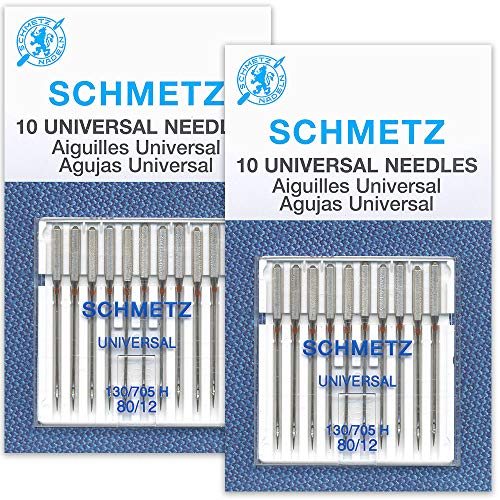
The unique star-shaped cross-section of these needles sets them apart from standard triangular options. Because they have more surface area for the barbs, they grab wool fibers from four directions instead of three.
This results in a much faster felting process, which is ideal when you are trying to attach small appendages or surface details. The efficiency is unmatched, saving you from the repetitive motion fatigue that can set in during long projects.
Be careful when using these on very delicate fibers, as they can sometimes leave larger entry marks if you aren’t careful. Use them for structural work where speed and density are your primary goals.
Ashford Fine Felting Needles: Best for Soft Wool

Ashford needles are engineered with a gentler touch, making them the preferred choice for fine merino or high-loft fibers. When you are working with luxury wools that have a delicate staple length, you don’t want a harsh, aggressive needle that will shred the material.
These needles move the fibers into place smoothly, preserving the integrity of the wool’s natural crimp. This is vital when you want a smooth, polished finish on the surface of your sculpture.
If you find that your wool is becoming frizzy or "pilled" while you work, your needle is likely too aggressive. Switching to an Ashford fine needle often solves this issue immediately.
Hamanaka Regular Needles: Ideal for Sculpting Work
Hamanaka needles are designed with the Japanese aesthetic of precision in mind. They are slightly shorter than standard industrial needles, which provides better control for small, delicate movements.
When you are sculpting facial features or tiny paws, that extra bit of control is everything. They feel intuitive in the hand, allowing for the kind of "sculpting by touch" that makes felting feel like working with clay.
They are less prone to bending than longer, thinner needles, which makes them excellent for beginners who are still learning how to manage their entry angles. They are a reliable workhorse for any detailed project.
Bear Creek 42 Gauge Needles: Best for Micro Detail
When you reach the stage of adding whiskers, eyes, or fine textures, a 42-gauge needle is your best friend. These are incredibly thin, designed specifically to manipulate a very small number of fibers at a time.
Using a needle this fine requires a gentle hand, as they are inherently more fragile than their 36 or 38-gauge counterparts. Treat them with the same care you would accord a set of delicate lace-weight knitting needles.
They are not meant for bulk felting; trying to force them through a dense core will result in a snap. Use them exclusively for the final "polishing" pass on your work.
Dimensions Replacement Needles: Best for Beginners

If you are just picking up your first felting project, you likely don’t need highly specialized tools yet. Dimensions needles are accessible and forgiving, providing a great baseline for learning how the barbs interact with the wool.
They are typically sold in kits, making them an easy entry point for someone who isn’t ready to invest in professional-grade gear. They are durable enough to survive the "learning curve" of a new crafter.
Once you start to notice that your needles aren’t catching the wool as effectively as they once did, that is your cue to upgrade. Think of these as the "bamboo needles" of felting—great for learning the mechanics before you move on to more specialized steel.
Understanding Felting Needle Gauges and Barbs

- Gauge: The higher the number, the thinner the needle. A 36-gauge is thick and aggressive, while a 42-gauge is ultra-fine.
- Barbs: These are the tiny notches that pull the wool fibers through the core of your project. More barbs mean faster felting, but potentially larger holes in the surface.
- Shapes: Triangular needles are standard, while star or spiral needles offer more surface area for faster, denser felting.
How to Prevent Needle Breakage During Projects
The most common cause of needle breakage is lateral pressure. You must always enter and exit the wool at the exact same angle; if you wiggle the needle while it is buried in the wool, you are putting immense stress on the metal.
Think of it like knitting with a needle that has a slight hook—if you pull sideways, it will snap. Always maintain a straight, vertical motion to keep the needle’s shaft intact.
If you feel resistance, don’t force it. Move to a slightly thicker needle to open up the fibers before returning to your finer, detail-oriented tool.
Essential Tips for Maintaining Your Needle Tools
Even the best needles will eventually dull, much like scissors losing their edge. You can extend their life by keeping them clean and free of oils from your hands, which can attract dust and grime to the barbs.
Store your needles in a dry place to prevent microscopic rust, which creates drag and ruins the finish of your wool. If you notice your needle "dragging" or making a squeaking sound, it is time to replace it.
Finally, keep a magnet in your workspace to safely store needles when not in use. It prevents them from rolling off the table and getting stepped on, which is the most common cause of "accidental" breakage.
Selecting the right felting needle is a process of balancing speed, precision, and the specific needs of your wool. By understanding how gauges and shapes impact your work, you can move from basic shapes to highly detailed fiber art with confidence. Don’t be afraid to experiment with different sizes as your project evolves from a dense core to a refined surface. With the right tools in hand, your creative possibilities in the fiber arts are truly endless.