6 Best Yarn Bowls For Tension Control To Try
Discover the top six yarn bowls designed to improve tension control. Learn how these essential tools prevent tangles and streamline your knitting projects.
Every knitter knows the frustration of a yarn ball skittering across the floor, picking up dust and tangles just as you reach the complex part of a lace chart. A yarn bowl acts as a dedicated anchor, keeping your fiber clean and feeding it at a consistent rate to your needles. By managing the drag on your yarn, these simple tools become the secret weapon for achieving perfectly even, professional-looking gauge. Investing in the right bowl transforms a messy knitting session into a rhythmic, meditative experience.
Ceramic Yarn Bowl by Yarn Valet: Best for Stability


When you are working with heavy, rustic wools that tend to pull, you need a bowl that won’t budge. The Yarn Valet ceramic bowl offers significant heft, ensuring it stays firmly planted on your side table even when you are pulling from a large, center-pull cake.
This weight is a massive advantage for knitters who suffer from "yarn-chase," where the ball rolls away and tightens the strand mid-stitch. By keeping the bowl stationary, you eliminate the sudden jerks that lead to uneven tension in your fabric.
The smooth interior finish is equally important. It prevents snagging, which is vital when you are working with delicate single-ply yarns or fibers with a high halo like mohair.
Furls Crochet Wooden Yarn Bowl: Premium Craftsmanship

If you appreciate the tactile joy of quality tools, a Furls wooden bowl is a piece of art that earns its place in your knitting kit. These bowls are carved from high-quality hardwoods, providing a warm, organic feel that synthetic materials simply cannot replicate.
Beyond the aesthetics, the wood grain is polished to a glass-like finish. This is crucial for preventing friction, allowing your yarn to glide effortlessly through the spiral cut-out.
While these are an investment, they are built to last a lifetime if maintained properly. They are ideal for the dedicated maker who wants a permanent, reliable station for their long-term projects.
Nagina International Rosewood Bowl: Best for Travel
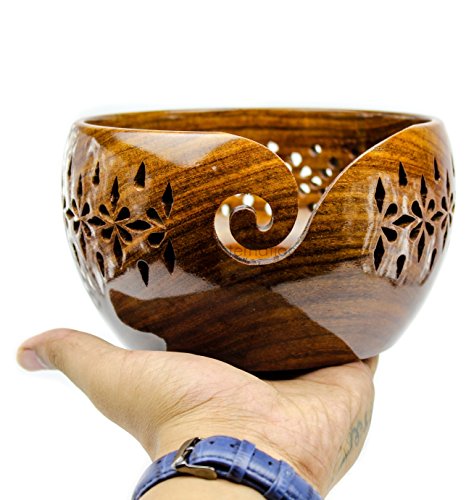
Travel knitting requires tools that are as portable as your circular needles and project bag. The Nagina International rosewood bowl is lightweight and compact, making it easy to tuck into a tote without adding unnecessary bulk.
Despite its portability, rosewood is naturally dense and durable. It can withstand the occasional bump in your luggage better than fragile ceramic alternatives.
It features a traditional swirl design that secures your yarn effectively. If you are a commuter or a frequent workshop attendee, this bowl provides the stability you need without the weight that usually accompanies it.
Yarn Tree Plastic Yarn Bowl: Best Budget Option
Not every knitter wants to spend a premium on a stationary tool, and that is perfectly fine. The Yarn Tree plastic bowl is an incredibly practical choice for beginners or those who prefer a lightweight, shatterproof option.
The primary benefit here is utility; it does exactly what it is designed to do without any fuss. If you are prone to dropping things or have a busy household with pets, this is a worry-free choice that won’t break if knocked off the table.
While it lacks the weight of ceramic or the beauty of wood, its functionality is undeniable. It provides a consistent feed and keeps your yarn contained just as well as its more expensive counterparts.
Fiber Artist Supply Co. Maple Bowl: Best Durability

Durability is the hallmark of a tool you intend to use for decades. The Fiber Artist Supply Co. maple bowls are known for their robust construction and resistance to the wear and tear of daily knitting.
Maple is a hard, tight-grained wood that resists splintering over time. For a knitter who handles a high volume of projects, this bowl offers a reliable, snag-free surface that remains smooth even after years of use.
The design is straightforward and functional, focusing on a deep basin that accommodates large skeins of yarn. It is a workhorse tool for the serious crafter who values longevity above all else.
KnitPal Portable Yarn Bowl: Best for On-the-Go Knit

If your knitting life happens in coffee shops, parks, or on public transit, the KnitPal portable bowl is designed for your lifestyle. Its design focuses on being lightweight and easy to manage in tight spaces.
The key feature is its clever portability, which doesn’t sacrifice the essential spiral cut-out needed for smooth yarn flow. It keeps your yarn contained in a small footprint, preventing it from rolling into the dirt or under seats.
This bowl is particularly useful when you are working with multiple colors for stranded colorwork. You can easily set up two or three of these to keep your strands separated and tangle-free while you work.
Why Yarn Bowls Are Essential for Tension Control

Tension is the "invisible" element that defines the quality of your finished garment. If your yarn is constantly snagging or dragging because it is rolling around the floor, your stitches will inevitably become uneven.
A yarn bowl provides a consistent point of resistance. By guiding the yarn through the opening, you ensure that the tension applied to the strand remains constant from the beginning of the row to the end.
- Prevents Tangles: Stops yarn from knotting during complex patterns.
- Keeps Fiber Clean: Protects your expensive hand-dyed yarns from floor dust and pet hair.
- Improves Speed: Allows for a smooth, rhythmic flow that increases your knitting pace.
Ceramic vs. Wooden Yarn Bowls: Which Suits You Best
Choosing between ceramic and wood often comes down to your personal knitting environment. Ceramic bowls are generally heavier, making them superior for knitters who tug hard on their yarn or use heavy, bulky-weight fibers.
Wooden bowls, conversely, offer a warmer, more tactile experience. They are less prone to shattering if dropped, making them a safer bet for those who knit in high-traffic areas or around children.
- Ceramic: Best for stability, heavy yarns, and stationary home knitting.
- Wooden: Best for portability, durability, and those who prefer natural materials.
How to Properly Feed Yarn Through Bowl Openings
The way you feed your yarn through the spiral or straight cut-out significantly impacts your tension. For most projects, you want the yarn to flow freely without feeling "choked" by the opening.
If you find the yarn is dragging too much, check for any rough spots or burrs in the opening. A quick rub with a fine-grit sandpaper or a bit of wax can often smooth out a problematic channel.
Always ensure your yarn cake is sitting flat in the bottom of the bowl. If it flips over, it can cause the yarn to catch on the edges of the bowl, leading to sudden, frustrating tension spikes.
Maintenance Tips to Keep Your Yarn Bowl Smooth
To keep your yarn bowl working perfectly, treat it like the fine tool it is. Wooden bowls benefit from an occasional rub with a food-safe wood conditioner or wax to prevent the wood from drying out and splintering.
For ceramic bowls, keep the interior free of dust and debris. A quick wipe with a microfiber cloth before you start a new project ensures that your yarn will glide smoothly without picking up any grit.
Avoid storing your bowls in extreme temperatures or direct sunlight, which can crack wood or cause ceramic to become brittle. With minimal care, these tools will serve you through countless sweaters, socks, and shawls.
Selecting a yarn bowl is about finding the balance between your knitting style and your workspace needs. Whether you prioritize the heavy stability of ceramic or the portable elegance of wood, the right tool will undoubtedly improve your consistency. Don’t be afraid to experiment with different materials to see what feels best in your hands. Happy knitting, and may your yarn always flow smoothly from your bowl to your needles.