6 Best Self-healing Cutting Mats For Bag Assembly
Discover the top 6 self-healing mats for bag assembly. Learn how these durable surfaces protect your blades and ensure precise cuts for professional results.
Bag making requires the same precision as knitting a complex cable sweater, where a single misaligned stitch can compromise the entire structure. A high-quality self-healing mat acts as the foundation for your workspace, ensuring that every cut is clean and accurate. Much like choosing the right needle material for your yarn, selecting the correct mat depends on your specific project needs. These six mats represent the best options for makers who demand professional results from their home studios.
Olfa RM-CG Rotary Mat: The Industry Gold Standard


When you spend hours drafting patterns and cutting heavy-duty canvas or waxed cotton, you need a surface that doesn’t buckle. The Olfa RM-CG has earned its reputation through sheer consistency, much like a classic set of stainless steel needles that never warp.
The surface is engineered to "heal" by allowing the mat material to close back up after a rotary blade passes through it. This prevents the deep grooves that can cause your blade to skip or veer off-course during a long, straight cut.
If you are working with thick interfacing or heavy leatherette, this mat provides the resistance you need to keep your edges crisp. It is a professional-grade investment that pays for itself by extending the life of your rotary blades significantly.
Fiskars Self-Healing Mat: Best Budget-Friendly Pick

If you are just starting to branch out from knitting into bag construction, the Fiskars mat is a reliable entry point. It offers a solid, dependable surface that handles standard cottons and light interfacing without breaking the bank.
Think of this as the "aluminum needle" of the mat world—it’s functional, widely available, and gets the job done without unnecessary frills. While it may not have the extreme longevity of a top-tier professional mat, it provides excellent value for the occasional maker.
The grid markings are clear and high-contrast, which is a lifesaver when you are tired after a long day of knitting and need to make quick, accurate cuts. Just be mindful that heavy-duty, repetitive cutting on the exact same line will eventually show wear faster than on more expensive boards.
Dahle Vantage Self-Healing Mat: Superior Durability
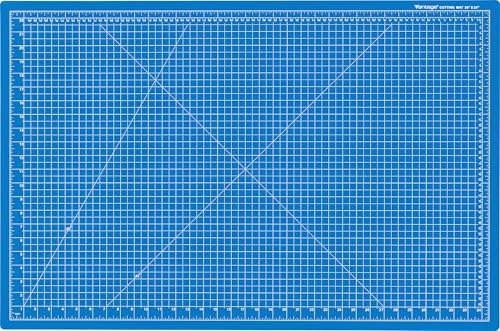
The Dahle Vantage is built for those who treat their studio like a high-production workshop. Its multi-layered construction is specifically designed to withstand the pressure of heavy-duty rotary cutters without losing its structural integrity.
What makes this mat stand out is its resilience; it resists the "memory" of past cuts far better than its competitors. In the same way that a high-twist wool yarn resists pilling, this mat resists the surface degradation that often plagues cheaper cutting surfaces.
If you are cutting multiple layers of fabric at once—a common requirement in bag assembly—this mat provides the necessary stability. It is the best choice for makers who want to buy one tool and have it last for years.
Alvin Professional Grade Mat: Best Large Workspace

Bag making often involves cutting large panels for tote bags or weekenders, which can be frustrating on a cramped surface. The Alvin Professional Grade mat offers expansive sizing options that allow you to lay out your entire pattern without folding your fabric.
Having a large, uninterrupted workspace is similar to using a long circular needle for a large blanket; it prevents the fabric from dragging and distorting. When your fabric is fully supported, your cuts are naturally more accurate.
The mat is heavy enough to lay perfectly flat, which is critical for avoiding the "shifting" that ruins precision cuts. If you have the table space, investing in a larger Alvin mat will dramatically improve your workflow efficiency.
Arteza Self-Healing Cutting Mat: Best Color Variety

Sometimes, the aesthetic of your workspace can influence your creativity, and Arteza understands that. Their mats come in a range of colors, which can actually help with visibility depending on the fabric you are using.
For example, if you are working with dark, navy, or black fabrics, a lighter-colored mat can provide the contrast needed to see your grid lines clearly. This is akin to choosing a light-colored yarn when working in low lighting to ensure you can see your stitch definition.
Beyond the color, the mat is double-sided, offering a secondary grid that doubles the usable surface area. It is a stylish and practical choice for the maker who wants a workspace that is as vibrant as their yarn stash.
Westcott Self-Healing Mat: Best For Precision Work

Westcott is known for its focus on extreme accuracy, and their mats are no exception. The grid markings are exceptionally sharp, making them ideal for the intricate measuring required for bag pockets, straps, and hardware placement.
When you are measuring to the millimeter for a bag clasp, you need a grid that is printed with absolute precision. This mat is for the perfectionist who measures twice and cuts once, much like a knitter who swatches meticulously to ensure their gauge is spot on.
The surface feel is slightly firmer than other mats, which provides excellent feedback when you are using a sharp blade. It is a fantastic tool for those who prioritize technical accuracy above all else.
Why Self-Healing Mats Are Essential For Bag Making
Unlike knitting, where mistakes can be undone by ripping back, cutting fabric is a permanent act. A self-healing mat provides a stable, cushioned surface that protects your table and, more importantly, your blade.
Without a self-healing surface, your blade would dull almost instantly upon hitting a hard tabletop. A dull blade is dangerous because it requires more force to cut, which increases the likelihood of the blade slipping and causing injury.
Furthermore, the grid lines act as a built-in guide for squaring up your fabric. Proper grain alignment is just as vital for a bag’s structure as it is for ensuring a sweater doesn’t twist at the side seams.
How To Measure And Cut Fabric For Bag Construction
Always start by pressing your fabric flat; wrinkles are the enemy of accuracy. Use your mat’s grid to align the straight grain of your fabric parallel to the printed lines, ensuring everything is square before you bring your cutter near the material.
When cutting, apply firm, even pressure to your acrylic ruler to keep the fabric from sliding. Stand directly over your work to avoid parallax errors, where the angle of your eyes makes the measurement look slightly off.
- Always use a sharp blade: A dull blade drags the fabric.
- Cut away from your body: This is a non-negotiable safety rule.
- Use weights: If your fabric is slippery, use pattern weights to hold it in place.
Essential Maintenance Tips To Extend Mat Lifespan
Just as you wouldn’t leave fine wool out in direct sunlight, you shouldn’t leave your cutting mat in a hot car or near a heater. Heat can cause the mat to warp, which ruins the flatness required for accurate cutting.
Clean your mat periodically with a soft cloth and mild soap to remove fabric fibers and lint. These small particles can get embedded in the "healed" cuts and create bumps that interfere with your next project.
Avoid cutting in the same spot repeatedly. Rotate your mat or shift your project around to ensure even wear across the entire surface. This is similar to rotating your knitting needles to ensure even wear on the finish.
Safety First: Proper Blade Care For Fiber Artists
Your rotary cutter is a precision tool that deserves the same respect as a high-end pair of knitting scissors. Always retract the blade immediately after use, even if you are only stepping away for a second to grab a cup of tea.
Change your blades frequently. A common mistake is trying to "nurse" a dull blade through a project, which leads to jagged edges and increased risk of slips. If you notice you’re having to press harder than usual, it is time for a fresh blade.
Keep a dedicated container for used blades—never toss them directly into the trash where they can cut you or someone else. Treat your tools with care, and they will provide the foundation for years of successful bag-making projects.
Choosing the right self-healing mat is a foundational step that mirrors the care you put into selecting your yarn and needles. Whether you prioritize durability, size, or budget, the right surface will make your bag assembly process smoother and more enjoyable. Take the time to maintain your mat, and it will remain a reliable companion for your creative journey. Happy making, and may your cuts always be as precise as your stitches.