7 Best Sewing Machine Attachments For Automatic Buttonholes
Master automatic buttonholes with these 7 essential sewing machine attachments. Upgrade your precision and finish garments like a pro with ease and efficiency.
Mastering the buttonhole is the final hurdle that separates a handmade garment from a truly professional-looking piece. While we spend hours perfecting our gauge and blocking our lace, a sloppy buttonhole can ruin the entire aesthetic of a cardigan. Choosing the right sewing machine attachment is essential for achieving that clean, store-bought finish on your knitted or sewn projects. Here are the seven best attachments to ensure your closures are as polished as your stitches.
Singer R Buttonhole Foot: Best Overall Choice
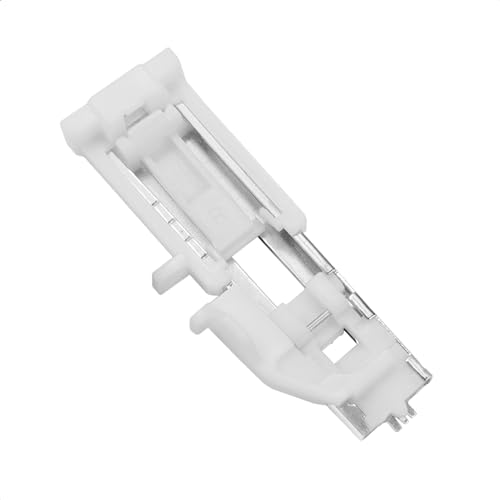

The Singer R foot is the workhorse of the sewing world, much like a reliable set of nickel-plated needles that never lets you down. It is designed to work with a wide range of Singer machines, making it the most accessible option for someone just starting to add closures to their hand-knit jackets.

This foot uses a simple sliding mechanism to measure the button size, ensuring the stitch length is perfectly uniform every time. It is particularly effective for those working with medium-weight wool blends that aren’t overly bulky or delicate.
The tradeoff here is that it lacks the high-tech sensors found on premium models, so you must ensure your fabric is fed evenly. If you are working with a very lofty, fluffy yarn, you might find it struggles slightly compared to more specialized feet.
Brother Sliding Buttonhole Foot: Top Precision

Brother’s sliding buttonhole foot is a masterclass in mechanical consistency. It operates on a track system that allows you to set the exact diameter of your button, which is vital when you’ve spent weeks knitting a sweater and don’t want to risk a button falling out.
This attachment excels at creating tight, dense "bartacks" at the ends of the buttonhole. For those who knit with high-twist yarns that tend to fray, this precision prevents the buttonhole from stretching out over time.
While it offers incredible accuracy, it requires a bit of a learning curve to snap it into place correctly. Take the time to practice on a swatch of your project yarn before committing to the final garment.
Janome Automatic Buttonhole Foot: Best for Ease
Janome has a knack for making complex tasks feel intuitive, much like following a well-written, clear knitting pattern. Their automatic buttonhole foot is designed for the maker who wants a "set it and forget it" experience.
You simply place your button in the back of the foot, and the machine calculates the stitch length automatically. This is a lifesaver when you are finishing a multi-piece project and your patience for technical adjustments is wearing thin.
The only downside is that it is less forgiving with extreme fabric thicknesses. If your button band is exceptionally heavy, you may need to manually guide the fabric to ensure the needle doesn’t skip stitches.
Juki Sensor Buttonhole Foot: Professional Pick
If you’ve moved beyond basic garments and are now tackling tailored coats or structured pieces, the Juki sensor foot is the gold standard. It uses electronic sensors to detect the thickness of the fabric, adjusting the stitch density accordingly.
This is the equivalent of switching from wooden needles to high-end carbon fiber; it feels like a professional upgrade. It handles the transition from a thin button band to a thicker collar seam with surprising grace.
Because it relies on sensors, it is a bit more sensitive to lint and dust. Keep your sewing area as clean as your knitting bag to ensure the sensors remain responsive.
Bernina Buttonhole Foot 3A: Premium Accuracy

Bernina is famous for their engineering, and the 3A foot is no exception. It features a built-in optical sensor that tracks the movement of the fabric, ensuring that the left and right sides of the buttonhole are perfectly symmetrical.
For a knitter who obsesses over matching stripes or intricate colorwork, this level of symmetry is non-negotiable. It provides a level of detail that makes your handmade items look like they came from a high-end boutique.
The primary tradeoff is the price point, as these attachments represent a significant investment. Only choose this if you are a frequent garment maker who values absolute perfection in every closure.
Husqvarna Viking Sensor Foot: Best for Knits
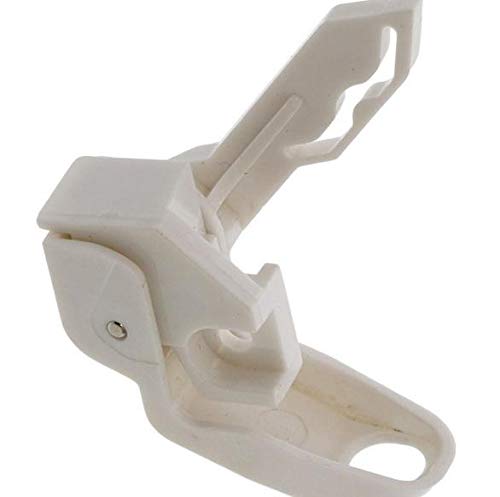
Working with knit fabric—or actual hand-knits—requires a delicate touch to prevent the fabric from stretching out of shape. The Husqvarna Viking sensor foot is specifically designed to minimize pressure, preventing that dreaded "wavy" look around the buttonhole.
It is incredibly gentle, making it my top pick for delicate fibers like alpaca or cashmere. It allows the fabric to feed naturally without forcing it, which preserves the integrity of your stitches.
Always remember to use a stabilizer underneath your knit fabric before sewing. Even the best foot cannot prevent a loose knit from distorting if the tension isn’t supported by a temporary backing.
Pfaff Sensormatic Foot: Best for Heavy Fabrics
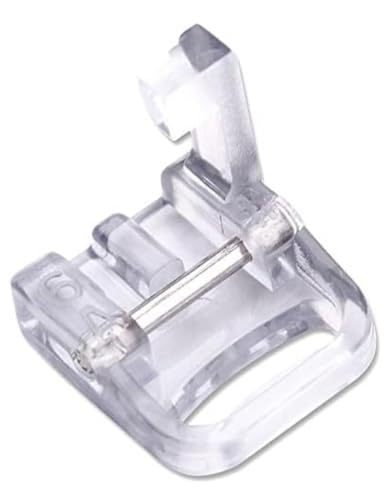
When you are working with a heavy-gauge wool or a thick felted project, you need a foot that can handle bulk without stalling. The Pfaff Sensormatic foot is designed to glide over thick seams and dense textures with ease.
Its unique design provides consistent pressure across the entire length of the buttonhole. This prevents the needle from getting "stuck" in the middle of a stitch, which is a common frustration when working with bulky, hand-knit button bands.
Because it is built for heavy lifting, it can sometimes feel a bit overkill for lightweight silk or lace-weight projects. Use it specifically for your heavy winter outerwear and thick cardigans.
Understanding Buttonhole Foot Compatibility Tips
Before you purchase any attachment, check your machine’s manual for the specific shank type. Sewing machine feet are not universal, and trying to force a foot that isn’t designed for your machine will result in broken needles.
- Check your shank height: Low, high, and slant shanks are not interchangeable.
- Verify electronic compatibility: Some sensor feet only work with specific computerized models.
- Test the feed: Always do a test run on a swatch made of the same yarn and stabilizer as your project.
Buying the wrong foot is like trying to use a cable needle that is two sizes too large; it’s a recipe for frustration. When in doubt, contact the manufacturer or a local sewing machine technician to confirm compatibility.
How to Calibrate Your Machine for Buttonholes
Calibration is the secret to a professional finish. Start by ensuring your machine is set to the correct stitch width and length as recommended by the foot’s instructions.
Adjust the presser foot pressure if your machine allows it. For hand-knits, you generally want less pressure to avoid crushing the loft of the yarn.
Finally, check your thread tension. A buttonhole that is too tight will pucker your fabric, while one that is too loose will look messy and unraveled. Practice on a scrap of your project fabric until the stitches look balanced on both sides.
Troubleshooting Common Buttonhole Stitch Issues
If your buttonhole looks uneven, the most common culprit is inconsistent fabric feeding. Ensure you are using a stabilizer, as it provides the structure your machine needs to move the fabric smoothly.
- Skipped stitches: Often caused by a dull needle; change your needle every project.
- Puckering: Usually a sign that your top tension is too high or your fabric isn’t stabilized.
- Uneven sides: Check that your sensor is clean and that the fabric isn’t catching on the machine bed.
Don’t be afraid to walk away if you’re frustrated. Just like when you drop a stitch in a complex lace chart, it’s better to take a breath and come back to the machine with fresh eyes.
Investing in the right buttonhole attachment is just as important as choosing the right yarn for a sweater. With these tools, you can ensure that your hard work is finished with the precision it deserves. Always remember to practice on swatches, keep your machine clean, and don’t rush the final steps of your project. Happy sewing, and may all your buttons fit perfectly.