6 Best Blocking Boards For Square Blankets To Try
Discover the top 6 blocking boards for square blankets. This guide evaluates durability and size to help you achieve professional, perfectly shaped results.
Blocking is the quiet, transformative magic that turns a bundle of slightly uneven stitches into a professional-grade heirloom. When you invest dozens of hours into a square blanket, the final finish depends entirely on how you set those fibers to rest. Choosing the right blocking board ensures your corners are crisp and your edges remain perfectly straight. Here are the best tools to help you achieve that polished, store-bought look.
KnitIQ Extra Thick Blocking Mats: Best Overall


These mats are a favorite in my studio because they offer the perfect density for holding heavy pins without wobbling. When you are blocking a dense wool blanket, you need a surface that won’t flex or collapse under the tension of your blocking wires.
The standout feature here is the extra thickness, which allows for deep pin penetration. If you use long T-pins, you want them to stay upright and secure rather than tilting over. This stability is crucial when you are trying to force a stubborn, non-superwash wool to hold a perfect 90-degree corner.
The grid lines printed on these mats are also incredibly helpful for maintaining symmetry across large surfaces. While they are a bit of an investment, the durability makes them a long-term companion for any serious knitter. My advice: if you plan on blocking heavy blankets regularly, the stability of these mats is worth every penny.
Knitter’s Pride Lace Blocking Mats: Best Value

If you are just starting your journey into lace or geometric blankets, you don’t necessarily need the most expensive professional gear. These mats provide a reliable, sturdy surface that gets the job done without breaking the bank.
They are lighter than the premium options, which makes them easy to tuck away in a closet when not in use. While they might not be as thick as the top-tier boards, they are perfectly sufficient for standard-weight yarns. They feature a clear grid that is excellent for keeping track of your stitch repeats.
Think of these as the reliable workhorse of your knitting kit. They handle the task of blocking square blankets with ease, provided you aren’t using extremely heavy, water-logged wool that requires industrial-strength support. For the average knitter, these offer the best balance of price and performance.
Cocoknits Knitter’s Block Kit: Best Modular Set

This system is brilliant because it is designed to grow with your projects. Instead of buying individual tiles, you get a modular board that can be configured into different shapes depending on what you’re working on.
The inclusion of the specialized pins and the heat-resistant surface is a game-changer for those who like to steam-block. If you are working with acrylic or delicate blends, having a surface that won’t warp under heat is a significant advantage. It feels like a more "grown-up" toolset for the dedicated crafter.
The tradeoff is the smaller surface area per unit, which means you might need to buy a few kits to cover a full-sized bed blanket. However, for smaller baby blankets or square motifs, the precision and ease of storage are unmatched. It’s an elegant solution for knitters who value organization and aesthetic.
Hephaestus Extra Large Foam Tiles: Best for Size
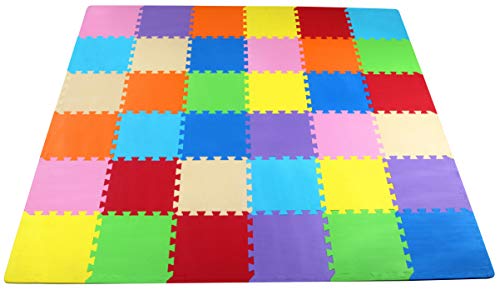
When you are blocking a massive, king-sized blanket, the last thing you want is to be constantly rearranging your mats. These extra-large tiles cover significant ground quickly, allowing you to pin out a large project in a single session.
Because they are larger, you have fewer seams to worry about across the center of your work. Seams in your blocking surface can sometimes cause "dips" in your fabric if you aren’t careful, so minimizing them is a pro move. These are ideal for those who have a dedicated floor space to leave a project pinned for several days.
The foam is dense enough to hold its shape, but keep in mind that they take up a lot of storage space. If you have a dedicated craft room, these are the ultimate choice for efficiency. They turn the chore of blocking a large blanket into a much faster process.
Boye Interlocking Blocking Boards: Best for Budget
These are the classic, no-nonsense choice for anyone who needs to get the job done on a shoestring budget. You can often find them at local big-box stores, making them incredibly accessible for the last-minute project finisher.
They interlock like puzzle pieces, which is a simple and effective design. While they may show wear and tear faster than premium foam, they are perfectly functional for standard blocking needs. If you are a beginner, starting here is a great way to learn the ropes without a heavy financial commitment.
Don’t expect them to last for a decade of heavy, daily use, but they will certainly get you through your first dozen blankets. They are lightweight, portable, and get the job done. Sometimes, the simplest tool is exactly what you need to get the project finished.
ArtBin Foam Blocking Tiles: Best for Durability
If you are the type of knitter who is hard on their tools, you will appreciate the resilience of these tiles. They are designed to withstand repeated pinning and unpinning without crumbling or losing their structural integrity.
The material is slightly firmer than standard foam, which means your pins won’t leave gaping holes that ruin the board over time. This makes them a fantastic long-term investment for someone who blocks projects every few weeks. They maintain their flat, even surface even after years of use.
They are a bit pricier than the budget options, but you pay for the peace of mind that your board won’t need replacing next season. If you treat your knitting tools as equipment rather than disposables, these are the way to go. They offer the kind of reliability that makes the blocking process feel effortless.
Why Square Blankets Require Proper Blocking Mats
Blocking is the act of using moisture and tension to set the shape of your stitches. Without a proper board, a square blanket will almost always end up with wonky, rounded edges or uneven tension that makes the piece look unfinished.
When you block a blanket, you are essentially "training" the fibers to relax into their final position. If you just lay the blanket out on a bed or a carpet, you cannot pin it with the necessary tension to ensure the corners are truly square. A proper mat allows you to use pins or wires to stretch the blanket exactly where it needs it.
Think of it like the final press on a tailored garment. You wouldn’t skip the ironing, so don’t skip the blocking. A good mat ensures your hard work isn’t lost to gravity or uneven drying.
How to Choose the Right Material for Your Mats
Not all foam is created equal, and the type of material you choose will affect your blocking experience. Most mats are made from EVA foam, which is lightweight and water-resistant, making it ideal for wet blocking.
- High-Density Foam: Best for heavy-weight wools; pins stay vertical and secure.
- Low-Density Foam: Good for lightweight lace, but pins may lean under tension.
- Heat-Resistant Surfaces: Necessary if you plan to use a steamer frequently.
Avoid using soft, generic craft foam, as it will likely be too flimsy to hold the weight of a large blanket. You want a material that provides enough "grip" for your pins while remaining easy to wipe down after a wet-blocking session. Always check the thickness before you buy—anything under 0.5 inches will likely be frustrating for larger projects.
Essential Blocking Tools for Perfect Corners
A board is only as good as the tools you use with it. To get those perfect, sharp corners, you need more than just the mat itself.
- Blocking Wires: These are essential for long, straight edges. You thread them through the edge of your blanket and pin the wire down, ensuring a perfectly straight line rather than a scalloped one.
- T-Pins: These are the gold standard for securing your work. They have a flat head that is easy to push into the mat without hurting your fingers.
- Rust-Proof Pins: Always ensure your pins are stainless steel, or you risk rust stains on your beautiful hand-knitted blanket.
Using a combination of wires for the sides and T-pins for the corners is the secret to a professional finish. Don’t be afraid to use plenty of pins; it is better to have too many than to have a corner "pop" out of place while the blanket is drying.
Maintaining Your Blocking Mats for Long Life
To keep your mats in top condition, always ensure they are completely dry before you stack or store them. Even though they are water-resistant, trapping moisture between tiles can lead to mold or mildew, especially if you live in a humid climate.
After each use, wipe down the surface with a damp cloth to remove any fiber dust or yarn debris. If you notice your pins are leaving large holes, try to rotate your pinning positions so you aren’t always using the exact same spots. This simple habit will extend the life of your boards significantly.
Store your mats flat if possible, rather than leaning them against a wall where they might warp over time. By taking these small steps, your blocking station will remain a reliable part of your knitting toolkit for years to come.
Blocking is the final, essential step that elevates your knitting from a homemade project to a professional-looking piece. Whether you choose a high-density professional mat or a budget-friendly set of tiles, the key is consistency and patience. Take your time with the pinning process, ensure your corners are true, and let your blanket dry completely before unpinning. Your finished blanket will thank you with a drape and shape that lasts for generations.