6 Best Fringe Combs For Detangling Fibers To Use
Discover the 6 best fringe combs for detangling fibers. Learn how these essential tools prevent matting and preserve your materials for a flawless finish.
Achieving that perfectly crisp, bohemian fringe on a wall hanging or a finished garment requires more than just a pair of scissors. If you’ve ever found yourself frustrated by tangled, uneven, or frizzy fibers, you know that the right tool makes all the difference. Choosing the wrong comb can lead to snapped threads or, worse, a messy, matted disaster that ruins hours of careful knotting. Here is my expert guide to selecting the best tools for the job.
Macramé Cord Comb: Best Overall for Fine Fibers


When you are working with high-twist cotton cords or delicate single-ply yarns, you need a tool that balances tension and gentleness. The Macramé Cord Comb is designed specifically to separate these fibers without compromising their structural integrity. It is the gold standard for achieving that soft, "brushed-out" look that defines modern fiber art.
Unlike standard hair combs, these tools feature closely spaced, sturdy teeth that reach deep into the bundle. This allows you to pull out the individual filaments of a multi-ply cord systematically. It is particularly effective for those who want a voluminous, cloud-like fringe on projects like plant hangers or wall tapestries.
However, keep in mind that this tool requires patience. If you pull too aggressively, you risk stretching the fibers, which can make your fringe look uneven or "tired" over time. Use it with a light touch, working from the ends upward to prevent knots from tightening at the base.
Susan Bates Finishing Comb: Best Budget Choice
You don’t always need expensive, specialized equipment to get professional results. The Susan Bates Finishing Comb is a staple in my kit precisely because it is simple, affordable, and incredibly reliable. It’s a classic plastic comb that happens to have the perfect tooth density for general-purpose fiber grooming.
Because it is lightweight, you won’t experience hand fatigue during long sessions of detangling. It is an excellent choice for beginners who aren’t yet ready to invest in heavy-duty metal tools. It handles synthetic fibers and standard cotton blends with surprising grace.
The trade-off here is durability; the plastic teeth can eventually bend or snap if you try to force them through thick, matted roving. Use this for your light-to-medium weight projects and reserve the heavy-duty metal tools for the more challenging, dense materials.
Ashford Wool Carders: Best for Dense Fringe

If your project involves thick, raw wool or dense roving that refuses to lie flat, a standard comb will simply glide over the surface. Enter the Ashford Wool Carder, a tool borrowed from the spinning world that excels at smoothing out unruly bundles. The fine wire teeth act like a thousand tiny fingers, grabbing and aligning fibers in a single pass.
These are particularly useful if you are blending different colors or textures into your fringe. By carding the fibers, you create a cohesive, blended look that feels luxurious and intentional. It’s a game-changer for anyone working with raw fleeces or unspun wool tops.
Be warned: these tools are sharp. You must be careful to keep your fingers away from the wire teeth during use. They are not meant for fine cottons, as the aggressive nature of the teeth can shred delicate fibers if you aren’t careful.
Clover Mini Comb: Best for Precision Detangling
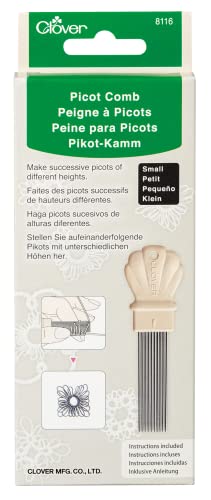
Sometimes, you need to fix a small section of a finished piece without disturbing the rest of the work. The Clover Mini Comb is compact enough to fit in your notions pouch, making it perfect for on-the-go touch-ups. Its small size allows for high-precision grooming on tassels or small decorative elements.
I find this tool indispensable for intricate macramé details where a large comb would be too clumsy. If you are working on a piece with mixed media—perhaps adding silk ribbons or lace alongside your cotton cord—this comb lets you isolate and brush specific fibers without catching the others.
It isn’t designed for large-scale work, so don’t try to brush out a massive wall hanging with it. Treat it as your "surgical tool" for finishing touches. It’s all about having the right tool for the scale of the task at hand.
Wooden Pet Slicker Brush: Best for Soft Yarns

For those who love the soft, fluffy aesthetic of brushed acrylic or wool yarns, a wooden pet slicker brush is often the best-kept secret in the fiber arts community. The soft, angled wires are gentle on the yarn, effectively "fluffing" the fibers rather than just straightening them. This is the secret to achieving that high-loft, cozy appearance on knit garments.
Because the handle is wooden, it provides a comfortable, ergonomic grip that feels much better in the hand than cheap plastic alternatives. The slicker style is also excellent for removing pilling from finished sweaters, making it a dual-purpose tool for your knitting collection.
Always brush in the direction of the fiber twist to avoid damaging the yarn’s structure. If you brush against the grain too hard, you’ll end up with a frizzy mess that looks worn out rather than intentionally brushed. Start slow and observe how the yarn responds.
Metal Greyhound Comb: Best for Thick Roving
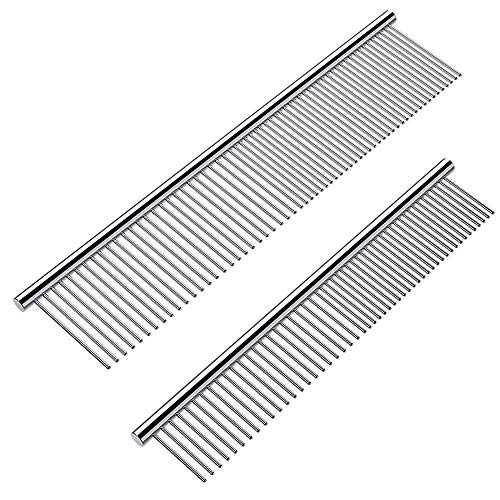
When you are dealing with heavy-duty fibers, such as thick, multi-ply cotton rope, you need a tool that won’t flex under pressure. The metal Greyhound comb is built for heavy lifting. Its long, steel teeth can penetrate deep into thick bundles, making it the only choice for projects that require significant detangling.
This comb is virtually indestructible, meaning it will likely be the last detangling tool you ever need to buy. It is particularly effective for "opening up" thick roving that has been tightly packed during shipping or storage.
However, because the teeth are rigid and metal, they can be unforgiving. If you encounter a stubborn knot, do not yank the comb through it. Instead, use the tip of the metal teeth to gently pick the knot apart from the outside in.
How to Choose the Right Comb for Your Fiber Type
Choosing the right tool is a matter of matching the tooth density to the fiber’s diameter and twist. As a rule of thumb, the finer the fiber, the closer the teeth should be. If you use a wide-toothed comb on fine thread, you’ll simply miss the tangles; if you use a fine-toothed comb on thick roving, you’ll struggle to get it through the mass.

- For Cotton Cords: Use a Macramé Cord Comb or a fine-toothed metal comb.
- For Wool Roving: Use a slicker brush or wool carders.
- For Synthetic Blends: Start with a plastic finishing comb to test for static build-up.
- For Delicate/Silk Fibers: Always opt for a soft-bristled brush or a very fine-toothed wooden comb.
Always perform a "test brush" on a scrap piece of the same material you used in your project. This prevents you from accidentally damaging the main piece before you know how the fibers will react to the tool.
Proper Technique for Detangling Without Breakage
The biggest mistake I see makers make is starting at the top of the fringe and pulling downward. This creates a "logjam" of knots at the bottom, which leads to breakage and uneven lengths. Always start at the very tips of your fringe and work your way up to the base in small, incremental sections.
Hold the cord firmly above the section you are currently brushing. This creates a "buffer zone" that prevents the tension from traveling up into your knots or stitches. If you feel resistance, stop immediately. Use your fingers to gently separate the fibers before going back in with the comb.
Remember that patience is a technique in itself. If you are rushing to finish a project, you are more likely to be heavy-handed. Take a breath, put on a podcast, and treat the grooming process as a meditative part of the craft, just like the knitting itself.
Maintaining Your Combs to Prevent Fiber Buildup
Your combs will inevitably collect "fluff" and loose fibers, which can actually make them less effective over time. After every session, spend a minute removing the trapped fibers from the teeth. For metal combs, you can use a second comb or a small pick to clear the debris.
If you are using plastic or wooden combs, a quick wipe with a slightly damp cloth can remove any oils or dust that have accumulated. This keeps the teeth smooth and prevents them from snagging on your fibers during the next project.
Store your combs in a dry, cool place. High humidity can cause wooden tools to warp or metal teeth to rust, which will eventually damage your yarn. Keeping your tools clean is the easiest way to ensure your fringe looks crisp and professional every single time.
Essential Tips for Achieving a Perfectly Even Trim
Once your fringe is perfectly detangled, the final step is the trim. Do not try to eyeball it while the piece is hanging. Instead, lay your project flat on a cutting mat and use a rotary cutter and a clear acrylic ruler to create a perfectly straight edge.
If you don’t have a rotary cutter, use a piece of masking tape to mark a straight line across your fringe. Cut along the bottom edge of the tape to ensure a clean, sharp line. This is the secret to that "high-end" look that separates amateur work from professional fiber art.
Finally, give your fringe one last light comb-through after trimming to remove any stray bits. A sharp pair of fabric shears is non-negotiable here; dull scissors will chew the fibers and ruin that clean edge you worked so hard to achieve.
Mastering the art of the fringe is all about respecting the materials you have spent so much time crafting. By selecting the right comb for your specific yarn and using a gentle, methodical technique, you elevate your work from a simple project to a polished piece of art. Take your time, keep your tools clean, and always prioritize the health of your fibers. With these tools in your kit, your fringe will finally match the quality of your stitches.