6 Best Row Counters For Pattern Tracking To Try
Stay on track with your knitting projects. We review the 6 best row counters, comparing digital and manual tools to help you find your perfect match today.
We have all been there: you are deep into a complex cable repeat, only to realize you have completely lost track of which row you just finished. A reliable row counter is the difference between a perfectly symmetrical sweater and a project that ends up in the "forgotten pile" for months. Finding the right tracking system is a personal journey that depends as much on your knitting style as it does on the tool itself. Here are six of the best options to keep your stitches on track and your sanity intact.
Knitter’s Pride Mindful Collection Row Counter


The Knitter’s Pride Mindful Collection row counter is a beautiful example of form meeting function. Its sleek, minimalist design fits perfectly with the aesthetic of the rest of the collection, making it a joy to keep on your project bag.
This is a manual, push-button counter that feels incredibly tactile. It is ideal for knitters who appreciate a satisfying "click" without the bulk of a larger device. Because it is small, it won’t get in the way if you are working on something delicate like a lace shawl.
The only real tradeoff is the size; if you have limited dexterity or vision issues, the small buttons might feel a bit fiddly. However, for most, it is a discreet and elegant way to stay organized.
Clover Kacha-Kacha Clicker Row Counter Tool

The Clover Kacha-Kacha is a legendary tool in the knitting community for a reason. Its name is onomatopoeic, mimicking the distinct, sharp sound it makes every time you press the button to advance a row.
This counter is designed to be worn around your neck or attached to your project bag, keeping it within arm’s reach at all times. The large, clear display makes it easy to read even in low-light conditions, which is a lifesaver when you are knitting with dark-colored wool.
One minor annoyance is the sound; if you knit in public spaces or while watching a movie, the "kacha-kacha" noise can be quite audible. If you need a silent counter, this might not be your first choice, but for sheer reliability, it is hard to beat.
Cocoknits Maker’s Keep Magnetic Row Counter
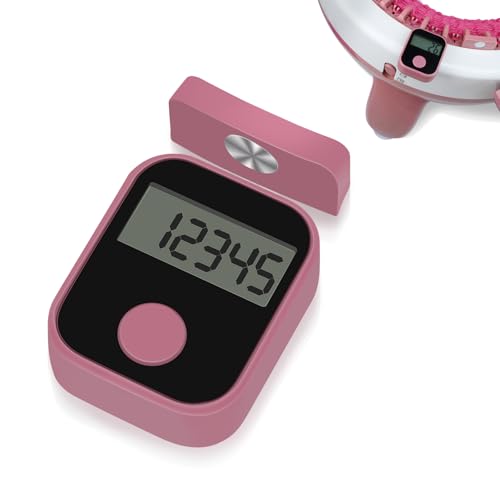
Cocoknits has revolutionized project organization, and the Maker’s Keep is their flagship tool. It is essentially a wearable magnetic cuff that holds your row counter and other metal notions right on your wrist.
This setup is a game-changer for knitters who move around a lot or switch between projects frequently. You never have to go hunting for your counter because it is literally strapped to you, ready for the next increase row.
The main consideration here is the price point and the learning curve of the system. It is an investment, but for those who value efficiency, having your tools magnetically attached to your wrist is the ultimate workflow upgrade.
Susan Bates Digital Finger Ring Row Counter

If you find that you constantly forget to reach for a counter, the Susan Bates digital ring is your best friend. You wear it on your index finger, allowing you to press the button with your thumb without ever letting go of your needles.
This is particularly useful for complex stranded colorwork or intricate cables where you cannot afford to break your rhythm. Because it is digital, you get a bright, easy-to-read screen that tracks your progress instantly.
The trade-off is the fit; since it is a fixed ring, it might feel too tight or too loose depending on your finger size. It is a fantastic, low-cost solution, but make sure the band is comfortable enough for long, multi-hour knitting sessions.
BeadSmith Wooden Abacus Style Row Counter

For those who prefer a traditional, analog approach, the BeadSmith wooden abacus is a beautiful, tactile choice. It uses sliding beads on a frame to track your rows, which feels very grounding compared to digital screens.
This style is perfect for knitters who want to avoid batteries or complex settings entirely. It is also completely silent, making it the ideal companion for quiet knitting sessions or working in a group setting.
The main drawback is that it is not as portable as a ring or a small clicker. It is a tool meant to sit on your side table or in your project basket, so it’s best suited for stationary knitting rather than "on-the-go" projects.
Boye Plastic Circular Dial Row Counter
The Boye circular dial is a classic, no-frills tool that has been around for decades. You simply rotate the dial to advance the numbers, which is an incredibly intuitive way to keep track of your progress.
This counter is designed to sit on your needle, which is both its greatest strength and its potential weakness. It is always right there, but if you are using very fine needles, it can add a bit of weight or drag to your work.
If you are a beginner, this is often the most straightforward tool to use. It is inexpensive, durable, and does exactly what it promises without any unnecessary bells or whistles.
Why You Need a Dedicated Row Tracking System
Relying on your memory to track rows is a recipe for frustration. Even the most experienced knitter will eventually get distracted by a phone call or a conversation, leading to "row-counting amnesia."
A dedicated system creates a physical "check-in" point. When you press that counter, you are signaling to your brain that the row is complete, which helps you maintain focus and consistent tension.
Without a system, you are forced to count stitches or look at your work to determine where you are. This wastes time and energy that could be better spent actually enjoying the rhythm of your knitting.
Digital vs. Analog Counters: Which Works Best?
Digital counters offer precision and ease of use, often including features like backlights or multiple memory slots. They are excellent for complex patterns with multiple repeats where you need to track different sections simultaneously.
Analog counters, like the abacus or the clicker, rely on tactile feedback. Many knitters find that the physical act of moving a bead or clicking a button helps them remember their place more effectively than a digital display.
Ultimately, it comes down to your personal workflow. If you want high-tech reliability, go digital; if you want a meditative, low-tech experience, stick with analog.
How to Choose the Right Counter for Your Project
When choosing a counter, consider the complexity of your project first. A simple stockinette scarf might only need a basic dial, while a lace shawl with 50-row repeats demands something more robust.
Consider your environment, too. If you knit in bed or in a dark room, a digital counter with a light is essential. If you knit at a local cafe, a silent analog counter will keep you from annoying your neighbors.
Finally, think about your "knitting ergonomics." If you have hand fatigue or arthritis, choose a counter that requires minimal pressure to operate, such as a light-touch digital button.
Pro Tips for Never Losing Your Place in a Pattern
The best tip for any knitter is to always reset your counter at the end of a project. There is nothing worse than starting a new sweater only to realize your counter is still set to row 42 from your last project.
If you are working on a pattern with multiple sections, keep a small notepad nearby to jot down notes. Sometimes a counter tells you the row, but your notes tell you which chart you are on.
Lastly, trust your gut. If you feel like your count is off, stop and check your work against the pattern before moving forward. It is always faster to rip back two rows than it is to fix a mistake ten rows later.
Investing in a row counter is one of the most practical upgrades you can make to your knitting toolkit. Whether you prefer the satisfying click of a mechanical tool or the modern convenience of a digital ring, the right choice will help you stay focused and finish your projects with confidence. Experiment with a few styles to see what feels natural in your hands, and you will find your knitting rhythm flows much more smoothly. Happy knitting, and may your row counts always be accurate.