6 Best Yarn Caddies For Managing Multiple Strands
Tangle-free knitting is possible. We review the six best yarn caddies to organize multiple strands, helping you streamline complex colorwork projects easily.
Managing multiple strands of yarn can turn a dream project into a tangled nightmare of frustration and knotted fiber. Whether you are working on a complex fair-isle sweater or holding two strands of lace-weight mohair together for a fluffy cardigan, the right equipment is non-negotiable. These tools act as an extra pair of hands, ensuring your tension remains consistent while your yarn feeds smoothly. Here are the top six yarn caddies designed to keep your multi-strand projects organized and flowing perfectly.
Yarn Valet Portable Yarn Dispenser: Best Overall
The Yarn Valet is a masterclass in simplicity, using a clever tension-arm design to keep your yarn from jumping off the cake. It is particularly effective for knitters who move between the living room and the coffee shop, as it fits easily into most project bags.


Because it relies on a vertical post rather than a rotating base, it occupies a very small footprint on your side table. If you are working on a project that requires two different weights of yarn, you can easily set two of these side-by-side to prevent the strands from twisting around each other.
The trade-off here is that it works best with center-pull cakes or balls. If you are working from a loose hank that hasn’t been wound, this tool won’t be able to provide the smooth release you need.
Stanwood Needlecraft Yarn Spindle: Best Stability

If you have ever had a yarn ball roll off your lap and under the sofa, you know the value of a heavy, stable base. The Stanwood Needlecraft spindle features a weighted base and a smooth-spinning mechanism that allows the yarn to release with almost zero resistance.
This is the gold standard for high-speed knitting where you cannot afford any drag on the yarn. When you are working with delicate fibers like silk or high-twist merino, this lack of resistance prevents you from accidentally stretching the yarn, which could otherwise alter your final gauge.
It is a bulkier piece of equipment, so it is best suited for a dedicated knitting nook rather than a portable setup. If your primary goal is consistent tension across a large, multi-strand garment, the investment in this stability is well worth the desk space.
Honeyoak Wooden Yarn Butler: Best for Aesthetics

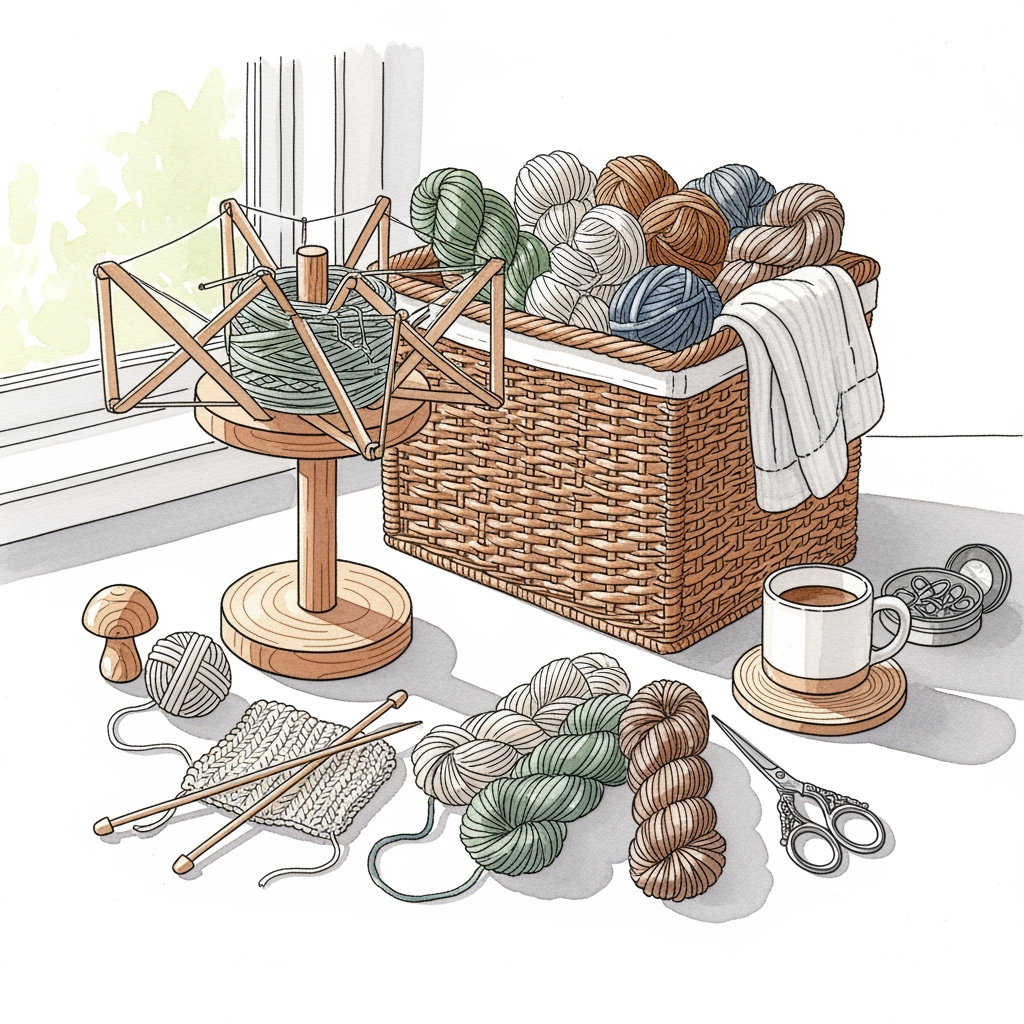
A yarn butler is essentially a vertical spindle that holds your yarn ball in place while it rotates on a ball-bearing base. The Honeyoak version is crafted from high-quality wood, making it as much a piece of home decor as it is a functional knitting tool.
Functionally, it is excellent for holding larger cakes of yarn that might be too heavy for smaller dispensers. The rotating base ensures that as you pull the yarn, the ball spins freely, reducing the amount of "tug" you feel in your hands.
Keep in mind that wooden tools require a bit of care; avoid leaving them in direct sunlight or humid environments to prevent warping. For the knitter who loves a beautiful workspace, this provides the perfect balance of form and function.
KnitPicks Yarn Ball Winder: Best for Organization
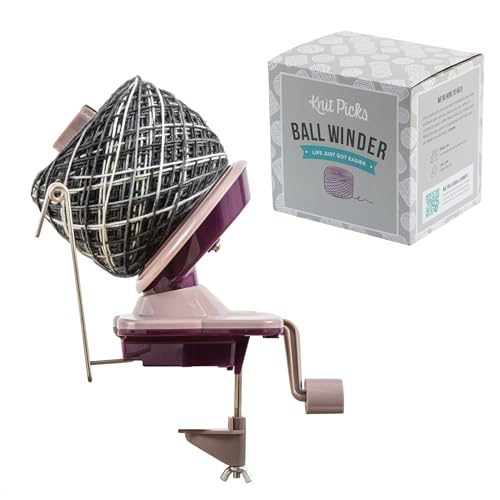
While technically a tool for preparation, the KnitPicks ball winder is the foundation of any multi-strand strategy. By turning loose hanks into center-pull cakes, you create the raw material that all other yarn dispensers require to function properly.
If you are planning to hold two strands together, winding them into a single "double-stranded" cake beforehand can save you hours of untangling. This process, often called "doubling up," ensures that both strands feed at the exact same rate.
The only downside is that you need a sturdy table edge to clamp the winder onto. If you don’t have a good surface, the winder will shift, leading to messy cakes that collapse mid-project.
Cocoknits Maker’s Keep: Best for Multi-Strand Use
The Cocoknits Maker’s Keep is a brilliant magnetic bracelet that helps manage your notions, but its true power in multi-strand knitting lies in its ability to keep your tools accessible. When you are juggling two or three strands, you need your stitch markers and scissors within arm’s reach at all times.
Beyond the magnetism, their system of yarn guides is a game-changer for stranded colorwork. By threading your different colored yarns through specific guides, you keep them separated and prevent the dreaded "yarn soup" that happens when multiple balls roll around in your bag.
It is a minimalist solution for the knitter who prefers to keep things streamlined. While it doesn’t "dispense" yarn in the traditional sense, it organizes the chaos of multiple strands better than almost any other accessory.
Tom Bihn Yarn Stuff Sack: Best for On-the-Go
Sometimes the best yarn caddy is a bag that keeps your balls from touching each other. The Tom Bihn stuff sack is made of durable, high-visibility nylon and features drawstrings that can be adjusted to create an exit point for your yarn.

If you are knitting a sweater with three different colors, you can place each ball in its own small stuff sack. This keeps them completely isolated, ensuring that when you reach for a specific strand, it isn’t tangled with the others.
The material is lightweight and virtually indestructible, making it perfect for travel. It won’t provide the mechanical tension control of a spindle, but for keeping multiple strands sorted in a cramped space, it is unbeatable.
Why Multi-Strand Knitting Requires Yarn Caddies
Multi-strand knitting—the practice of holding two or more yarns together to create a new texture or color—is a classic technique. However, it introduces the risk of "yarn twist," where the strands wrap around each other before they even reach your needles.
Without a dispenser, your yarn balls will naturally migrate toward each other as you knit. This creates a friction point that can lead to uneven tension, causing one strand to be pulled tighter than the other, which ruins the fabric’s drape.
A good yarn caddy forces the strands to remain independent until they meet at your needle tip. This separation is the secret to getting that professional, even stitch definition in your final piece.
How to Prevent Yarn Tangles During Colorwork
Colorwork is the most common time to encounter tangling, especially when carrying two colors across a row. The best way to manage this is to keep your balls of yarn at a fixed distance from each other.
- Fixed Positions: Always keep your main color on the left and your contrast color on the right.
- Use Dividers: Use separate caddies or even simple bowls to ensure the balls don’t roll into one another.
- The "Twist" Check: Every few rows, let your project hang vertically to allow the strands to untwist themselves naturally.
Even with the best tools, you will eventually have to rotate your project to "un-twist" the strands. Don’t fight the physics of fiber; embrace the pause as a moment to check your progress.
Essential Features to Seek in a Yarn Dispenser
When shopping for a yarn dispenser, the most important feature is a smooth-spinning mechanism. If the base or spindle catches even slightly, your tension will spike, leading to tight, puckered stitches.
Look for a base that is heavy enough to stay put when you pull the yarn quickly. A lightweight plastic dispenser will slide across the table, which is more annoying than having no dispenser at all.
Finally, consider the versatility of the spindle size. Some spindles are too thin for large, bulky-weight cakes, while others are too wide for small, delicate balls of fingering-weight wool.
Maintaining Your Yarn Tools for Longevity
Most yarn tools are simple mechanical devices that benefit from basic maintenance. If your spindle is squeaking or dragging, a tiny drop of sewing machine oil on the bearing will restore its smooth rotation.
Wooden tools should be kept away from extreme heat, which can cause the wood to expand and crack. If you notice a rough spot on a wooden spindle, a light sanding with fine-grit sandpaper will prevent your yarn from snagging.
Treat your yarn tools as an investment in your craft, just like your favorite set of needles. With a little care, these simple devices will serve you for decades of knitting projects.
Finding the right yarn caddy is about matching your personal knitting style to the specific requirements of your project. Whether you prioritize the absolute stability of a heavy spindle or the portability of a stuff sack, these tools are designed to remove the friction from your creative process. By keeping your strands separated and flowing, you free up your mind to focus on the rhythm of your stitches rather than the mess in your lap. Happy knitting, and may your yarn always flow exactly as it should.