6 Best Needle Size Labels for Easy Organization
Keep your knitting supplies tidy with our top 6 needle size labels. This guide helps you organize your collection, ensuring you always find the right tool fast.
We have all experienced the frustration of pulling a pair of needles from a project bag, only to realize the size markings have long since rubbed off. Identifying needle sizes by eye is a skill that takes years to develop, and even then, a quarter-millimeter difference can ruin your project’s gauge. Proper organization isn’t just about tidiness; it is the foundation of consistent stitch tension and successful garment fit. These tools turn a chaotic stash into a professional-grade workspace.
Susan Bates Silvalume Knitting Needle Gauge
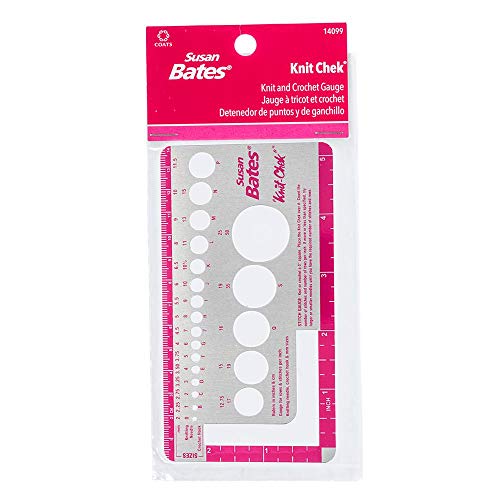

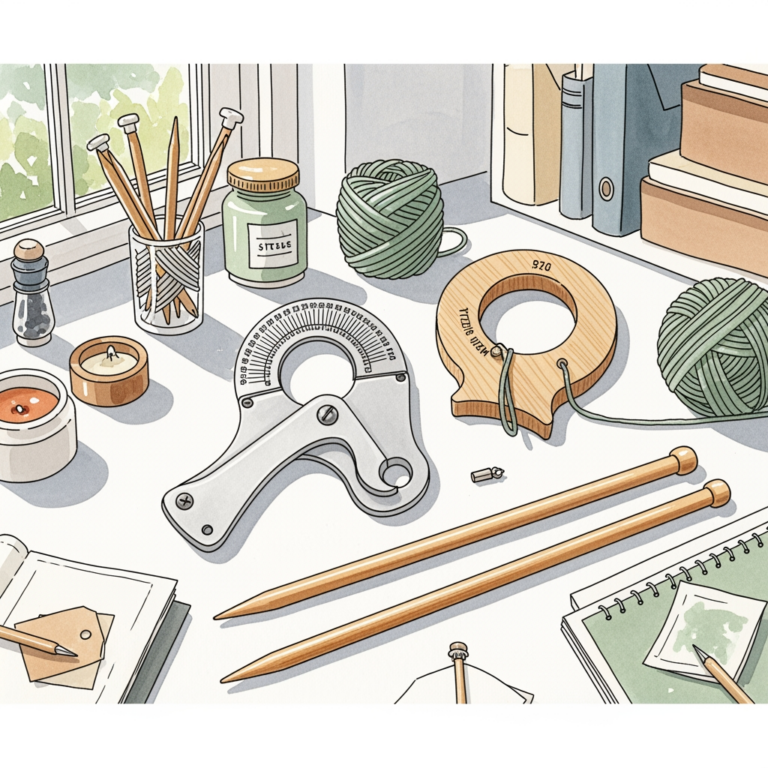
This classic plastic gauge is a staple in almost every knitting kit for a reason. It is lightweight, inexpensive, and provides a quick, reliable way to check the diameter of your needles when the printed size has vanished.
The design is straightforward: you insert the needle tip into the various holes until you find the one that fits snugly without forcing it. It is particularly useful for older aluminum needles where the anodized finish has worn away over decades of use.
Keep in mind that plastic gauges can warp if left in a hot car or near a heater. If you’re checking a needle and it feels like it might be "between" sizes, trust your gut and use a swatch to verify your gauge before committing to a full project.
ChiaoGoo Needle Gauge and Ruler Tool

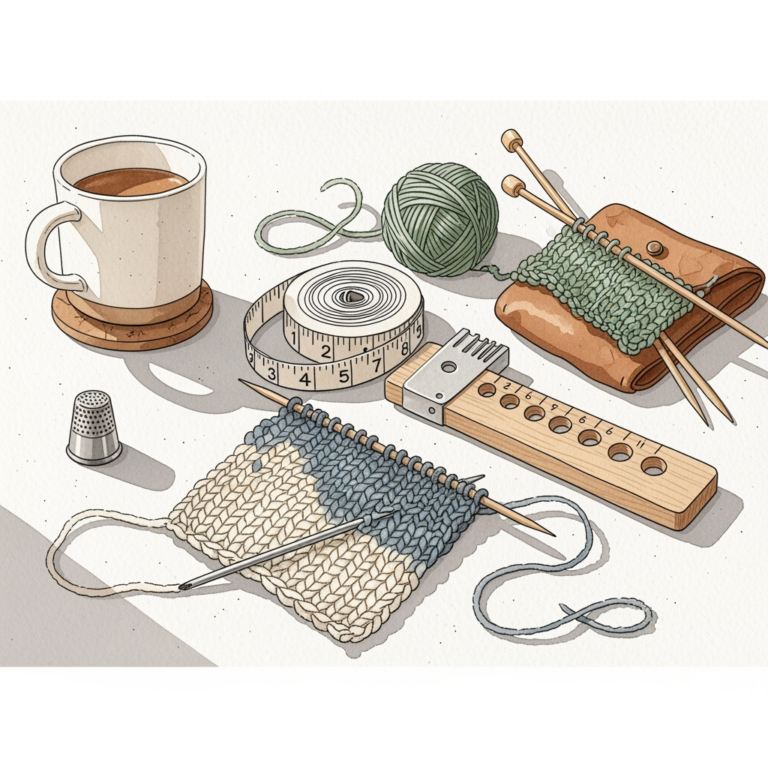
If you prefer precision, the ChiaoGoo needle gauge is a significant step up from standard plastic versions. Crafted from durable plastic or metal, it features both metric and US sizing, which is essential for those of us who switch between local patterns and international designs.
The integrated ruler is a godsend for measuring your swatch. When you are calculating your stitches per inch to ensure a sweater fits properly, having a reliable, rigid ruler right on your gauge tool saves you from hunting for a tape measure.
The only downside is that the markings can sometimes be hard to read in low light. I recommend keeping this in your primary project bag so it is always within reach when you are starting a new cast-on.
Cocoknits Maker’s Keep Magnetic Bracelet
This isn’t a traditional gauge, but it is one of the most clever organizational tools I’ve used in years. It’s a slap-bracelet with a magnetic surface that holds your needle gauge, stitch markers, and even your tapestry needles securely while you work.
The real magic happens when you are working on lace or complex cables and need to keep your needle size and stitch count top of mind. Having your gauge physically attached to your wrist means you never have to put your needles down to check the size.
It is a bit of an investment, but for those who knit on the go, it provides peace of mind. You won’t lose your tools in the couch cushions or at the bottom of a deep tote bag ever again.
Clover Knitting Needle Point Protectors

While primarily designed to keep stitches from sliding off, many knitters use these as a clever way to label needles in storage. If you color-code your protectors by size, you can identify your needle diameter at a glance without needing a gauge tool.
These are excellent for keeping your needle points safe, especially if you use high-end wooden needles that can splinter if dropped. The soft rubber material grips the needle firmly, ensuring that your work stays put even if the bag gets tossed around.
Be careful not to leave these on bamboo needles for months at a time. The rubber can sometimes react with the natural oils or finishes on wooden needles, leaving a sticky residue behind.
KnitPro Symfonie Needle Size Markers

These are small, ingenious rings that slide onto the end of your needles to act as a permanent size label. If you have a massive collection of fixed circular needles, these are the best way to categorize them in your storage case.
They are unobtrusive and don’t interfere with your knitting rhythm or the way the yarn slides over the join. For someone who owns multiple sets of the same size, these markers allow you to distinguish between your "sock needles" and your "sweater needles" instantly.
The trade-off is that they are small and can be easily misplaced if you take them off. Keep a small tin or a magnetic dish nearby to store them when they aren’t actively labeling a needle.
HiyaHiya Interchangeable Needle Grips

If you use interchangeable needle sets, you know the struggle of the needle tips unscrewing during a long knitting session. These rubber grips are designed to provide the torque needed to tighten your needles, but they also double as a tactile way to identify your needle size.

The grip itself is often color-coded, which helps you associate specific colors with specific sizes. Over time, your brain will start to recognize that the "blue" grip corresponds to your 3.25mm needles, making your setup process much faster.
They are small and portable, fitting easily into the smallest pockets of a needle case. Always keep a set in your project bag, as they are the only reliable way to ensure your needles don’t come apart mid-row.
Why Needle Size Organization Matters for You
The difference between a 3.5mm and a 3.75mm needle can be the difference between a sweater that fits perfectly and one that is two sizes too big. When you are working with fine fibers like alpaca or silk, which have more drape, even a slight variation in needle size can lead to an inconsistent fabric.
Organization reduces the "friction" of starting a new project. When you can grab the right tool immediately, you are more likely to swatch, which is the most important step in any garment project.
Don’t let a disorganized stash dictate your gauge. By taking control of your needle labeling, you ensure that your tension remains consistent across every project you undertake.
Best Materials for Durable Needle Labels
When choosing labels or storage solutions, look for materials that won’t degrade over time. Metal gauges are the gold standard for longevity, as they won’t warp or snap under the pressure of a packed knitting bag.
If you are using stickers or tags, look for archival-quality materials that won’t leave a sticky residue on your needles. For wooden needles, avoid anything that requires a harsh adhesive, as it can strip the finish and make the wood "grabby" against the yarn.
Ultimately, simplicity is best. A set of metal gauges or a dedicated, labeled storage case will always outperform temporary solutions that rely on tape or makeshift markers.
How to Store Your Needles by Size Category
The best way to store needles is by size, not by type. Use a case with individual slots or clear plastic pouches that allow you to see the needle size clearly without removing them from their home.
If you have a large collection, use a spreadsheet or a simple notebook to keep an inventory. This prevents you from buying a duplicate pair of needles when you already have three sets in the size you need.
Group your needles by "frequently used" and "specialty." Keep your standard sizes (like 3.5mm, 4.0mm, and 5.0mm) in an easily accessible pouch, and tuck your specialty sizes or large-diameter needles in a secondary storage area.
Troubleshooting Worn Needle Size Markings
If you find a needle with no visible markings, don’t guess. Use your gauge tool to test it against several holes; if it fits loosely in one and is too tight for the next, it is almost certainly the size in between.
If you have a favorite pair of needles that have lost their markings, consider using a small piece of painter’s tape on the cable or the end of the needle to label them yourself. It’s not permanent, but it’s a quick fix that saves you from having to re-measure every single time you pick them up.
Remember that needles can wear down over time, especially aluminum and plastic. If a needle feels significantly thinner than it should be, it may be time to retire it to prevent gauge drift in your future projects.
Investing time in organizing your needle collection is an investment in the quality of your finished work. By utilizing the right gauges, markers, and storage systems, you eliminate the guesswork that often leads to frustration. Take the time to audit your stash today, and you will find that your knitting process becomes smoother and more enjoyable. Happy knitting, and may your gauge always be perfect.