7 Best Task Lighting Kits For Knitting Studios
Illuminate your craft with our guide to the 7 best task lighting kits for knitting studios, designed to reduce eye strain and improve stitch clarity for all.
Proper lighting is just as critical to a successful knitting project as choosing the right needle material or yarn weight. Without adequate illumination, even the most experienced knitter will struggle to see stitch definition in dark-colored yarns or intricate lace patterns. The following guide highlights the best task lighting solutions designed to eliminate eye strain and improve your overall making experience. By optimizing your workspace, you can knit for longer periods with greater comfort and precision.
OttLite 2-in-1 LED Floor Lamp: Best Overall Choice


The OttLite 2-in-1 is a staple in many dedicated craft rooms because it offers exceptional versatility. You can use it as a tall floor lamp for your favorite armchair or convert it into a shorter table lamp for your desk.
The real beauty here lies in the "ClearSun" LED technology, which mimics natural daylight. When you are working with variegated hand-dyed yarns, this color accuracy is non-negotiable for seeing subtle tonal shifts.
However, keep in mind that the base takes up a bit of floor space. If you are working in a cramped corner of a small apartment, you will need to measure your footprint before committing.
Brightech LightView Pro Magnifying Floor Lamp
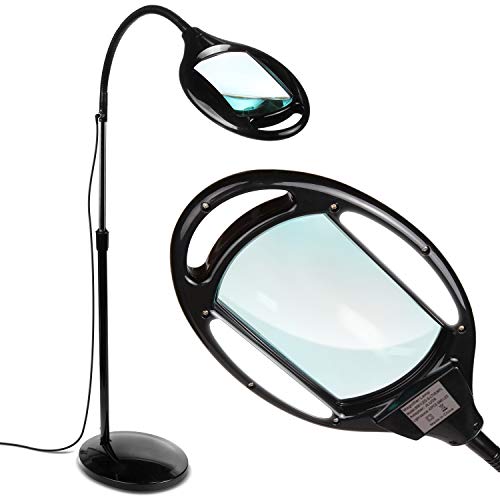
When you are working on fine-gauge projects like socks or lace shawls, a magnifying lamp is a game-changer. The Brightech LightView Pro features a high-quality glass lens that makes picking up dropped stitches significantly easier.
The added magnification allows you to inspect your work for accidental yarn-overs or twisted stitches without leaning in and straining your neck. It is particularly helpful for those of us who find the "squint factor" becoming a real issue after a few hours of knitting.
The trade-off is that the magnification can sometimes feel disorienting if you aren’t used to it. Give yourself a few rows to adjust your depth perception before deciding if the level of zoom is right for your specific vision needs.
Daylight Company Wafer 2 Lightbox for Charts

If you are a fan of intricate colorwork or complex cables, a lightbox is your best friend. The Daylight Company Wafer 2 is incredibly thin and provides a perfectly even glow behind your paper patterns.
Backlighting your chart makes it much easier to track your progress row by row, especially when the light is dim. It effectively turns your pattern into a high-contrast map, reducing the chance of losing your place in a 20-row repeat.
While it isn’t a primary light source for your hands, it’s an essential secondary tool for pattern management. It keeps your workspace clean and minimizes the paper-shuffling that often leads to dropped stitches.
Mighty Bright NuFlex Rechargeable Book Light

Sometimes, you just want to curl up on the sofa without setting up a massive floor lamp. The NuFlex is a fantastic, portable option that clips directly onto your needle case or a nearby surface.
It is lightweight and rechargeable, meaning you aren’t tethered to a wall outlet. This is perfect for those "knitting on the go" moments, whether you are in a car, on a plane, or just moving from room to room.
Because it is a smaller light, it won’t illuminate your entire room, but it provides a very concentrated pool of light exactly where you need it. Just be careful not to clip it onto your yarn, as the weight can sometimes pull on your work if you aren’t mindful.
Lepower Metal Architect Swing Arm Desk Lamp

The swing arm lamp is a classic for a reason: it offers unmatched adjustability. The Lepower model allows you to pivot the light head into almost any position, ensuring that you can direct the beam directly onto your needles.
This is ideal for knitters who work at a dedicated desk or table. You can pull the light close when you are performing a complex bind-off and push it away when you are just cruising through stockinette.
The downside is the need for a clamp or a heavy base, which can be cumbersome on smaller surfaces. Ensure your desk edge is sturdy enough to hold the clamp securely without damaging the finish.
BenQ ScreenBar Halo Monitor Light for Patterns

Many of us keep our digital patterns on a computer monitor or tablet. The BenQ ScreenBar Halo sits on top of your screen, casting light downward onto your workspace without creating glare on your display.
It is a brilliant way to illuminate your needles while simultaneously viewing your pattern clearly. It saves a significant amount of desk real estate compared to traditional lamps.
The main consideration here is the price point, which is higher than most standard task lights. However, for the dedicated knitter who relies heavily on digital charts, the reduction in screen glare is worth every penny.
Vekkia Extra Wide LED Neck Reading Light
If you are a knitter who tends to move around or change positions frequently, the Vekkia neck light is a surprisingly effective solution. It rests comfortably around your neck, casting light exactly where your hands are moving.
This is excellent for late-night knitting sessions when you don’t want to disturb others with a bright floor lamp. It keeps your hands completely free and follows your movement, ensuring you are never in your own shadow.
Some knitters find that the weight around the neck can be distracting during long sessions. It’s best used for shorter, focused spurts rather than marathon knitting weekends.
Essential Features for Knitting Studio Lighting
When shopping for studio lighting, prioritize functionality over aesthetics. You need a lamp that offers:
- Adjustability: Can you move the head to avoid shadows?
- Brightness Control: Do you have dimming options for different times of day?
- Stability: Will the lamp tip over if you accidentally bump it?
- Color Rendering Index (CRI): High CRI is vital for seeing the true color of your yarn.
Avoid buying lights based solely on their appearance in a catalog. A beautiful lamp is useless if it casts a shadow over your needles or creates a glare that makes it impossible to see your stitch definition.
Cool vs Warm Light: Choosing Your Color Temp
The color temperature of your light—measured in Kelvins—drastically changes how you perceive your yarn. Cool, daylight-balanced light (around 5000K) is usually best for knitting because it reveals the true color of the fiber.
Warm light (around 2700K) can make it difficult to distinguish between similar shades, like dark navy and black. If you are working with black mohair or dark-colored wool, you will struggle immensely under warm, yellow-toned light.
If possible, choose a lamp with adjustable color temperatures. This allows you to switch to a cooler light for precision work and a warmer, softer light for relaxing in the evening.
How Proper Lighting Reduces Eye Strain Fatigue
Eye strain is a silent enemy of the knitter, often masquerading as a headache or general fatigue. When your lighting is inadequate, your eyes work overtime to focus on tiny loops of yarn, leading to dry, tired eyes by the end of the day.
Proper task lighting creates a high-contrast environment that allows your eyes to relax. By illuminating your work clearly, you stop the constant "micro-adjustments" your eyes make when trying to find the stitch in low light.
Remember to take breaks every 30 minutes, even with perfect lighting. Use your lamp to create a dedicated "knitting zone" that signals to your body and mind that it is time to focus on your craft.
Investing in quality lighting is one of the most impactful upgrades you can make for your knitting practice. Whether you choose a versatile floor lamp or a portable neck light, the goal is always to see your stitches with clarity and comfort. Take the time to evaluate your specific workspace needs, and don’t be afraid to experiment with different light angles. Your eyes will thank you, and your projects will surely show the difference.