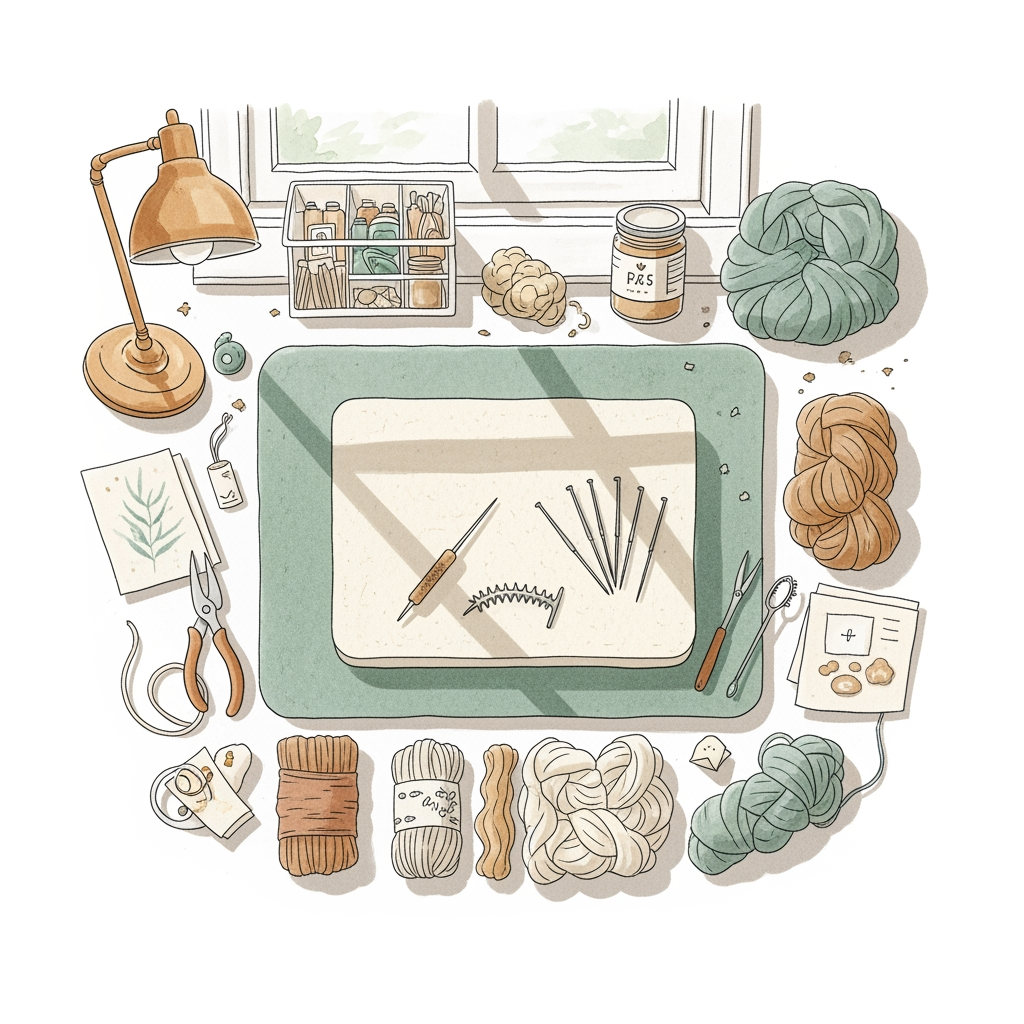
6 Best Synthetic Felting Pads For Longevity Tested
We tested six synthetic felting pads for durability. Discover which materials offer the best longevity and consistent performance for your needle felting needs.
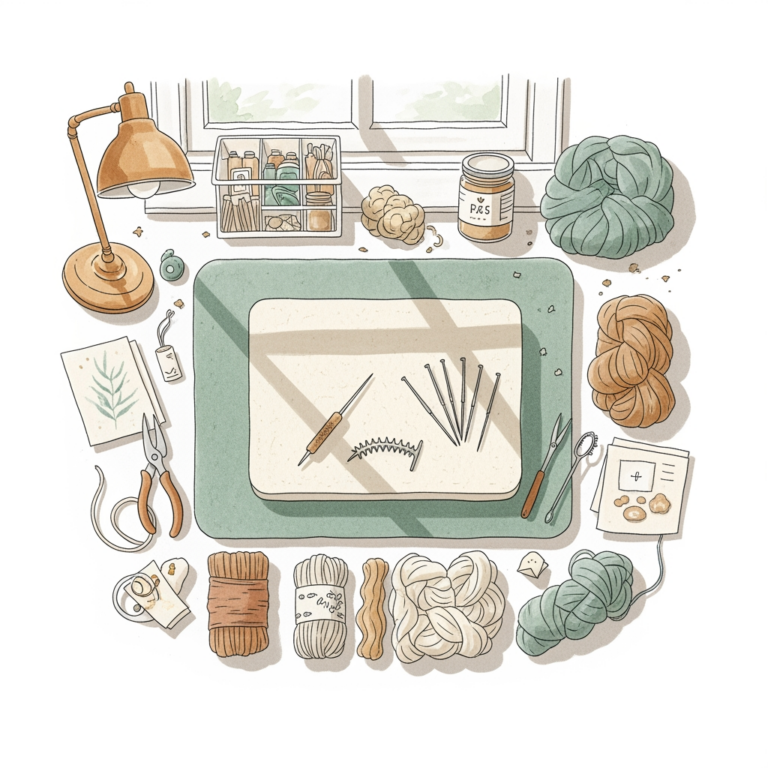
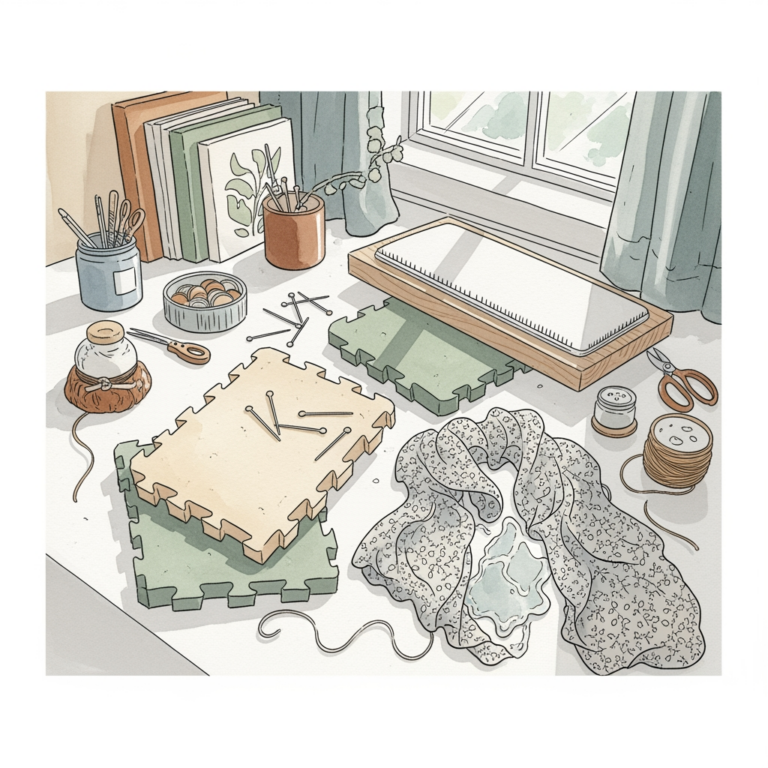
Finding the right foundation for your needle felting is as critical as choosing the perfect needle size for a delicate lace shawl. A high-quality synthetic pad acts as your canvas, providing the necessary resistance to allow fibers to interlock without damaging your delicate needles. After years of working with various fibers, I have found that the surface you work on dictates the quality of your finished sculpture. Here are the top synthetic felting mats that stand the test of time and heavy use.
Clover Needle Felting Mat: Best Overall Choice


The Clover mat is a staple in many studios because it strikes an ideal balance between density and flexibility. It features a unique brush-like surface that allows your needles to penetrate deeply without meeting hard resistance, which is essential for protecting your needle tips from snapping.
When you are working on intricate details, like shaping the ears of a small felted animal, the bristles hold the wool firmly in place. This prevents the "crawling" effect where your project shifts while you are trying to sculpt fine features. It is a reliable, workhorse tool for any skill level.
The primary trade-off is that these bristles can eventually get matted with stray fibers. You will need to use a small comb or your fingers to clean it regularly to maintain its effectiveness. For most projects, this mat offers the most consistent results.
Ashford Foam Felting Pad: Best For Stability

Ashford’s foam pad is remarkably dense, providing a solid, non-slip surface that feels incredibly stable under your hands. If you are a vigorous felter who tends to use a lot of force, this pad won’t slide across your table during a long session.
This density is particularly beneficial when you are working on flat pieces, such as appliqués for a wool sweater or a decorative wall hanging. Because the foam doesn’t collapse easily, you get a clean, even penetration every time. It mimics the feeling of working on a firm block of cork but with the forgiveness of synthetic foam.
Keep in mind that high-density foam will eventually show "pockmarks" where you have felted most frequently. While these marks are a sign of a well-loved tool, you can flip the pad over to extend its lifespan. It is the best choice if you prioritize a rock-solid work surface.
Hamanaka Felting Mat: Best For Precision Work

The Hamanaka mat is designed with a very specific, fine-grained synthetic material that is perfect for those who specialize in miniature, highly detailed work. If you are felting tiny faces or delicate appendages, you need a surface that doesn’t grab the wool too aggressively.
This mat allows for subtle adjustments to your sculpture without pulling the fibers out of alignment. It is almost like working on a soft velvet; it provides just enough grip to hold the wool, but enough release to let you move the piece easily. It is a favorite for those who enjoy the "sculptural" side of fiber arts.
Because of its fine texture, it is not ideal for large-scale, heavy-duty felting where you are using multiple needles at once. Choose this mat if your projects involve fine-tuning and delicate fiber placement.
Woolbuddy Felting Pad: Best For Large Projects

The Woolbuddy pad is impressively thick, making it a fantastic choice for larger projects that require a deep "cushion" for your needles to travel through. When you are building a large armature or a chunky base, you need a pad that can accommodate the length of your needle without hitting a hard base.
This pad is built for endurance and can withstand a significant amount of needle penetration before it starts to show signs of wear. It is particularly helpful if you are a beginner who is still learning how to control the depth of your needle strokes. The extra thickness provides a safety buffer for your tabletop.
One thing to note is that because it is quite thick, it can feel a bit "spongy" compared to a firmer foam mat. If you are working on substantial, three-dimensional sculptures, this is your best companion.
Sullivans Felting Mat: Best For Durability

Sullivans offers a synthetic mat that is engineered specifically for longevity in high-traffic crafting environments. The material is resistant to tearing and crumbling, which often happens to cheaper foam pads after only a few months of consistent use.
I recommend this for makers who produce work in batches or teach classes where the mats see constant, daily use. It holds its shape remarkably well, even after thousands of needle punctures. You won’t find yourself replacing this one nearly as often as standard craft-store foam blocks.
While it is highly durable, the surface is slightly firmer than others, which means you need to be mindful of your needle angle to avoid breakage. This is the investment piece for the serious felter who wants a "buy it once" tool.
Dimensions Felting Mat: Best Budget Option

The Dimensions mat is an excellent entry point for those just starting to explore needle felting. It provides a standard foam surface that is perfectly adequate for learning the basics of fiber interlocking and shaping.
It is lightweight and portable, making it easy to toss into a project bag alongside your latest knitting WIP. If you are unsure if needle felting will become a long-term obsession, this is a low-risk purchase that still delivers solid performance. It is a great way to learn the mechanics of the craft without a heavy financial commitment.
Be aware that these budget foam pads will break down faster than the premium options mentioned above. It is a great "starter" mat, but expect to upgrade as your skills and project volume increase.
Synthetic vs. Wool Pads: Which Should You Use?
Choosing between synthetic and natural wool pads often comes down to your personal workflow and the types of fibers you use. Synthetic pads, like the ones listed above, are generally easier to clean and tend to be more affordable and widely available.
Wool pads (often made of dense, felted wool) offer a more "natural" resistance that some artists prefer for high-end sculptures. However, wool pads can sometimes trap fibers so deeply that they become difficult to remove, and they are prone to harboring dust or debris over time.
- Synthetic: Consistent density, easy to clean, long-lasting, ideal for beginners.
- Wool: Natural feel, fibers "grip" better, can be more expensive, requires careful maintenance.
If you are looking for consistency and low maintenance, stick with a high-quality synthetic pad.
How to Extend the Life of Your Felting Surface
The most important way to extend the life of any felting pad is to vary your working area. Most beginners tend to felt in the exact center of the mat, which causes that area to disintegrate quickly. Rotate your mat frequently and use the edges and corners to distribute the wear evenly.
Additionally, always ensure your needles are sharp. A dull or bent needle creates larger, more destructive holes in the foam, accelerating the breakdown of the material. If your needle feels like it is dragging or catching, it is time to replace it.
Finally, keep your mat free of stray, loose fibers. Using a soft brush to clear the surface after every session prevents fibers from being driven deeper into the pad, which can eventually cause the surface to become uneven and lumpy.
Essential Tips for Proper Needle Felting Form
Proper form is just as important in felting as it is in knitting to avoid hand fatigue and broken needles. Always keep your needle at a 90-degree angle to the mat. If you tilt your needle, you increase the lateral pressure on the shaft, which is the primary cause of needle breakage.
Work with a light touch. You don’t need to drive the needle deep into the base of the mat; you only need to go deep enough to pass through your wool and into the top layer of the surface. This saves your needles, your mat, and your wrists.
Lastly, listen to your tools. If you hear a distinct "crunching" sound, you are likely hitting the mat too hard or at the wrong angle. Adjust your position, relax your grip, and let the needle do the work of interlocking the fibers.
Frequently Asked Questions About Felting Mats
How do I know when to replace my mat? When your mat starts to lose its shape or becomes so soft that your needles are constantly hitting your table, it is time for a new one. A failing mat will no longer provide the resistance needed to felt efficiently.
Can I use a piece of upholstery foam instead? You can, but it is rarely as effective as a dedicated felting mat. Upholstery foam is often too soft and can release small bits of foam into your wool, which is impossible to remove once felted.
Is it okay to wash my synthetic mat? Most synthetic mats do not respond well to soaking or machine washing. Stick to light surface cleaning with a brush or a vacuum hose attachment to keep them in top condition.
Investing in a reliable felting mat will fundamentally change the way you interact with your fiber sculptures. By choosing a surface that matches your project needs and maintaining it with consistent care, you ensure that your tools support your creativity rather than hindering it. Happy felting, and may your fibers always interlock exactly as you intend.