6 Best Ball Winders for Smooth Yarn Transitions
Discover the top 6 ball winders for seamless yarn transitions. Our guide compares features to help you find the perfect tool for efficient, tangle-free work.
There is nothing quite as frustrating as a tangled mess of yarn mid-project, turning a relaxing evening of knitting into a frantic exercise in untangling. A quality ball winder transforms unruly hanks or collapsing skeins into neat, organized center-pull cakes that sit perfectly still while you work. By mastering your yarn storage, you protect the integrity of the fiber and ensure a consistent tension from start to finish. This guide breaks down the best tools to help you streamline your stash and keep your focus where it belongs: on your stitches.
Stanwood Needlecraft Large Metal Ball Winder


If you frequently work with bulky weight wool or massive 400-gram hanks, the Stanwood Large Metal Ball Winder is the gold standard for durability. Unlike plastic models that can flex or warp under the tension of heavy yarn, this metal construction feels rock-solid on your tabletop.
The internal gears are engineered for longevity, meaning you won’t hear that dreaded grinding noise after a few months of heavy use. It handles large quantities of fiber with ease, making it ideal for those who prefer to wind their entire sweater quantity at once.
However, its size is a double-edged sword; it requires a dedicated, sturdy workspace to clamp down effectively. If your table has a thin edge or a decorative lip, you might struggle to get the stability this beast requires.
KnitPicks Ball Winder: Best Budget Option
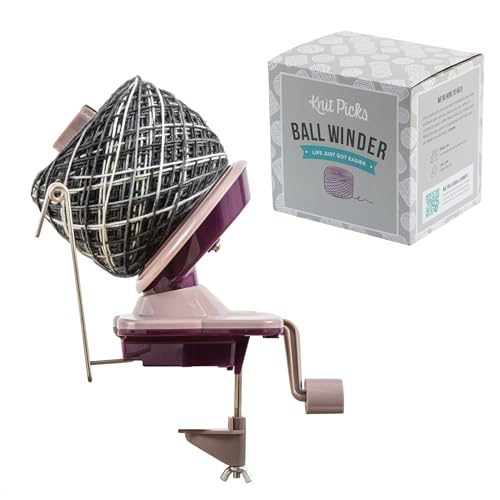
For the knitter who is just starting to build a stash or primarily works with standard fingering and worsted weights, the KnitPicks winder is a reliable workhorse. It is compact, lightweight, and incredibly easy to set up for a quick winding session before a new cast-on.
While it is made of plastic, it is surprisingly resilient if treated with care and not forced beyond its capacity. It creates a perfectly functional center-pull cake that fits neatly in most yarn bowls or project bags.

The trade-off here is capacity and long-term mechanical wear. If you try to force a thick, chunky roving through the guide, you will likely strip the gears. Treat this as your "daily driver" for standard projects, and it will serve you well for years.
Nancy’s Knit Knacks Heavy Duty Ball Winder

When you are a serious maker who views winding as a professional task rather than a chore, Nancy’s Knit Knacks offers a level of precision that is hard to beat. This winder is designed for those who demand consistent cake shape and tension control.
The build quality is exceptional, often featuring components that are easily replaceable if something eventually wears down. It is an investment piece, but it provides a smooth, fluid motion that makes winding large amounts of lace-weight mohair or delicate silk blends a meditative experience.
Be aware that this level of engineering comes with a learning curve regarding setup and tensioning. It is not a "plug and play" device; you will need to spend time calibrating your yarn feed to get those perfectly symmetrical cakes.
U-nitt Large Capacity Yarn Ball Winder

The U-nitt Large Capacity winder is a fantastic middle-ground option for the knitter who wants a higher volume capacity without the industrial footprint of a professional-grade machine. It is designed to handle big skeins without the yarn "jumping" off the cone during the process.
This model is particularly good for those who work with slippery fibers like bamboo or Tencel, which often slide off standard winders. The tension guide is well-placed, keeping the yarn feeding at a steady rate, which prevents the cake from becoming too loose or uneven.
It is a sturdy, mid-weight tool that balances cost and performance effectively. If you are tired of stopping halfway through a 200-gram skein to restart a collapsed cake, this is a significant upgrade.
ChiaoGoo Hand-Operated Yarn Ball Winder

ChiaoGoo has built a reputation on high-quality knitting needles, and their winder reflects that same attention to detail. It is a smooth, quiet, and highly efficient tool that feels like a natural extension of the knitting process.
The design is sleek and minimalist, taking up very little room on a craft table. It is particularly adept at handling various yarn weights, from delicate lace to heavy worsted, without requiring constant adjustments to the tension guide.
One thing to note is that the handle action is quite light; if you are used to the heavy resistance of cheaper winders, you might find yourself winding too fast initially. Slow down and let the mechanics do the work to avoid creating an overly tight cake that stretches your yarn.
Lacis Yarn Ball Winder: Compact and Sturdy
Lacis is a name long associated with traditional fiber arts, and their ball winder is a testament to functional, no-nonsense design. It is compact enough to tuck into a drawer, yet sturdy enough to handle daily winding duties for a busy knitter.
This winder is an excellent choice for those with limited space who still want a reliable tool. It doesn’t have the bells and whistles of the larger metal models, but it performs the core task—creating a stable center-pull cake—with consistent reliability.
It is particularly well-suited for winding small amounts of leftovers or managing yarn for colorwork projects. If you have a small apartment or a dedicated corner in a shared room, the Lacis is a space-saving win.
Why Use a Ball Winder for Your Yarn Stash
A ball winder isn’t just about aesthetics; it is about protecting the life of your fiber. Winding yarn into a center-pull cake prevents the "yarn barf" that happens when a factory skein collapses, saving you hours of detangling.
Furthermore, it makes it easier to inspect your yarn for knots, breaks, or inconsistencies in the ply before you start knitting. If you find a knot in a hank, you can deal with it immediately rather than discovering it in the middle of a complex lace row.
- Prevents tangling: Keeps yarn organized and ready for use.
- Fiber protection: Reduces the stress caused by pulling from the outside of a skein.
- Inventory management: Neat cakes take up less space and are easier to color-coordinate.
Manual vs Electric: Choosing Your Winder
Most knitters start with manual winders, and for good reason: they are affordable, intuitive, and give you total control over the speed. You can feel the tension in your fingers, which helps you identify if the yarn is snagging or if the ply is becoming compromised.
Electric winders, while tempting, can be aggressive. If you are winding delicate hand-dyed wool or fragile alpaca, an electric motor can stretch the yarn beyond its elastic limit, potentially ruining your gauge later.
Choose a manual winder if you want to maintain a tactile connection with your yarn. Choose an electric winder only if you are processing massive amounts of yarn regularly and have the experience to monitor tension by sight rather than feel.
Essential Tips for Perfect Center-Pull Cakes
The secret to a perfect cake is consistent tension; never pull the yarn too tightly as it feeds into the winder. If you wind too tightly, you risk stretching the fibers, which will cause your finished garment to grow or sag after the first wash.
Always ensure your yarn is coming off the swift smoothly before it reaches the winder. If the swift is jerky, your cake will be uneven, leading to inconsistent tension when you actually start knitting.
- Check for knots: Always unwind the hank fully before starting the winder.
- Use a swift: Never wind from a pile on the floor; it will inevitably tangle.
- Let it rest: After winding, let the cake sit for a few hours before knitting to allow the fibers to relax.
How to Maintain Your Winder for Longevity
Treat your winder like a precision tool rather than a toy. Keep the gears free of dust and stray fibers, as these can build up and cause the mechanism to seize or grind.
A tiny drop of sewing machine oil on the moving parts once or twice a year can keep the action smooth. If your winder has a removable cone, clean it regularly to ensure the yarn slides off without catching on debris.
Finally, always store your winder in a dry, cool place. Humidity can warp plastic components, while extreme heat can cause the grease in the gears to break down, leading to a sticky, sluggish winding experience.
Investing in a quality ball winder is one of the most practical upgrades you can make for your knitting practice. By transforming your hanks into stable, center-pull cakes, you create a more efficient and enjoyable workflow that protects your precious yarn. Whether you choose a budget-friendly manual model or a heavy-duty metal machine, the result is a more organized stash and a better knitting experience. Take the time to master your tension, keep your tools clean, and enjoy the satisfaction of a perfectly wound cake ready for your next project.