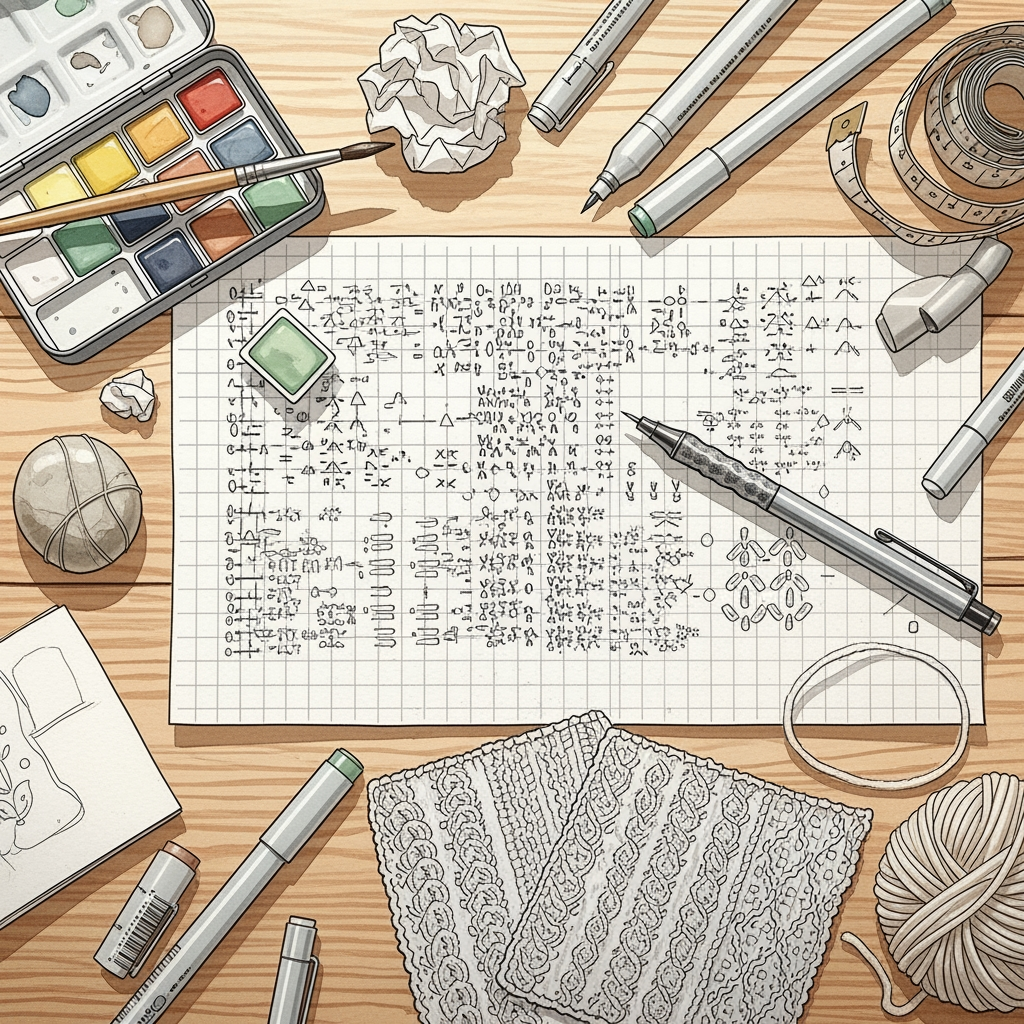
7 Best Printed Pattern Binders for Project Organization
Elevate your workspace with our top 7 printed pattern binders. Discover stylish, durable options that keep your projects organized and visually appealing.
Keeping your knitting patterns organized is the difference between a relaxing evening of cable work and a frustrating search for a lost chart. As your project library grows, a dedicated system becomes essential for tracking gauge, yarn substitutions, and row counts. These seven binders offer varying levels of durability and style to suit your specific maker needs. Finding the right vessel for your patterns ensures that your hard-earned notes stay safe for years to come.
The Cocoknits Maker’s Binder: Best Overall Choice
This binder feels like it was designed by someone who has spent thousands of hours at the needles. It isn’t just a place to hold paper; it is a dedicated tool for the modern knitter who values both form and function.
The kraft board construction is surprisingly sturdy, standing up to the wear and tear of being tossed into a project bag. It features a unique magnetic closure that keeps your precious patterns from slipping out while you’re on the go.
The best part is the integration with the Cocoknits Method, allowing you to use their specific accessories like stitch markers and row counters directly within the system. It is an investment, but for a dedicated maker, it provides a cohesive experience that cheaper office supplies simply cannot match.
Avery Durable View Binder: Best Budget Option


If you are a knitter who prefers to keep a separate binder for every major project, you need a cost-effective solution that doesn’t sacrifice basic utility. The Avery Durable View is the workhorse of the office world, and it serves the knitting community just as well.
The clear overlay allows you to slip in a custom cover page, which is perfect for identifying your project’s yarn label, needle size, and gauge swatch notes at a glance. I often use these to store my printed lace charts because the rings are easy to open and close repeatedly.
While it lacks the aesthetic charm of specialized craft binders, its functionality is undeniable. It is the perfect choice for the knitter who wants to keep their stash of patterns organized without spending a fortune on the binder itself.
Leuchtturm1917 Drehgriffel Binder: Best Premium Pick

For the knitter who treats their pattern collection like a curated library, the Leuchtturm1917 system is a dream. It offers a level of refinement that turns the act of reviewing your project notes into a genuine pleasure.
The materials are top-tier, featuring a tactile finish that feels as good in your hands as a high-quality skein of hand-dyed merino. It is designed for longevity, ensuring that your heirloom patterns and handwritten modifications are protected in a sophisticated, minimalist package.
This isn’t for the person who throws their patterns in the bottom of a tote bag. It is for the knitter who keeps a dedicated craft space and values gear that reflects the artistry of their work.
Mead Five Star Flex Binder: Best for Portability

When you are knitting on the train or at a local knit night, you need a binder that moves with you. The Mead Five Star Flex is essentially a hybrid between a notebook and a binder, making it incredibly slim and easy to pack.
Its flexible cover means it won’t crack or warp when stuffed into a crowded project bag alongside your circular needles and notions pouch. Because it can fold back on itself, it takes up very little table space while you are working through a complex colorwork chart.
The tradeoff is that it holds fewer sheets than a traditional thick binder. However, for a single, active project, it is arguably the most ergonomic choice for the traveling knitter.
Wilson Jones 3-Ring Binder: Best Heavy Duty Pick

If you are the type of knitter who keeps every pattern you have ever printed in one massive, master reference binder, you need something that won’t give up under the weight. The Wilson Jones heavy-duty binder is designed to handle hundreds of pages without the rings becoming misaligned.
A misaligned ring is the enemy of a knitter; it causes your pages to snag and tear, which is a nightmare when you are trying to follow a delicate lace stitch pattern. This binder features a reinforced hinge that keeps your pages turning smoothly, even after years of use.
It is bulky and heavy, so it’s not meant for travel. Keep this on your bookshelf as your permanent, reliable archive for your entire pattern history.
Case-it Open Tab Binder: Best for Large Projects

Large, multi-part projects like complex sweaters or intricate blankets often require a lot of supplemental material. The Case-it binder is unique because it features an open-tab design, allowing you to access your patterns without having to fully open the rings every time.
This is a game-changer when you are constantly switching between your main pattern, your modification notes, and your yarn substitution logs. The exterior pocket is also deep enough to hold a pair of scissors or a small crochet hook for picking up dropped stitches.
It is bulkier than a standard binder, but the organizational capacity is unmatched. If you are working on a project with a 20-page instruction manual, this is the system that will keep you from losing your place.
Samsill Earth Choice Binder: Best Eco-Friendly Pick

Many of us in the fiber arts community are deeply conscious of our environmental footprint, from the sheep that grow our wool to the dyes we use. The Samsill Earth Choice binder is made from recycled materials, aligning your organizational habits with your values.
It doesn’t feel like a compromise, either; the construction is solid and the rings are reliable. It is a clear reminder that we can maintain our project records without contributing to unnecessary plastic waste.
It is a great choice for the knitter who wants to ensure their hobby remains as sustainable as possible. You get the same organizational utility as a standard binder, but with a much cleaner conscience.
Key Features to Look for in a Knitting Binder
When shopping for a binder, don’t just look at the color or the price tag. Think about how the binder will sit on your lap or your side table while you are knitting.
- Ring Mechanism: Look for "D-rings" rather than round rings; they hold more pages and keep them aligned, which prevents tearing.
- Cover Durability: Choose a material that can be wiped clean, as yarn fibers and the occasional rogue drop of tea are inevitable.
- Size: A standard letter size is usually best, but ensure it is wide enough to accommodate sheet protectors that stick out slightly past the edge of the paper.
- Interior Pockets: Pockets are essential for storing your yarn labels, which contain vital information like dye lot numbers and care instructions.
Protective Sheet Protectors for Your Patterns
A pattern without a protective sleeve is a pattern waiting to be ruined by a stray cup of coffee or greasy fingers. I always recommend using heavy-duty, non-glare sheet protectors to keep your charts pristine.
The non-glare finish is critical; high-gloss plastic can create reflections that make it difficult to read small, intricate charts under bright lamps. If you are working with dark yarn, you need every bit of clarity you can get to see your stitches.
Furthermore, you can use dry-erase markers directly on the sheet protectors to track your row progress. This saves you from having to print multiple copies of the same chart as you work through a long project.
Tips for Organizing Your Knitting Project Notes
Organizing isn’t just about the binder; it’s about the information you put inside it. I suggest creating a "Project Cover Sheet" for every item you make, including the yarn brand, colorway, dye lot, and the specific needle size you used to achieve gauge.
If you made any modifications—such as lengthening a sleeve or changing a neckline—write them down immediately. You will never remember these details six months from now, and your future self will thank you when you want to recreate the project.
Finally, keep a small swatch of the yarn taped to your project notes. This helps you remember the feel and drape of the fiber, which is invaluable when you are trying to match a project to a new pattern in the future.
Organizing your knitting patterns is a rewarding practice that honors the time and love you pour into every stitch. Whether you choose a compact, portable binder or a heavy-duty archival system, the best choice is the one that you actually use consistently. By protecting your charts and documenting your modifications, you build a personal library of expertise that will serve you for decades. May your needles stay sharp and your patterns stay perfectly organized.