6 Best Measuring Rulers For Swatching To Own
Accurate swatching is vital for garment fit. We explore the six best measuring rulers designed for precision to ensure your knitting projects succeed every time.
Every seasoned knitter knows that the difference between a garment that fits perfectly and one that ends up as a "re-gift" lies entirely in the swatch. While your intuition is a powerful tool, relying on your eyes alone to count stitches is a recipe for heartbreak once you reach the armhole shaping. Investing in a dedicated measuring tool transforms your swatching process from a guessing game into a precise science. Here are the six best rulers to ensure your next project fits exactly as intended.
Cocoknits Maker’s Keep: The Best Magnetic Ruler
The Maker’s Keep is far more than just a ruler; it is a wearable workstation designed for the knitter who constantly loses their place. By incorporating a magnetic slap-bracelet design, it keeps your metal tools and tapestry needles within arm’s reach at all times.
For swatching, the included magnetic ruler is a game-changer because it stays put on your work. If you are measuring a large, heavy sweater swatch, you don’t have to worry about the tool sliding around or losing your starting point.
The trade-off here is the bulk. If you prefer a minimalist knitting bag, this accessory might feel like overkill compared to a flat, plastic ruler. However, for those who struggle with "tool clutter" on their sofa or knitting chair, it is an unparalleled organizational asset.
Susan Bates Knit Chek: The Classic Gauge Tool
You have likely seen the Knit Chek in the bottom of every veteran knitter’s notions bag for the last thirty years. It is a simple, no-nonsense piece of plastic that combines a needle sizer with a standard ruler.
Its primary strength is its durability and portability. Because it is thin and flexible, it slips into any project bag without adding weight. It is the tool you keep on hand for quick, mid-project checks when you need to verify a needle size or measure a few inches of progress.
The downside is that it lacks the specialized cut-outs for counting stitches that more modern tools provide. It is a generalist tool, not a specialist, which means you’ll need to do the manual work of counting your stitches against the edge of the ruler yourself.
HiyaHiya Stainless Steel Needle Gauge and Ruler


Stainless steel is the gold standard for precision, and the HiyaHiya gauge reflects that reliability. Unlike plastic tools that can warp or snap over time, this metal ruler remains perfectly straight for the life of your knitting practice.
This tool is particularly useful if you work with fine-gauge yarns or lace weight fibers. Because the markings are etched into the steel, they won’t rub off after a few years of friction against your yarn.
Be aware that the metal can be slick, which might make it slide on certain types of mohair or angora blends. If you are working with very "haloed" yarns, you might find that the steel lacks the grip needed to hold the swatch perfectly still while you count.
Katrinkles Wooden Swatch Ruler: Best for Texture
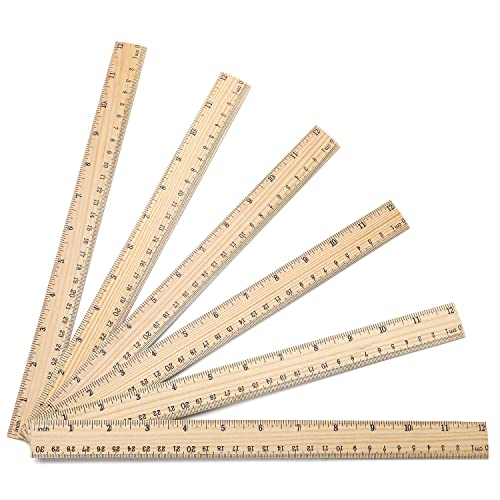
Katrinkles has carved out a niche by creating tools that are as beautiful as they are functional. Their wooden swatch rulers are crafted from birch, providing a warm, tactile experience that is a joy to handle.
The standout feature here is the precision-cut window, which is specifically designed to isolate a one-inch or two-inch square. This takes the guesswork out of counting, as the wooden frame acts as a physical barrier to keep your eyes focused on the correct stitches.
Because these are made of wood, they are not as indestructible as stainless steel. You should avoid keeping them in a bag where they might get crushed under a heavy yarn bowl or a pair of sharp scissors.

ChiaoGoo 6-Inch Aluminum Needle Gauge and Ruler

ChiaoGoo is beloved for their needles, and their aluminum gauge follows suit with a sleek, industrial aesthetic. It is lightweight, rigid, and provides a clear, high-contrast surface that makes reading stitch counts easy on the eyes.
This ruler is an excellent choice for the knitter who frequently switches between different needle materials. The gauge holes are accurately sized, ensuring that you aren’t guessing whether your needle is a 3.5mm or a 3.75mm—a common confusion that can ruin a project’s gauge.
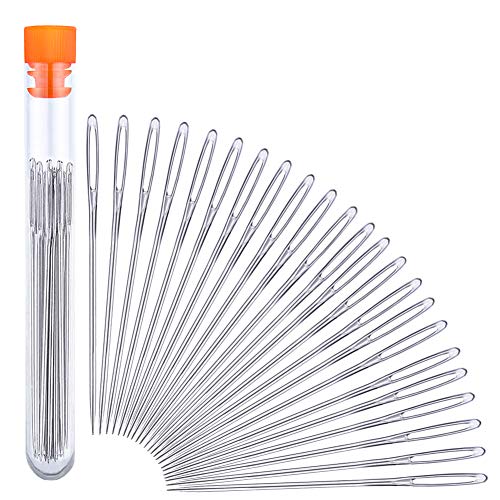
The only real drawback is the aluminum’s tendency to show scratches over time. While this won’t affect the accuracy of your measurements, it does mean the ruler will eventually look "well-loved" after a few years of heavy use.
Clover Knitting Gauge: The Essential Basic Tool

If you are a beginner, the Clover Knitting Gauge is the most accessible entry point into the world of accurate swatching. It is widely available, affordable, and gets the job done without any unnecessary bells or whistles.
It features a built-in needle gauge that covers a wide range of standard sizes, making it an essential "first purchase" for any new knitter. It is the reliable workhorse of the knitting world, designed to be used daily without fuss.
While it lacks the premium feel of wood or the permanence of steel, it is perfectly calibrated for standard knitting needs. Don’t let its humble appearance fool you; it is a perfectly accurate tool for verifying your gauge before casting on a sweater.
Why Accurate Swatch Measuring Matters for Fit
Your gauge is the mathematical foundation of your garment. If your gauge is off by even half a stitch per inch, that error compounds over the entire width of a sweater, potentially resulting in a garment that is two sizes too big or small.
Measuring accurately is not just about the numbers; it is about respecting the time you invest in your craft. A swatch is a small investment of time that prevents the massive disappointment of a finished object that doesn’t fit.
Always remember that swatches behave differently than the final garment. When you measure, you are looking for the "after-blocking" gauge, which represents how the yarn will settle once it is washed and relaxed.
How to Use a Gauge Ruler for Stitch Counting
To get an accurate count, lay your blocked swatch on a flat, well-lit surface. Place your ruler across the center of the swatch, avoiding the edges where the stitches may be distorted by tension changes near the needles.
Use the window or the markings on your ruler to isolate exactly one inch or two inches of fabric. Count the "V" shapes created by the stitches, being careful to count every single stitch, including partial stitches at the edges if necessary.
If you are counting in the round, your gauge might differ from your flat-knitted swatch. If your project is a sweater in the round, ensure your swatch is also worked in the round to account for the difference in tension between knit and purl stitches.
Understanding Inches Versus Centimeters in Knits
Most modern patterns provide gauge in both inches and centimeters, but you should stick to the system you are most comfortable with. Switching back and forth can lead to rounding errors that affect your final stitch count.
If a pattern calls for 20 stitches over 4 inches, do not simply divide by 4 to get the per-inch count if you are working in centimeters. Always measure the full span indicated in the pattern to ensure your math remains consistent and accurate.
Remember that yarn properties dictate the measurement. A wool-silk blend will behave differently than 100% cotton, and your ruler will capture these differences if you measure consistently across the entire width of your swatch.
Tips for Measuring Swatches Without Distortion
Never stretch your swatch while measuring it. If you pull the fabric to make it fit a certain number of stitches, you are essentially lying to yourself about the gauge, and the resulting garment will likely be loose and baggy.
Place your ruler gently on top of the fabric. If your swatch is curling at the edges, you haven’t blocked it correctly; take the time to steam or wet-block the swatch until it lies perfectly flat before you even pick up your ruler.
Finally, measure in at least three different spots on the swatch and take the average. This accounts for minor variations in tension that occur as you get into the "rhythm" of your knitting, giving you the most realistic number possible.
Choosing the right ruler is a personal decision that depends on your workflow, your workspace, and the types of yarn you prefer. Whether you opt for the tactile warmth of wood or the clinical precision of stainless steel, the most important step is simply using the tool consistently. By taking the time to measure your swatches with care, you guarantee that your finished projects will be as beautiful as they are wearable. Happy knitting!