6 Best Velvet Blocking Boards Worth Using
Discover the top 6 velvet blocking boards for precise fiber projects. This guide evaluates durability and pin retention to help you achieve perfect results.
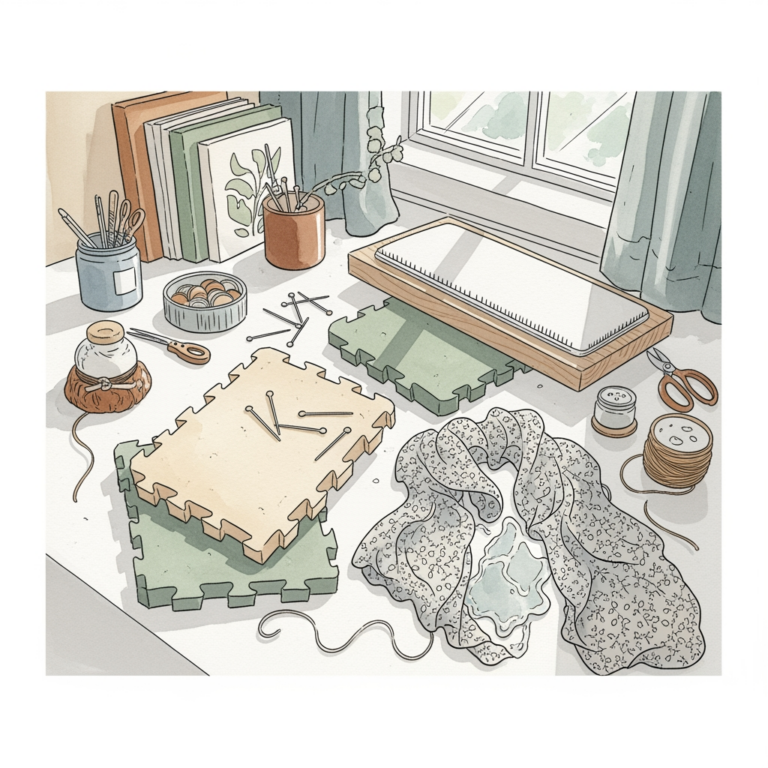
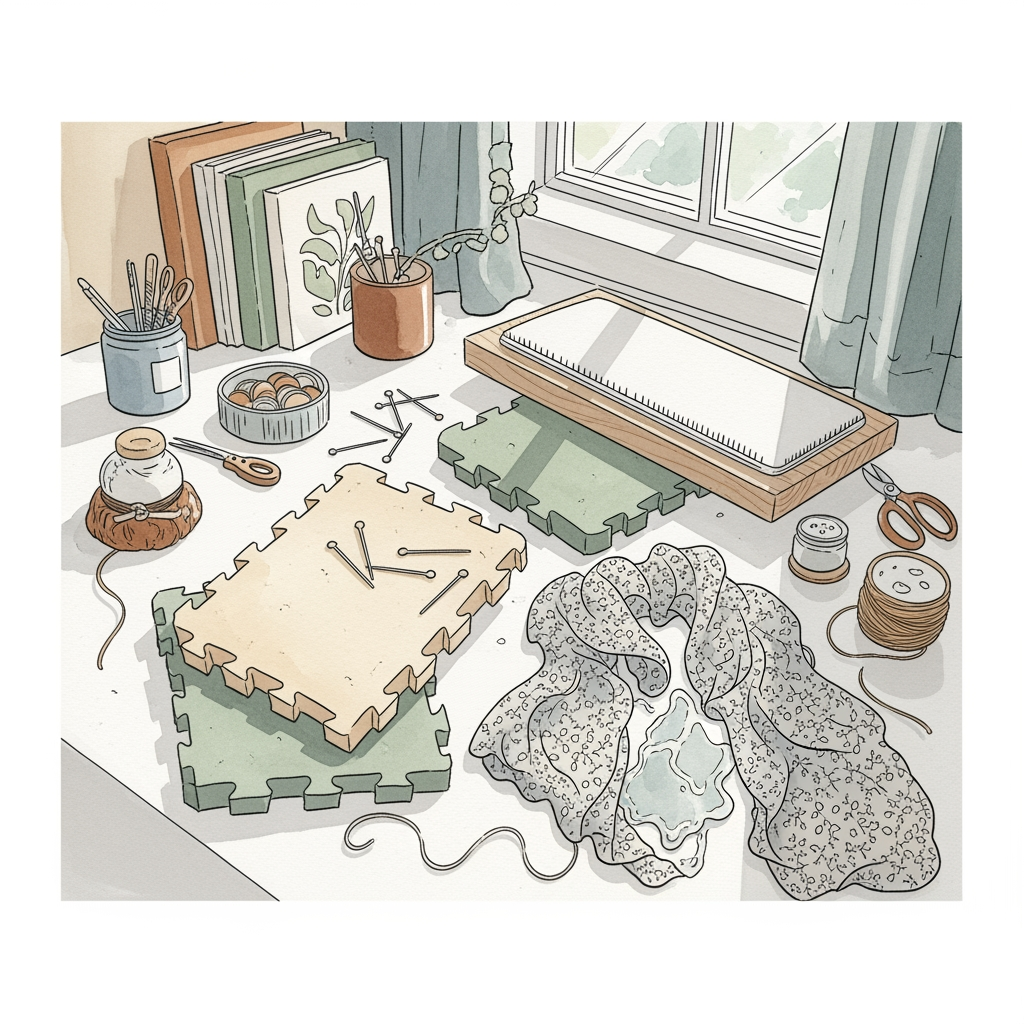
Achieving the perfect finish on a hand-knitted garment is entirely dependent on the quality of your blocking surface. While standard foam mats are common, velvet-topped boards offer a superior level of friction and fiber protection that prevents snagging during the pinning process. Investing in a specialized surface ensures your lace opens correctly and your seams align with professional precision. Here are the top six velvet-surfaced boards that will elevate your finishing game.
Knitter’s Pride Lace Blocking Mats: Best Overall
These mats are a staple in my studio because they strike the perfect balance between density and surface texture. The velvet-like flocking provides just enough grip to keep your stitches from sliding around while you are trying to measure your gauge or tension.
Unlike cheaper foam alternatives, these mats hold T-pins firmly without the "bounce back" that can sometimes cause tension irregularities in delicate lace. When you are blocking a complex mohair shawl, that stability is the difference between a symmetrical result and a lopsided mess.
The modular design is their greatest strength for the modern knitter. You can snap them together to fit anything from a small swatch to a massive circular lace tablecloth.
Susan Bates Knit Chek Velvet Blocking Board Set


The Susan Bates system is a classic for a reason, focusing on utility and measurement accuracy. This set often includes integrated rulers or grid markings that are essential when you need to ensure your garment pieces match exactly before seaming.
The velvet surface here is slightly more durable than standard flocked foam, making it a great choice if you block heavy wool sweaters regularly. It resists the indentations that usually plague lighter mats after months of heavy pinning.
If you are a knitter who struggles with consistent sizing, this board is your best friend. It turns the blocking process into a precise, repeatable science rather than a guessing game.
Clover Locking Blocking Mats With Velvet Finish

Clover is known for thoughtful engineering, and these mats are no exception. The locking mechanism is incredibly secure, preventing the boards from sliding apart when you are stretching a heavy, water-saturated wet-blocked piece.
The velvet finish is thin but effective, providing a soft barrier that prevents the fibers of your yarn from grabbing onto the base material. This is particularly useful when working with delicate silk or alpaca blends that tend to "fuzz" or catch on rough surfaces.

These are ideal for the knitter who wants a "set it and forget it" experience. Once you lock your pieces into place, they stay exactly where you put them until they are bone dry.
Boye Blocking Board With Soft Velvet Surface
The Boye board offers a very plush, soft velvet surface that is incredibly gentle on luxury fibers. If you frequently work with expensive hand-dyed yarns or single-ply wools, this surface minimizes the risk of friction damage.
It is particularly well-suited for smaller projects like socks or baby hats. The soft pile allows the pins to sink in deeply, ensuring that even the most stubborn, springy yarn stays exactly where you need it to bloom.
Keep in mind that because the surface is quite soft, it can show wear over time if you use very thick pins. It is best reserved for fine-gauge work where you want to treat your fibers with the utmost care.
Lacis Velvet Lined Blocking Board for Lace Work
Lacis has long been the gold standard for traditional lacemakers, and their velvet-lined boards reflect that heritage. This is a specialized tool designed specifically for the intense pinning required by intricate lace patterns.
The velvet is exceptionally high-quality, providing a deep, luxurious grip that keeps every single picot and point in place. When you are blocking a project with hundreds of points, you need a surface that doesn’t fight back.
This board is an investment piece for the dedicated lace knitter. If you find yourself spending hours pinning out a shawl, the tactile experience of this board makes the work feel significantly less tedious.
ArtBin Velvet Blocking Station for Small Projects
This station is a brilliant solution for the knitter who mostly works on accessories. It is compact, portable, and features a high-quality velvet surface that is perfect for blocking swatches or small items like mitts.
Because it is smaller, it is much easier to store than a full-sized set of floor mats. It is my go-to recommendation for knitters who live in smaller spaces or who travel to knitting retreats frequently.
Don’t let the size fool you; the build quality is sturdy and professional. It provides the same surface benefits as the larger boards but in a footprint that won’t take over your entire living room.
Why Velvet Surfaces Protect Delicate Fiber Ends
Blocking is essentially a "reset" for your yarn, allowing the fibers to relax and bloom into their final shape. A velvet surface acts as a buffer, preventing the microscopic scales on wool fibers from catching on the board.
When you block on a hard or abrasive surface, you risk "pilling" or fraying the ends of your stitches. Velvet allows the yarn to sit on top of the surface rather than digging into it, which keeps the stitch definition crisp and clean.
This is especially critical for superwash wools, which can be prone to stretching and losing their shape if handled roughly. A velvet surface provides the gentle support these fibers need to regain their structure without being damaged.
Essential Features for Quality Blocking Boards
When shopping for a board, look for density and pin-retention. A high-quality board should feel firm to the touch, not squishy, so that pins stand straight up and don’t lean under the tension of the yarn.
- Grid Markings: Essential for symmetry and squaring up pieces.
- Modular Design: Allows you to customize the shape for different projects.
- Velvet Pile Depth: A shorter, dense pile is generally more durable than a long, loose one.
- Water Resistance: Since you are blocking wet garments, the backing must be moisture-proof.
Avoid boards that feel like cheap, hollow plastic. A good blocking board should have some weight to it, which helps keep the entire assembly anchored to your table or floor.
How to Properly Pin Projects on Velvet Mats
Always start from the center and work your way out toward the edges. This ensures that the fullness of the garment is distributed evenly across the entire surface rather than being pulled toward one side.
Use T-pins rather than standard sewing pins. T-pins provide a better grip in the velvet surface and are much easier to remove once the project is dry without stretching the stitches.
If you are blocking a sweater, remember to measure your pieces against your schematic. Pinning to the correct dimensions is just as important as the stitch quality itself when it comes to the final fit.
Maintaining Your Blocking Mats for Longevity
Velvet surfaces can attract lint and stray fibers over time. Use a soft garment brush or a lint roller after every few uses to keep the surface clean and ready for your next project.
Store your mats flat whenever possible to prevent warping. If you must stack them, place a piece of acid-free tissue paper between the velvet surfaces to prevent them from sticking together or picking up debris.
If a mat gets damp during the blocking process, allow it to air dry completely in a well-ventilated area before storing it away. This prevents mildew and keeps the foam core from breaking down over time.
Choosing the right velvet blocking board is a commitment to the longevity and beauty of your hand-knitted work. By opting for a surface that protects your fibers and provides reliable tension, you ensure that every stitch you labored over looks its absolute best. Take the time to select a board that fits your specific project needs, and you will see the difference in every garment you finish. Happy blocking, and may your points always be perfectly sharp.