6 Best Yarn Swift Mounting Brackets for Craft Rooms
Optimize your craft space with our top 6 yarn swift mounting brackets. Discover stable, space-saving options to improve your winding efficiency and comfort.
Winding a fresh, hand-dyed skein of wool into a neat center-pull cake is one of the most satisfying rituals in a knitter’s life. However, a wobbly or poorly mounted swift can turn that meditative process into a tangled, frustrating mess. The secret to a perfect cake isn’t just the winder; it’s the stability of your swift mounting bracket. Finding the right anchor for your workspace ensures your yarn flows smoothly without snagging or jumping off the swift.
Stanwood Needlecraft Table Clamp: Best Overall
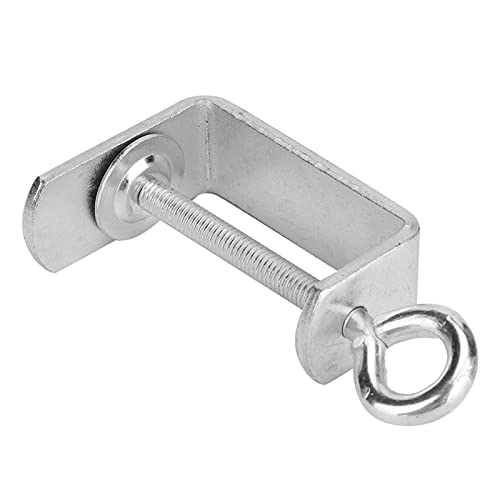

The Stanwood clamp is a staple in many dedicated craft rooms because it balances accessibility with rock-solid performance. It features a wide, adjustable opening that accommodates everything from thin glass-topped desks to thick, chunky farmhouse tables.
What makes this the "best overall" is the sheer reliability of the grip. When you are winding a delicate, slippery silk-mohair blend, the last thing you want is the swift shifting mid-wind, which often causes the yarn to lose tension and tangle.
This mount holds firm, allowing you to focus on the speed of your winding rather than babysitting the equipment. If you frequently switch between different winding stations in your home, its intuitive design makes it a breeze to move and reset.
Lacis Wooden Swift Mount: Top Premium Choice

For the knitter who treats their craft room like a sanctuary, the Lacis wooden mount offers a level of aesthetic beauty that plastic alternatives simply cannot match. It is crafted with precision, feeling less like a tool and more like a piece of fine furniture.
Beyond the looks, the craftsmanship translates into a smooth, vibration-free rotation. If you are dealing with a large, heavy skein of rustic, high-twist wool, you will notice that this mount handles the momentum of the swift much more gracefully than cheaper, lightweight models.
It is an investment piece, certainly, but one that respects the fiber you are working with. The wood is finished to be snag-free, ensuring that even the most delicate lace-weight yarns won’t catch on a rough edge or splinter.
KnitPicks Yarn Swift Clamp: Best Budget Option

If you are just starting your journey into buying yarn in skeins rather than pre-wound balls, you don’t need to break the bank to get organized. The KnitPicks clamp is a functional, no-nonsense solution that gets the job done for a fraction of the cost of high-end models.
It is lightweight and compact, making it an ideal choice for knitters with limited space who need to tuck their tools away in a drawer after a project. While it may not have the heavy-duty weight of professional equipment, it is perfectly capable of handling standard worsted-weight wool or acrylic blends.
The trade-off here is the plastic construction, which can feel a bit more "flexy" during high-speed winding. As long as you maintain a steady, moderate pace, it will provide perfectly acceptable results for most everyday knitting projects.
Amish-Style Wooden Swift Base: Best Stability
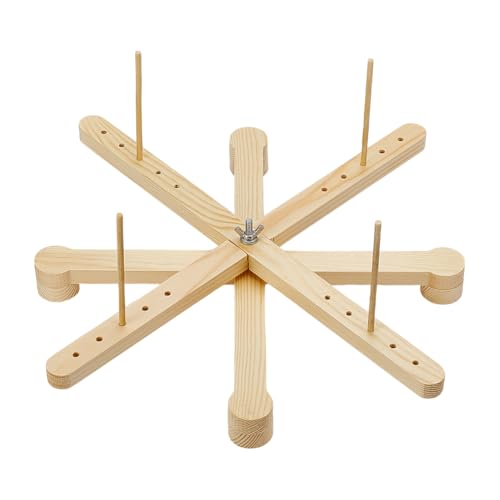
The Amish-style swift is a masterpiece of engineering that relies on gravity and a wide footprint rather than a clamping mechanism. This base sits directly on your table, utilizing its own weight to stay anchored while the swift rotates atop a central spindle.
This is the ultimate choice for knitters with glass-topped tables or antique furniture where you simply cannot risk the pressure of a metal clamp. Because it doesn’t attach to the edge, you can place it anywhere in the room, giving you more flexibility in your workspace layout.
The sheer mass of the wooden base prevents the "traveling" effect that lighter swifts often suffer from. It is a fantastic option for winding large, heavy hanks of bulky yarn that would otherwise pull a clamped swift toward the center of the table.
Ashford Table Swift Clamp: Best Professional Fit

Ashford has a long-standing reputation in the spinning and weaving community, and their mounting hardware reflects that heritage of precision. This clamp is designed for the knitter who demands a professional-grade fit and finish.
The engineering here is tight, meaning there is virtually no play or wiggle in the connection point. When you are winding expensive, hand-dyed luxury fibers, you want a system that feels like an extension of your own hands.
Because of its robust design, this mount is particularly well-suited for those who wind yarn for hours at a time. It is built to withstand the rigors of heavy use without loosening or requiring constant adjustments.
Strauch Fiber Equipment Mount: Best Heavy Duty

Strauch is the gold standard for those who process their own fiber or wind massive quantities of yarn. Their mounting equipment is built like a tank, designed to handle the torque and weight of large-scale winding operations.
If you are a knitter who frequently works with heavy, multi-ply yarns or large cones, this is the mount you want. It provides an unshakeable connection that allows you to wind at high speeds without the slightest hint of instability.
While it is certainly overkill for someone winding a single skein of sock yarn once a month, it is a dream for the serious fiber artist. It is a "buy it once" tool that will likely outlive your current stash.
How to Secure Your Swift for Smooth Winding
The secret to smooth winding is ensuring your swift is perfectly centered relative to your ball winder. If the yarn has to travel at an awkward angle, it will inevitably create uneven tension, resulting in a "mushy" cake that collapses later.
Always ensure your mounting bracket is tightened securely to a flat, level surface. Even a slight tilt in the table can cause the swift to lean, which creates uneven drag on the yarn as it pulls off the swift.
Test the rotation with a small amount of yarn before you commit to the full skein. If the swift wobbles or jerks, check the mounting bracket first; 90% of winding issues are caused by an insecure base rather than the swift itself.
Essential Tips for Preventing Table Damage
We all love our yarn, but we also love our furniture. Metal clamps, if tightened too aggressively, can leave deep indentations or scratch the finish of a beautiful wooden table.
Always use a piece of felt, a thick rubber coaster, or a scrap of heavy fabric between the clamp and the table surface. This simple barrier distributes the pressure and protects your furniture from the metal teeth of the mounting bracket.
Avoid over-tightening the clamp; it only needs to be firm enough to prevent movement. If you find yourself needing to crank it down to the point of pain, your mounting bracket might not be the right fit for your table’s edge.
Comparing Metal vs Wood Swift Mounting Systems
Metal mounting systems are generally more compact and provide a very rigid, low-profile connection to the table. They are excellent for modern, minimalist craft rooms where space is at a premium and you need a "set it and forget it" solution.
Wooden mounting systems, conversely, offer a softer touch and often come with a wider footprint. They are warmer to the touch and tend to be more forgiving if you accidentally bump into them while reaching for your scissors or measuring tape.
The choice often comes down to your specific table material and the aesthetic of your space. If you have a delicate antique desk, wood is almost always the safer, more sympathetic choice for the finish.
Troubleshooting Common Swift Wobble Issues
If your swift is wobbling, start by checking the mounting bracket for any loose screws or shifting. Often, the issue isn’t the swift itself, but the connection point where the bracket meets the table.
Ensure that the swift is balanced; if you are winding a very large skein, make sure it is centered on the swift’s arms. An off-center load will create a rhythmic wobble that can eventually loosen even the best mounting brackets over time.
Finally, check for debris or dust in the central spindle of the swift. Sometimes, a simple cleaning and a drop of light machine oil can solve a "wobble" that was actually just friction-induced drag.
Investing in a quality mounting bracket is one of the most underrated ways to improve your knitting experience. By providing a stable foundation for your yarn, you ensure that your cakes are wound with consistent tension and zero frustration. Choose a system that fits your table, your space, and your project load, and you will find that the winding process becomes as relaxing as the knitting itself. Happy winding, and may your yarn always flow freely.