6 Best Lace Weight Yarn Bowls For Preventing Tangles
Stop yarn tangles with our top 6 lace weight bowls. Discover stable, snag-free designs that keep your delicate fibers organized and ready for every stitch.
Working with lace weight yarn is a delicate dance that requires precision, patience, and the right equipment to keep your fiber from becoming a chaotic nest. When you are dealing with fine, high-yardage yarns like cobweb or lace weight, even a small snag can ruin your tension or break a fragile strand. A high-quality yarn bowl is not just a luxury; it is an essential tool for maintaining consistent tension and preventing the dreaded yarn barf. Here are the best options to keep your next lace project moving smoothly from start to finish.
YarnValet Portable Plastic Bowl: Best for Travel


If you are a knitter who refuses to leave the house without a project, the YarnValet is a game-changer. Its lightweight, compact design means it fits easily into a project bag without adding unnecessary bulk to your commute.
Unlike heavy wooden or ceramic bowls, this plastic option won’t shatter if it takes a tumble in your carry-on luggage. It features a unique tension-control post that is particularly helpful for lace weight yarns that tend to pool or roll away when you aren’t looking.
The trade-off here is the lack of weight. If you are a vigorous knitter, you might find the bowl sliding across the table, so I recommend using a small piece of non-slip shelf liner underneath it for extra stability.
Nagina International Rosewood Bowl: Best Aesthetic
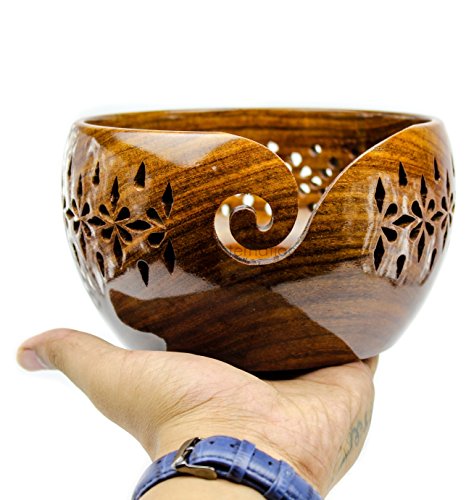
There is something undeniably satisfying about working with a tool that is as beautiful as the garment you are creating. These rosewood bowls are handcrafted and polished to a mirror-like finish, which is crucial for preventing delicate lace threads from catching on rough edges.
The natural density of rosewood provides a satisfying weight that keeps the bowl firmly anchored on your side table. Because the wood is so smooth, it allows even the stickiest mohair-blend lace yarns to glide out of the spiral cutout without resistance.
Be aware that wood is a natural material and can occasionally have tiny imperfections. If you notice a snag, a quick pass with a piece of fine-grit sandpaper will restore the surface to its original, snag-free condition.
Fiber Artist Supply Co. Maple Bowl: Best Stability

When you are working on a complex lace shawl with hundreds of stitches per row, the last thing you need is your yarn bowl dancing across the table. This maple bowl is substantial and wide-based, offering a level of stability that is hard to beat.
The craftsmanship here is focused on utility; the spiral cutout is deep and precision-cut to ensure your yarn stays contained even when you pull a long length of thread. It is a workhorse that stands up to the daily rigors of a dedicated lace knitter.
While it is heavier to carry around, the trade-off is a tool that stays exactly where you put it. It is the perfect choice for a dedicated knitting station in your home where you want equipment that feels permanent and secure.
Ceramic Artisan Studio Spiral Bowl: Best Smoothness

Ceramic is arguably the best material for preventing friction, as it is naturally non-porous and incredibly smooth. If you are working with slippery silk lace or delicate bamboo-blend yarns, a ceramic bowl ensures that the yarn flows with zero drag.
The weight of a well-made ceramic bowl is usually significant, providing a solid anchor for your yarn cake. The spiral cutout in these bowls is often rounded and glazed, which is a massive advantage for preventing the fraying that can occur with sharper wooden edges.
The obvious downside is fragility. If you have pets or children, or if your knitting space is shared with a busy household, keep this bowl on a low, stable surface to avoid accidents.
KnitPal Premium Wooden Yarn Bowl: Best Value Pick

You don’t have to spend a fortune to get a functional, reliable tool that protects your yarn. The KnitPal wooden bowl offers a great balance of weight, finish, and design without the premium price tag of boutique artisan pieces.
It features a classic spiral design that works well for most lace-weight balls and cakes. The wood is finished well enough to prevent snagging, making it a great entry point for knitters who are just starting to experiment with lace projects.
It is a fantastic option if you are building your knitting toolkit on a budget. While it may not have the intricate carving of higher-end bowls, it performs the primary function of tension management perfectly.
Della Q Canvas Yarn Bowl: Best Collapsible Option

Sometimes, you need a solution that disappears when the project is done. The Della Q canvas bowl is a brilliant departure from traditional hard-sided bowls, offering a soft, structured alternative that is perfect for small spaces.
Because it is fabric-based, it is incredibly gentle on your yarn and won’t cause any friction-related tangles. It is also surprisingly sturdy, standing up on its own while you work, but collapsing flat when it’s time to store your project.
This is the ultimate choice for knitters who travel or live in smaller apartments. It provides the containment you need without the footprint of a traditional bowl, making it a versatile addition to any collection.
How to Choose the Right Material for Your Yarn Bowl
When choosing a material, consider the "drag" factor of your specific yarn. Silk and synthetic lace yarns are naturally slick, so they work well in almost any bowl, but matte wools or mohair blends can benefit from the extra smoothness of ceramic or polished wood.
- Ceramic: Best for ultra-slick yarns; requires careful handling.
- Hardwood: Offers a balance of weight and durability; look for hand-polished finishes.
- Plastic: Ideal for travel; look for weighted bases to compensate for lightness.
- Fabric: Best for portability and protecting delicate fibers from surface friction.
Always inspect the interior of the bowl before your first use. Even a tiny splinter or a rough glaze bubble can snag a fine lace thread, so run your finger along the entire path of the yarn cutout to ensure it is perfectly smooth.
Why Spiral Cutouts Prevent Lace Weight Tangling
The spiral cutout is designed to keep your yarn flowing in a singular, controlled direction. By forcing the yarn to exit through a narrow, curved path, the bowl prevents the entire ball from jumping out if you pull the yarn too quickly.
For lace weight projects, this is vital because these yarns are often wound into center-pull cakes that can collapse. The spiral acts as a gatekeeper, ensuring that only the amount of yarn you need is released, which keeps your tension even and your work stress-free.
If you find your yarn is still tangling, check the size of the cake you are using. If the cake is wider than the bowl, it will rub against the sides and create friction; ensure your yarn cake is sized appropriately for the bowl’s diameter.
Comparing Weighted Bases for Heavy Lace Projects
Stability is the difference between a relaxing evening of knitting and a frustrating session of chasing your yarn ball. A weighted base is essential for lace knitting because you are often working with thin, long-yardage cakes that become lighter as you progress.
As the cake gets smaller, it becomes more prone to bouncing inside the bowl. A heavier bowl provides the inertia needed to keep the container stationary, even when you are pulling the last few yards of a 1,000-meter skein.
If you already own a bowl that feels too light, you can easily improve it by attaching a heavy-duty adhesive rubber pad to the bottom. This adds weight and, more importantly, grip, which prevents the bowl from sliding on smooth table surfaces.
Essential Tips for Maintaining Your Yarn Bowl Care
To keep your yarn bowl in top condition, store it in a dust-free area when not in use. Dust and lint can accumulate in the spiral cutout, creating a rough surface that can catch on delicate lace fibers during your next session.
If you have a wooden bowl, consider conditioning it once a year with a food-safe wood wax or mineral oil. This prevents the wood from drying out and keeps the surface slick, ensuring that your yarn continues to glide effortlessly.
For ceramic or plastic bowls, a simple wipe-down with a damp cloth is usually sufficient. Avoid using harsh chemicals that could degrade the finish, as a smooth surface is your best defense against the dreaded lace-weight tangle.
Investing in a dedicated yarn bowl is one of the smartest decisions you can make to elevate your lace knitting experience. By choosing the right material and design for your specific project needs, you can eliminate tangles and focus entirely on the rhythm of your stitches. Whether you prioritize portability, stability, or aesthetic beauty, there is a tool out there that will make your time at the needles infinitely more rewarding. Happy knitting, and may your yarn always flow as freely as your creativity.