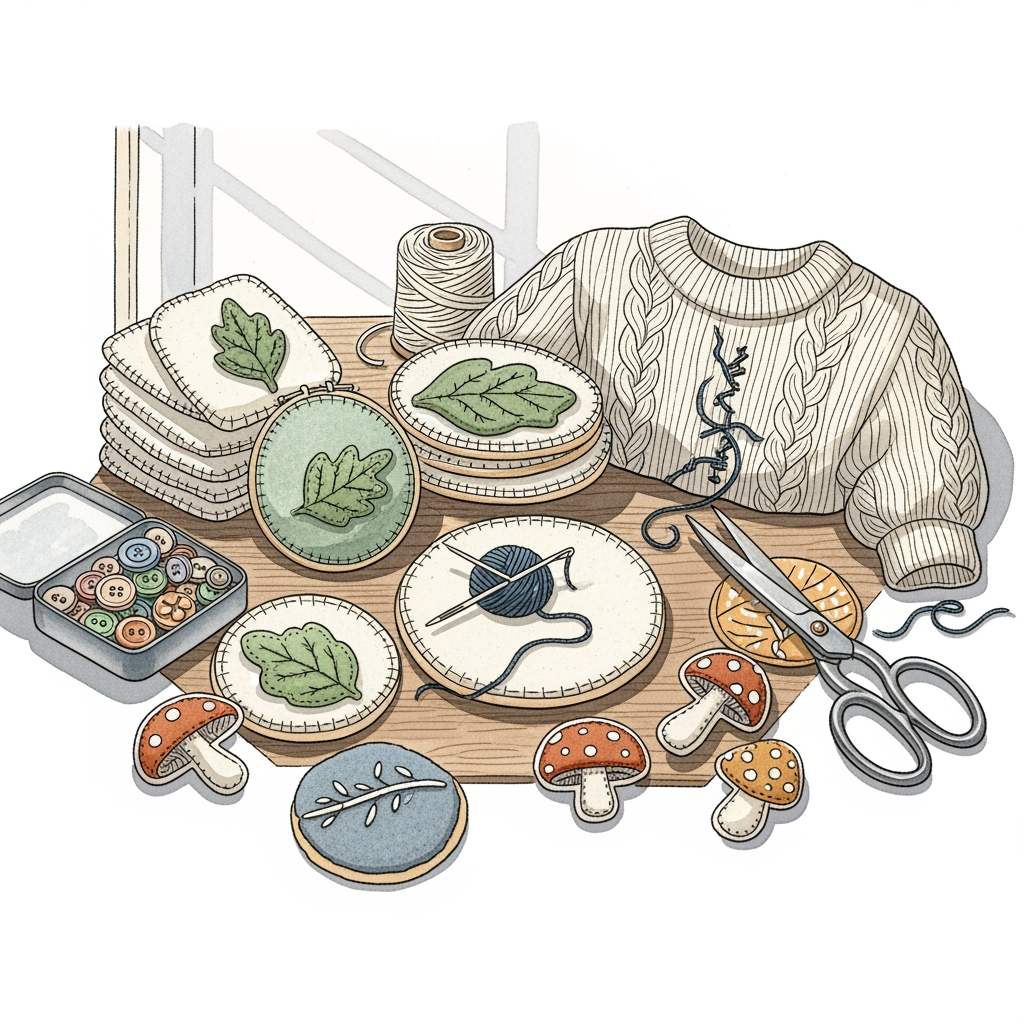
7 Best Embroidery Hoops For Sweater Embellishment
Select the perfect hoop for sweater embroidery. Our guide reviews 7 top options to ensure fabric tension, minimize snagging, and protect delicate knit fibers.
Embellishing a hand-knit sweater with embroidery is a beautiful way to add personality to your finished garments, but the process requires a delicate touch. Unlike woven fabrics, knits are elastic and prone to distortion if you pull them too tightly within a frame. Choosing the right hoop is the difference between a professional, polished design and a stretched-out, misshapen neckline. Here are the best tools to help you secure your work without compromising the integrity of your stitches.
Nurge Beechwood Embroidery Hoop: Best Overall


The Nurge Beechwood hoop is a favorite among seasoned fiber artists for its exceptionally smooth finish and sturdy construction. It features a deeper profile than standard wooden hoops, which provides a more substantial grip on the fabric.
When you are working with a heavy wool sweater, you need a frame that won’t bow under the weight of the garment. The Nurge’s high-quality beechwood is sanded to perfection, ensuring that your delicate yarn fibers don’t snag or fray while you are stitching.
The hardware is equally impressive, utilizing a heavy-duty tension screw that stays locked in place. If you are doing long-term surface embroidery on a favorite cardigan, this hoop is a reliable companion that won’t require constant readjustment.
Susan Bates Wood Hoop: Best for Secure Tension

If you struggle with fabric slipping, the Susan Bates wood hoop is an excellent, time-tested solution. These hoops are known for their traditional design and reliable metal hardware that allows for precise tension control.
The key here is the metal adjustment mechanism, which offers a tighter grip than many modern plastic alternatives. For a sweater that has a loose gauge, this extra security ensures that your embroidery stays centered and flat throughout the entire project.
Be mindful, however, that the wood can be slightly more abrasive than high-end polished frames. I recommend wrapping the inner ring with cotton twill tape to create a "cushion" that protects your sweater’s fibers from direct friction.
Elbesee Versatile Seat Frame: Best Hands-Free

When you are working on a large sweater back or a heavy cable-knit piece, holding a hoop and a needle simultaneously can lead to hand fatigue. The Elbesee seat frame allows you to sit on the base, leaving both hands free to maneuver your needle.
This setup is a game-changer for complex projects like duplicate stitch or intricate floral motifs. By keeping the weight of the sweater off your wrists, you can maintain a more consistent tension across your embroidery stitches.
While it does require a bit of practice to get used to the positioning, the ergonomic benefits are undeniable. It is an investment piece, but if you plan on doing multiple sweater embellishment projects, the comfort it provides is well worth the cost.
DMC Beechwood Embroidery Hoop: Best for Beginners

The DMC Beechwood hoop is the gold standard for those just starting their embroidery journey on knitwear. It is lightweight, affordable, and widely available, making it a low-risk entry point for your first embellishment project.
The wood is soft enough that it won’t distort your stitches, provided you don’t overtighten the screw. It offers a gentle hold that is ideal for beginners who are still learning how much pressure is needed to keep the fabric taut without pulling it out of shape.
My advice for beginners is to start with a smaller size, such as a 5 or 6-inch hoop. Smaller hoops are easier to handle and help you keep your focus on the specific area you are embellishing rather than trying to manage a large expanse of fabric.
Hardwicke Manor Spring Hoop: Best for Knit Fabric

The Hardwicke Manor spring hoop is unique because it uses a spring-tension mechanism rather than a traditional screw. This design is incredibly gentle on delicate fibers like cashmere or fine merino wool.
Because there is no screw to catch on your yarn, you don’t have to worry about snagging your sweater while you move the hoop around. The spring action provides an even, consistent pressure all the way around the circle, which is ideal for maintaining the natural elasticity of a knit.
If you find that traditional wooden hoops are leaving permanent "hoop marks" on your sweater, this is likely your best solution. The gentle, uniform tension prevents the harsh creasing that can sometimes occur with rigid wooden frames.
Morgan No-Slip Plastic Hoop: Best Grip Control

The Morgan No-Slip hoop is a synthetic marvel that uses a tongue-and-groove system to lock your fabric in place. Unlike wooden hoops, it doesn’t rely on screw tension alone, which makes it perfect for slippery fibers like silk-blend yarns.
If your sweater is made from a slick, high-twist yarn, you know how frustrating it is when the fabric starts to "creep" out of the hoop. This plastic design grips the fabric firmly, preventing the dreaded sag that ruins your design placement.
While plastic isn’t as aesthetically pleasing as wood, its functional superiority for difficult-to-hold fibers is unmatched. It is a tool of convenience and utility that ensures your embroidery stays exactly where you intended it to be.
Frank A. Edmunds Clamp Hoop: Best for Large Knits
The Frank A. Edmunds clamp hoop is designed for the knitter who isn’t afraid of a large-scale project. It attaches to a table or desk, providing a stable, stationary surface for your embroidery work.
This is the best choice if you are embellishing the hem of a long sweater or a massive shawl. Because the hoop is anchored to your furniture, you don’t have to worry about the weight of the sweater pulling the hoop off-center or dragging on your lap.
The clamp is adjustable, allowing you to find the perfect angle for your work. It is a bulky tool, so it’s best reserved for dedicated craft spaces, but its stability is unmatched for large-format embellishment.
Why Tension Matters When Embellishing Sweaters
Knits are fundamentally different from woven fabrics because they are a series of interconnected loops. When you apply too much tension in an embroidery hoop, you are effectively pulling those loops out of their natural alignment.
If you overstretch the fabric, your embroidery will look beautiful while it’s in the hoop, but the moment you remove it, the sweater will snap back to its original shape, causing the embroidery to pucker and distort. Always aim for "taut but relaxed" tension.
You should be able to press the fabric slightly with your finger, but it shouldn’t feel like a drumhead. If you find your stitches are pulling the fabric, you have likely tightened the hoop too much or are working with a frame that is too rigid for the garment’s gauge.
Selecting the Right Hoop Size for Your Project
Choosing the right hoop size is about balancing the area you want to cover with the manageability of the tool. A general rule of thumb is to use a hoop that is just slightly larger than the design you are stitching.
- Small (3-4 inch): Perfect for tiny details, duplicate stitch initials, or small floral accents on a collar.
- Medium (5-7 inch): The "Goldilocks" size for most sweater chest embellishments and sleeve designs.
- Large (8+ inch): Best for expansive, all-over patterns or when working on the back of a sweater.
Remember that a larger hoop is heavier and harder to maneuver. If you are working on a small design, don’t be tempted to use a large hoop; the extra fabric will only get in your way and make it harder to maintain even tension.
Essential Tips for Hooping Delicate Knit Fibers
Before you ever put your sweater in a hoop, take a moment to consider the fiber content. Superwash wool is more resilient, but delicate fibers like mohair or alpaca can be easily damaged by the pressure of a frame.
Always place a piece of soft fabric, like a scrap of cotton or a thin piece of felt, between the inner and outer rings of the hoop. This acts as a barrier, protecting your sweater from direct contact with the wood or plastic.
Finally, never leave your sweater in the hoop when you aren’t working on it. Even the best hoops will leave marks if left for days at a time, and the weight of the frame can cause the fabric to sag over long periods.
Embellishing a sweater is a wonderful way to breathe new life into a hand-knit piece, but it requires patience and the right equipment. By choosing a hoop that respects the elasticity of your yarn, you ensure that your hard work remains beautiful for years to come. Take your time, test your tension, and most importantly, enjoy the process of turning your garment into a unique work of art. Happy stitching!