6 Best Sewing Clips For Seam Alignment Worth Owning
Master seam alignment with these 6 essential sewing clips. Discover durable, easy-to-use options that keep fabric layers secure for precise, professional hems.
Precision in finishing is what separates a handmade garment from a truly professional-looking piece. While we often obsess over our needles and yarn choices, the tools we use to assemble our knitted panels are equally vital. Sewing clips have become a game-changer for knitters, offering a way to hold heavy or delicate edges without the risk of snagging fibers. Here is a guide to the best clips for ensuring your seams are perfectly aligned every time.
Clover Wonder Clips: The Gold Standard for Seams
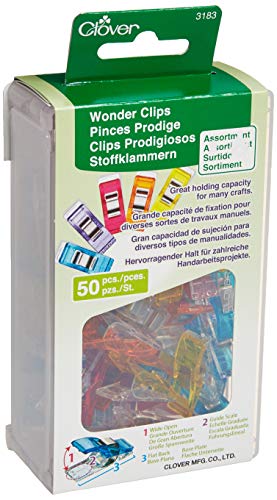

Clover Wonder Clips are the industry benchmark for a reason. They feature a flat base that allows them to sit perfectly against your knitting table, preventing the fabric from shifting while you work.
The tension on these clips is calibrated perfectly for medium-weight yarns like worsted or DK. They are strong enough to hold two layers of wool together without slipping, yet gentle enough that they won’t leave permanent indentations on delicate fibers like alpaca or cashmere.
If you find that your knitted pieces tend to "creep" while you are seaming, the flat base of these clips is your best friend. They keep the seam allowance strictly aligned, ensuring your mattress stitch remains straight.
Wondertip Precision Clips for Delicate Knits
When you are working with lace-weight mohair or fine silk blends, standard clips can feel like overkill. Wondertip clips are designed for these high-stakes projects where fiber integrity is everything.
These clips are significantly smaller and lighter than standard options, meaning they won’t pull or distort your delicate stitches. They provide just enough pressure to keep two edges aligned without crushing the loft of your yarn.
I recommend these specifically for delicate garment finishing where you want to avoid "bruising" the fiber. They are excellent for holding lace motifs in place before you begin your grafting or seaming process.
Singer Multi-Purpose Clips for Heavy Projects

When you move into the territory of heavy, cabled wool sweaters or thick, felted projects, you need something with a bit more bite. Singer Multi-Purpose clips are built for these heftier tasks.
These clips have a wider opening capacity, which is essential when you are trying to align thick ribbing or folded collars. They provide a firm grip that keeps bulky seams from shifting under the weight of the garment.
While they are excellent for heavy items, use caution with lighter yarns. The strong spring mechanism can sometimes leave a temporary mark on softer, single-ply yarns if left on for too long.
Dritz Quilting Clips for Bulkier Seam Edges
Dritz quilting clips are a versatile staple that performs surprisingly well for knitters who work with multiple layers. They are particularly useful when you are attaching facings or heavy interfacings to the inside of a knitted cardigan.
The key feature here is the wide, sturdy jaw. It manages the bulk of a seam edge effectively, preventing the "rolling" effect that often happens when you try to pin thick, stockinette-stitch edges together.
These are best used during the blocking or assembly phase of your project. They are not designed for fine-tuned precision, but they are unmatched for keeping large, bulky sections of a sweater firmly in place.
Bohin Extra-Strong Clips for Secure Alignment

Bohin is known for precision engineering, and their extra-strong clips are no exception. They offer a very specific, high-tension grip that is ideal for knitters who struggle with slippery fibers like bamboo or silk.
If you are working with a superwash wool that has a tendency to slide around under your needle, these clips will hold it firmly in place. They provide a sense of security that allows you to focus entirely on your sewing technique rather than fabric management.
The tradeoff is the strength of the spring. I suggest using these primarily on structural seams where the fabric is dense, such as side seams on a tightly knit sweater.
Taylor Seville Magic Clips for Easy Handling
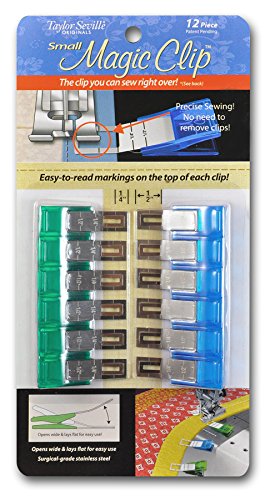
Taylor Seville Magic Clips feature a unique soft-touch coating that makes them very easy to handle, especially if you have arthritis or find standard plastic clips difficult to squeeze. The ergonomic design is a significant advantage for long seaming sessions.
These clips are designed to be "non-slip," which is a massive help when you are trying to match stripes or complex colorwork patterns. The textured surface ensures that the clip stays exactly where you place it.
If you find yourself getting frustrated with clips that pop off or slide around, these are a fantastic upgrade. They offer a balance of firm holding power and user-friendly design.
Why Sewing Clips Beat Pins for Knitted Fabrics
Pins are a traditional choice, but they come with significant risks when working with knitted textiles. A pin must pierce the yarn, which can easily split a ply or snag a delicate mohair fiber.
Clips, by contrast, work by clamping the fabric from the outside. This preserves the structural integrity of your yarn and prevents the unsightly holes that pins often leave behind in dense fabrics.
Furthermore, clips are much easier to see and remove as you work. You don’t have to worry about accidentally leaving a stray pin in your garment, which is a major safety concern if you are gifting your work to children.
Essential Tips for Aligning Your Knitted Seams
Alignment starts long before you reach for the clips. Always ensure your pieces are properly blocked to the correct dimensions before you begin the assembly process.
When clipping, always start from the center of the seam and work your way out toward the edges. This helps distribute the fabric evenly and prevents the common issue of one side being longer than the other by the time you reach the end.
- Match your seam markers (like the start of a cable or a color change) first.
- Use clips at regular intervals to maintain tension across the length of the seam.
- Check your alignment periodically as you sew, rather than waiting until the end to discover a mistake.
How to Prevent Fabric Distortion While Clipping
Distortion usually happens when you apply too much tension during the clipping process. Knitted fabric is inherently elastic, and if you stretch it while clipping, your seam will end up wavy or "puckered."
Always lay your pieces flat and allow them to relax before applying the clips. If you find your fabric is stretching, you are likely using too many clips or placing them too close together.
Remember that the goal of the clip is to hold, not to stretch. If the fabric looks taut or distorted between the clips, reduce the number of clips you are using and let the natural drape of the yarn take over.
Frequently Asked Questions About Sewing Clips
Do these clips replace the need for blocking? No, they are tools for assembly. You should always block your pieces to final measurements before using clips to hold them together for seaming.
Can I use these clips on very fine lace? Yes, but choose a lightweight, smaller clip like the Wondertip variety to avoid distorting the delicate structure of the lace stitches.
Will these clips leave marks on my yarn? Most clips are safe, but any clip can leave a temporary mark on very soft or single-ply yarns if left on for an extended period. Remove them as soon as you finish the seam.
How many clips do I need? A set of 20 to 30 clips is usually sufficient for most sweater projects. Having a variety of sizes is more useful than having a large quantity of just one type.
Investing in a quality set of sewing clips is one of the most practical upgrades you can make for your knitting toolkit. By choosing the right clip for your specific yarn and project, you can eliminate the frustration of shifting seams and protect your hard work from snagging. Take the time to experiment with these options, and you will find your finishing process becomes much more enjoyable and precise. Happy seaming, and may your edges always align perfectly.