
7 Best Tension Wire Sets For Precision Knitting
Discover the 7 best tension wire sets for precision knitting. This guide evaluates top tools to help you achieve consistent, professional blocking results.
Achieving consistent stitch gauge is the hallmark of a seasoned knitter, yet even the most experienced hands struggle with tension fatigue. Tension wires and rings provide a mechanical bridge between your yarn supply and your needles, effectively smoothing out the inconsistencies that occur during long sessions. By offloading the work of yarn control from your fingers to a dedicated tool, you can prevent the dreaded "tight-knitting-cramp." Whether you are working with slippery silk or grabby wool, these tools are game-changers for your project’s final drape.
The Knitting Barber Tension Ring: Best Overall


The Knitting Barber Tension Ring is a masterclass in minimalist design. It sits unobtrusively on your finger, acting as a constant guide that prevents the yarn from slipping or tangling as you work.
What makes this the gold standard is its adaptability across different yarn weights. Whether you are using a fingering weight for a delicate lace shawl or a chunky wool for a winter sweater, the ring maintains a steady flow without creating unnecessary drag.
It is particularly effective for stranded colorwork, where managing two yarns at once can quickly lead to tangled fingers. By keeping your dominant color anchored, you’ll find your floats become significantly more uniform.
Prym Ergonomic Yarn Guide: Best for Beginners
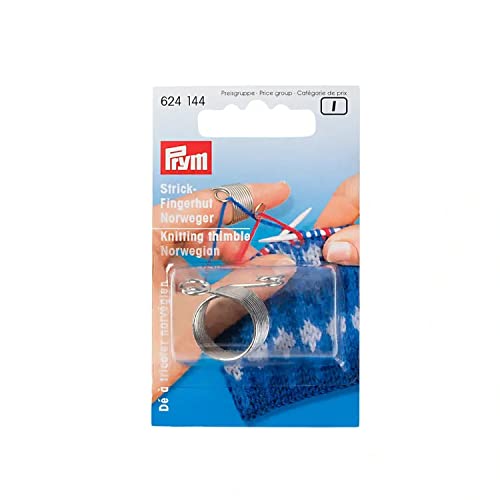
If you are just starting your knitting journey, the Prym Ergonomic Yarn Guide is an approachable entry point. It features a simple, plastic-based design that clips easily onto your finger, requiring zero complex threading.
New knitters often struggle with "death-gripping" their yarn, which leads to fabric that is too stiff and needles that are difficult to insert. This guide forces your yarn to sit at a consistent angle, which naturally discourages that frantic, over-tightening reflex.
It is lightweight and unobtrusive, meaning you won’t feel like you’re wearing a piece of heavy machinery while you learn the basic knit and purl stitches. It’s a low-risk investment for anyone still finding their "knitting rhythm."
Clover Adjustable Tension Ring: Best for Comfort

The Clover Adjustable Tension Ring is designed for those who find metal rings too rigid or uncomfortable after an hour of knitting. Its open-ended, adjustable band allows you to customize the fit to your specific finger size perfectly.
Comfort is not just a luxury; it is a necessity for preventing repetitive strain injuries. If you are prone to swelling during long knitting sessions, the ability to quickly adjust the ring’s diameter is a feature you will grow to appreciate.
The surface is smooth and snag-free, ensuring that delicate fibers like mohair or alpaca don’t get caught on the metal. It’s an ideal choice for knitters who suffer from arthritis or general finger fatigue.
Cocoknits Metal Yarn Guide: Best for Durability

Cocoknits is known for high-quality, long-lasting tools, and their Metal Yarn Guide is no exception. Constructed from sturdy, polished metal, this tool is built to survive years of daily use without bending or losing its shape.
This tool is especially useful when working with high-twist yarns that have a tendency to "kink" or spiral as they come off the ball. The metal guide acts as a stabilizer, keeping the yarn path straight and ensuring a smooth feed into your needle tips.
While it is heavier than plastic alternatives, the weight actually helps keep your tension consistent by providing a slight, steady resistance. It is a reliable workhorse for the serious knitter who wants a tool that won’t need replacing.
Pony Knitting Tension Spring: Best Value Choice

The Pony Knitting Tension Spring is a simple, wire-based tool that offers incredible utility for a very low price. It functions much like a tiny, coiled spring that holds your yarn in place, providing just enough resistance to keep your stitches even.
This is an excellent option if you want to experiment with tension tools without committing to a premium price point. It works remarkably well for projects involving cotton yarns, which can be notoriously slippery and difficult to keep at a consistent gauge.
Because it is so small and portable, you can keep one in every project bag you own. It’s the perfect "just-in-case" tool to have on hand when your hands get tired halfway through a complex cable pattern.
Tulip Etimo Tension Guide: Best for Precision

Tulip is synonymous with precision, and their Etimo Tension Guide is designed for the knitter who demands absolute perfection. The guide features a refined, polished finish that reduces friction to an absolute minimum.
If you are working on fine-gauge lace or intricate intarsia, you need a tool that doesn’t add any unnecessary drag to your yarn. This guide provides a smooth, consistent path, allowing you to maintain a perfect gauge even when the pattern calls for complex yarn-overs and decreases.
It is a sophisticated piece of equipment that rewards the knitter who values technical accuracy. When you are aiming for professional-level results, the consistency provided by this guide is worth the investment.
Addi CraSy Trio Tension Tool: Best for Socks
Knitting socks on small-circumference needles can be a test of patience, especially when it comes to maintaining tension on the heel and gusset. The Addi CraSy Trio Tension Tool is specifically engineered to handle the unique challenges of small-diameter knitting.
It helps manage the yarn flow as you manipulate your needles in tight spaces, preventing the yarn from becoming slack between stitches. This is vital for avoiding ladders—those unsightly gaps that often appear between needle transitions in sock knitting.
If you frequently knit socks with superwash wool or nylon blends, this tool will help you maintain a firm, durable fabric. It effectively turns a potentially fiddly process into a streamlined experience.
How Tension Wires Improve Your Stitch Quality
Tension wires work by creating a consistent "path of resistance" for your yarn before it reaches your needles. Without a guide, your yarn tension is entirely dependent on how you hold your yarn, which can fluctuate based on fatigue or focus.
By using a tool, you essentially outsource the "tensioning" to the device, allowing your fingers to focus solely on the movement of the needles. This leads to a more uniform stitch size, which is critical for achieving a professional finish on garments.
- Uniformity: Eliminates the "tight-loose-tight" cycle that happens as you tire.
- Speed: Allows for faster, more rhythmic knitting once you get used to the guide.
- Consistency: Ensures your gauge remains the same from the start of the row to the end.
Choosing the Right Material for Tension Guides
The material of your tension guide should complement the yarn you are using. Metal guides are excellent for most wools, as they are durable and provide a smooth, frictionless surface.
However, if you are working with very sticky or "grabby" yarns like mohair or certain raw wools, you may find that metal creates too much friction. In these cases, a plastic or coated guide might be preferable to allow the yarn to glide more freely.
- Metal: Best for durability and smooth, consistent feeding.
- Plastic: Lightweight and ideal for sensitive fibers that might snag.
- Coated/Rubberized: Provides extra grip if you find your yarn is slipping too much.
Tips for Adjusting Your Tension During Knitting
Always remember that tension is a dynamic process, not a static one. If you notice your stitches are becoming too tight, check your grip on the yarn; you may be unconsciously pulling the working yarn too hard.
If you are struggling with uneven tension in colorwork, try using a tension ring to keep the two strands separated and at a consistent height. You can also experiment with different finger positions to find the angle that feels most natural for your specific hand size.
Finally, don’t be afraid to adjust your needle size if your tension tool isn’t quite fixing your gauge issues. Sometimes, the best way to improve your tension is a combination of a reliable guide and the right needle material for your specific yarn.
Investing in a tension wire or ring is one of the most effective ways to elevate your knitting from "homemade" to "hand-crafted perfection." By removing the physical burden of yarn control, you allow yourself to focus on the rhythm and joy of the craft. Explore these options, find the one that fits your unique hand shape, and enjoy the newfound consistency in your stitches. Happy knitting, and may your gauge always be spot on.