6 Best Spinning Gauge Tools For Measuring Twist
Accurately measuring yarn twist is vital for quality. Explore our top 6 spinning gauge tools designed to ensure precision and consistency in your textile work.
Achieving consistent yarn is the secret bridge between a chaotic handspun mess and a professional-looking sweater. Whether you are aiming for a delicate lace weight or a sturdy worsted, measuring your twist and thickness is non-negotiable for success. These six tools offer different approaches to mastering your singles and plies. By integrating these instruments into your routine, you transform your spinning from a guessing game into a repeatable craft.
The SpinOlution WPI Tool: Best Overall Gauge
The SpinOlution WPI tool is a masterclass in simplicity and functional design. It features a clear, easy-to-read scale that takes the squinting out of measuring your Wraps Per Inch (WPI).
Because it is made from durable materials, it holds up well when tossed into a project bag alongside sharp needles and heavy bobbins. It is an excellent choice for spinners who want a tool that performs reliably without needing a manual to operate.
If you are a production spinner who needs to check your gauge dozens of times in a single session, this tool’s ergonomic shape is a significant advantage. It sits comfortably in the hand, making it easy to wrap your yarn quickly and accurately.
Ashford Spinning Gauge: The Classic Standard


The Ashford spinning gauge is likely the tool you will see in most local guild meetings, and for good reason. It is a no-nonsense, wooden or plastic instrument that has been the industry benchmark for decades.
This tool excels at providing a tactile experience that matches the organic nature of fiber. It is particularly helpful for beginners who are still learning to feel the difference between a loose, airy spin and a tight, dense one.
While it lacks the bells and whistles of newer digital or specialized tools, its simplicity is its greatest strength. It is virtually indestructible, meaning it will likely be the last tool you ever need to buy for basic sizing.
Schacht Spindle Company Plastic WPI Tool

Schacht’s plastic WPI tool is a lightweight, budget-friendly option that punches well above its weight class. It is designed for those who appreciate the clean, precise engineering that defines the Schacht brand.
The markings are crisp and high-contrast, which is a lifesaver when you are working with dark-colored wools or mohair blends. If you have ever tried to measure black yarn against a dark ruler, you know exactly why this visibility matters.
This tool is exceptionally portable, making it the perfect companion for spinning on the go. If you take your wheel or drop spindle to the park, this is the gauge that won’t weigh down your kit.
Hansen Crafts Spinning Twist Angle Gauge
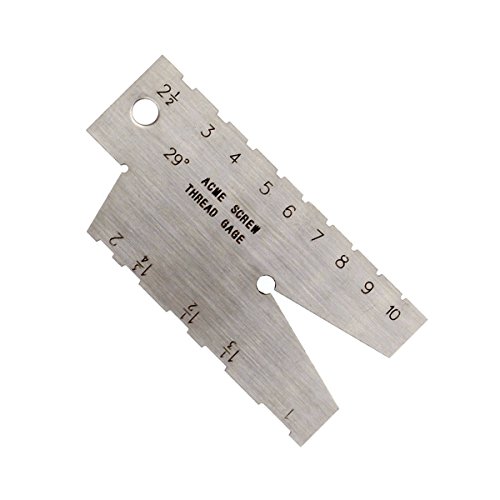
Measuring WPI is only half the battle; measuring the angle of the twist is where you truly start to control your yarn’s character. The Hansen Crafts gauge is specifically designed to help you visualize that twist angle.
This tool is a game-changer for knitters who want to replicate commercial yarn structures. By aligning your yarn with the visual guides on the gauge, you can ensure your singles are balanced, preventing your finished fabric from biasing or twisting unexpectedly.
It is a more advanced tool that requires a bit of practice to interpret correctly. However, once you master it, your ability to match a specific "twist per inch" for a pattern will improve dramatically.
Strauch Fiber Equipment WPI and Twist Tool
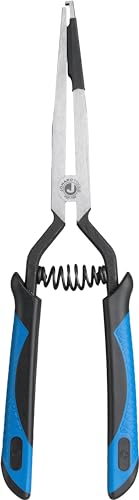
The Strauch tool is a heavy-duty, multi-functional piece of equipment that feels like it belongs in a professional mill. It combines WPI measurement with a built-in twist angle guide, offering a comprehensive solution in one footprint.
Because it is slightly larger and more substantial, it is best suited for a dedicated spinning station rather than a travel bag. It is perfect for those who are serious about record-keeping and want to track their progress over multiple projects.
If you are a spinner who loves to document your "yarn recipes," this tool provides the consistency you need to recreate your favorite skeins. It removes the variability that often creeps into handspun production.
Majacraft Spinning Gauge for Precision
Majacraft tools are known for their precision, and their spinning gauge is no exception. It is designed with the exacting spinner in mind, featuring fine-tuned measurements that allow for very specific yarn weights.
This gauge is particularly useful when you are working with high-end luxury fibers like silk or cashmere. When every millimeter counts, the Majacraft gauge ensures you aren’t over-spinning or under-spinning your precious materials.
The craftsmanship is top-tier, making it a beautiful addition to your spinning room. It is an investment piece for the spinner who views their craft as an exact science rather than just a hobby.
Understanding Twist Per Inch in Handspinning
Twist Per Inch (TPI) is the fundamental measurement of how many times your yarn has been rotated per inch of length. It determines the strength, durability, and drape of your final knitted fabric.
If you spin with too little twist, your yarn will pill rapidly and lose its structural integrity. Conversely, too much twist can result in a harsh, wiry yarn that resists knitting and creates a stiff, uncomfortable garment.
Understanding TPI allows you to manipulate the "personality" of your fiber. You can choose to spin a soft, low-twist yarn for a luxurious scarf or a high-twist, tight yarn for a pair of durable, everyday socks.
Why Consistency Matters in Your Yarn Twist
Consistency is what separates "homemade" from "handmade." When your TPI fluctuates wildly throughout a skein, your finished knitting will have uneven tension, leading to awkward gaps or tight patches in your stitch pattern.
This is especially critical when knitting colorwork or lace. If your yarn thickness or twist varies, your stitches will not sit uniformly, and your color transitions or lace motifs will appear muddy and distorted.
By maintaining a consistent twist, you ensure that your yarn will behave predictably when it hits the needles. You will find that your gauge swatches are much more accurate and your blocking process is significantly more effective.

How to Use a WPI Tool for Accurate Measurement
To get an accurate WPI, wrap your yarn around the tool snugly, but do not stretch it. You want to see the natural "resting" state of the fiber, not the tensioned version.
Place the wraps side-by-side without overlapping them, ensuring they touch just enough to sit flat. Count the number of wraps that fit into a one-inch space to determine your WPI.
Always measure in several different spots along the length of your yarn. A single measurement can be misleading; an average of three or four spots will give you a much clearer picture of your overall consistency.
Tips for Achieving Consistent Singles and Plies
The best way to achieve consistency is to develop a rhythm that you can maintain over long periods. Focus on your drafting speed and treadling rate, trying to keep both steady as you work.
- Use a leader: Always start with a leader thread to ensure your yarn is under control from the very first inch.
- Check often: Don’t wait until the bobbin is full to measure; check your WPI every few minutes to catch inconsistencies early.
- Trust your hands: Over time, your fingers will learn the "feel" of your target gauge, making the tool a verification step rather than a crutch.
Remember that practice is the only way to build muscle memory. Even the best tool cannot replace the hours spent at the wheel, but it can certainly guide you toward the results you desire.
Mastering your spinning gauge is a pivotal step in your journey as a fiber artist. By choosing the right tool for your specific needs, you gain the control necessary to produce yarn that elevates every knitting project. Keep practicing, keep measuring, and enjoy the process of turning raw fiber into something truly your own. Happy spinning, and may your twists always be balanced.