6 Best Crochet Hooks For Beaded Lace Additions
Master beaded lace with our top six crochet hooks. Discover essential tools designed for precision, comfort, and seamless bead integration in your projects.
Adding beads to delicate lace projects transforms a simple shawl into a shimmering heirloom piece. While the technique seems daunting, the secret to success lies entirely in selecting the right steel crochet hook for your specific thread and bead size. With two decades of experience, I’ve learned that the wrong tool can lead to snagged yarn or, worse, broken beads. This guide will help you navigate the specialized world of steel hooks to ensure your beading journey is as smooth as your stitches.
Clover Amour Steel Crochet Hooks: Best Overall


Clover Amour hooks are the gold standard for many lace knitters because of their perfectly balanced weight and signature elastomer handle. The handle provides just enough grip to prevent slipping, even if your hands get a bit clammy during a long lace session.
The steel shaft is remarkably smooth, allowing you to slide through a bead and pick up a stitch without catching on the fine fibers of your laceweight yarn. It is a workhorse tool that manages to feel both substantial and incredibly lightweight in the hand.
If you are working on a project with hundreds of beads, the comfort of this handle is unmatched. It is my top recommendation for those who want a reliable, professional-grade tool that won’t cause hand cramping.
Tulip Etimo Rose Steel Hook Set: Ergonomic Pick

Tulip Etimo Rose hooks are widely considered the pinnacle of ergonomic design in the fiber arts world. The cushion grip is remarkably soft, and the polished finish of the steel hook head is so smooth it feels like it glides through yarn on its own.
These hooks are particularly excellent for knitters who suffer from arthritis or repetitive strain injuries. The balance point is perfectly centered, which helps reduce the tension you might unconsciously apply when trying to pull a bead through a tight stitch.
While they come at a premium price point, the quality of the finish ensures your thread won’t fray. For a large-scale project like a beaded wedding veil, the investment in comfort pays for itself within the first few rows.
Susan Bates Steel Crochet Hooks: Best for Value

Susan Bates hooks are iconic for their unique inline head design, which is a fantastic departure from the more traditional tapered styles. This shape is specifically engineered to help you maintain consistent tension, which is crucial when you are manipulating beads into a lace pattern.
Because the throat of the hook is deep and the head is pointed, they are exceptionally good at grabbing a single strand of cobweb-weight yarn. They are an affordable, accessible option for knitters who are just beginning to experiment with adding beads.
The trade-off is that the metal handles can be thin and sometimes uncomfortable for those accustomed to ergonomic grips. However, for the price, you can easily add a foam sleeve to the handle to make them more comfortable for longer sessions.
Addi Swing Steel Hooks: Best for Hand Fatigue

The Addi Swing series features a dramatic, curved handle that is designed to sit naturally against the palm of your hand. This shape encourages a relaxed grip, which is essential when you are doing the repetitive work of placing beads onto lace stitches.
The steel tips are high-quality, polished to a mirror finish that prevents them from snagging on delicate mohair or silk blends. The weight distribution is unique, pushing the center of gravity toward your palm to minimize wrist strain.
If you find yourself needing to take frequent breaks due to fatigue, this hook is a game-changer. It forces you to change your hand posture slightly, which can alleviate the tension built up during complex lace maneuvers.
Boye Steel Crochet Hooks: The Classic Choice
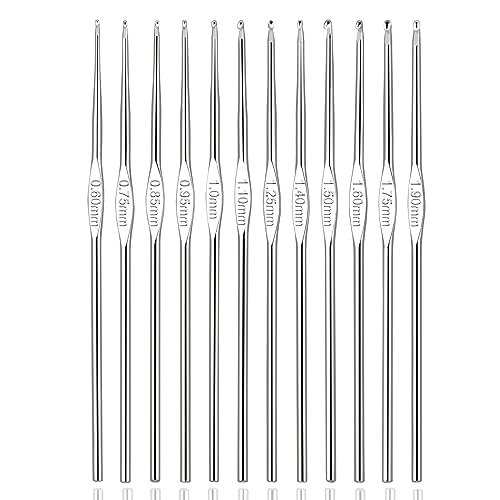
Boye hooks are the reliable classics that have been in knitting bags for generations, featuring a tapered throat that many knitters find intuitive. The taper helps the yarn slide off the hook smoothly, which is a significant advantage when you are trying to pull a bead through a stitch.
These hooks are incredibly durable and won’t bend or lose their shape, even after years of heavy use. They are widely available and very affordable, making them an excellent choice for a "beading kit" that you keep in your project bag.
While they lack the ergonomic bells and whistles of modern specialty hooks, their simplicity is their strength. If you have a neutral, relaxed grip, you might find that you prefer the straightforward feel of a Boye hook over more complex designs.
Lacis Steel Crochet Hooks: Precision Tip Design

Lacis hooks are designed with the serious lacemaker in mind, featuring an extremely fine, sharp tip that is perfect for the smallest seed beads. When you are working with size 15/0 beads, a standard hook head is often too bulky to pass through the center of the bead.
These hooks are specialized tools, and you will notice the difference immediately when you are trying to pick up a single strand of 2-ply lace yarn. The precision of the tip allows for surgical accuracy in your bead placement.
Because the tips are so fine, they can be delicate; it is important to treat them with care and avoid bending them. If your lace project requires intricate, tiny beadwork, this is the specific tool that will save you from constant frustration.
Choosing the Right Hook Size for Your Beadwork
The golden rule of beading is that the hook must be small enough to fit through the hole of your bead while still being able to catch your yarn. If the hook is too large, you will struggle to pull the bead over the stitch, which can snap the yarn or crack the bead.
- Size 11/0 beads: Use a 0.60mm or 0.75mm crochet hook.
- Size 8/0 beads: Use a 0.90mm or 1.00mm crochet hook.
- Size 6/0 beads: Use a 1.25mm or 1.50mm crochet hook.
Always test your hook with a spare bead and a scrap of your project yarn before you start the real work. If the bead feels forced, move down a size; if the hook keeps slipping out of the yarn, move up.
How to Successfully Thread Beads onto Lace Yarn
Threading beads onto lace yarn can be a tedious process if you don’t use the right tools, such as a collapsible-eye needle or a specialized bead spinner. For smaller projects, a simple dental floss threader works wonders as a makeshift needle.
When threading, ensure your yarn end is clean and not fuzzy. If your yarn is prone to fraying, a quick dab of clear nail polish or a specialized thread conditioner on the tip can help it slide through the beads more easily.
Don’t try to thread all your beads at once if you are working on a very long lace shawl. Threading in batches of 50 or 100 keeps the yarn from becoming tangled and makes the project feel much more manageable.
Essential Techniques for Adding Beads to Stitches
The most common method for adding beads is the "pre-strung" technique, where you slide the bead up to the active stitch and then knit the stitch with the bead held in place. This ensures the bead sits securely on the front of your work.
Alternatively, you can use the "crochet hook method" to add beads as you go, which is useful if you don’t want to pre-string all your beads. You simply use the crochet hook to pull the stitch through the bead, then place the stitch back onto your knitting needle.
Practice both methods on a swatch to see which feels more natural for your tension. The pre-strung method is generally faster for all-over beadwork, while the crochet method offers more flexibility for random bead placement.
Troubleshooting Common Beading and Lace Issues
If you find that your beads are drooping or pulling the lace fabric out of shape, your tension is likely too loose. Try using a slightly smaller knitting needle for the rows where you are adding beads to keep the fabric firm.
Broken beads are often caused by using a hook that is too large or by pulling too hard against the bead hole. If a bead breaks, carefully remove the shards and re-knit that stitch, ensuring no sharp edges remain to cut your yarn.
Finally, remember that blocking is your best friend when working with beaded lace. Once the project is finished, a thorough wet block will even out your stitches and help the beads settle into their intended positions, hiding any minor irregularities in your work.
Mastering the art of adding beads to lace is a journey of patience and precise tool selection. By choosing a high-quality steel hook that fits your specific yarn and bead size, you eliminate half the struggle of these intricate patterns. Take the time to swatch, experiment with different methods, and above all, enjoy the way the light catches your finished work. Your dedication to the details will undoubtedly result in a piece that is as beautiful as it is technically impressive.