6 Best Portable Tables For Knitting Machine Stability
Find the 6 best portable tables for knitting machine stability. Learn which features ensure a steady, wobble-free workspace for your crafting projects today.
Setting up a knitting machine requires far more than just a flat surface; it demands a foundation that can withstand the rhythmic, high-frequency force of a carriage moving back and forth. A wobbly table will inevitably lead to dropped stitches, uneven tension, and unnecessary frustration during your projects. The following recommendations focus on the structural integrity needed to keep your machine perfectly aligned. Finding the right balance between portability and rock-solid stability is the secret to a smooth, professional knitting experience.
Lifetime 4-Foot Fold-In-Half Table: Best Overall


When you are tight on space but need a reliable station for a standard-gauge machine, this table is a staple in many home studios. Its lightweight design makes it easy to tuck away when you need to reclaim your living room, yet it holds its own during long knitting sessions.
The blow-molded plastic top is surprisingly resilient, though it can have a slight amount of "give" if you are a particularly vigorous knitter. I recommend placing a thin, non-slip rubber mat under your machine’s clamps to ensure it doesn’t shift during high-speed row counting.
For the price, it is the most accessible entry point for machine knitters. Just remember that it isn’t designed for heavy-duty industrial machines, so keep your projects to standard weights and fibers.
Husky 46-Inch Adjustable Height Work Table
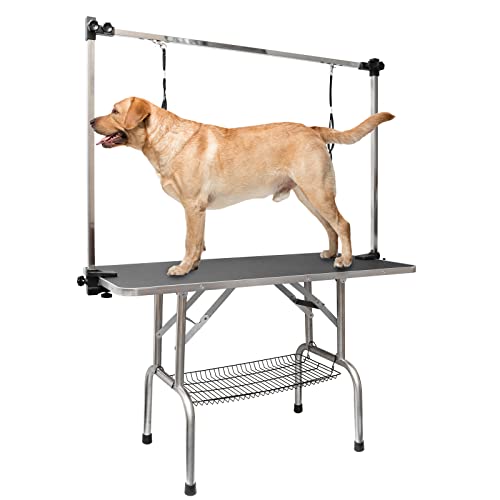
This table is a favorite because it bridges the gap between a hobbyist surface and a professional workbench. The steel frame provides a level of rigidity that plastic tables simply cannot match, which is vital when you are working with heavier, multi-ply wools that require more force to move the carriage.
The adjustable height is a game-changer for your posture. Being able to dial in the exact height allows you to keep your elbows at a neutral angle, preventing the shoulder fatigue that often sets in after a few hours of intensive stitch manipulation.
It is heavy, which is a blessing for stability but a challenge for portability. If you have a dedicated corner for your machine, this is a long-term investment that will serve you for years.
Seville Classics UltraHD Steel Work Table

If you are working with a bulky machine or a setup that includes an electronic ribber, you need a surface that doesn’t flex. This steel work table is built like a tank, offering a solid, vibration-dampening platform that keeps your needle bed perfectly level.
The solid wood top is an excellent surface for mounting clamps. Unlike metal or plastic, wood provides a bit of "bite" for the clamp screws, ensuring your machine stays locked in place even when you are tackling challenging stranded colorwork.
The primary trade-off here is the weight and the footprint. It is not something you will want to move around frequently, but for sheer, unwavering stability, it is hard to beat.
IKEA Bekant Sit-Stand Desk for Machine Work

The beauty of the Bekant system is its versatility, allowing you to transition between sitting and standing as your back dictates. Knitting machine work can be incredibly taxing on the lower back, so being able to adjust your station mid-project is a luxury that becomes a necessity.
However, be aware that some sit-stand desks have a slight wobble at their maximum height. I suggest keeping the desk at a lower, more stable setting if you find your machine vibrating too much during carriage passes.
It offers a clean, modern aesthetic that fits well in a home environment. It is a fantastic choice if your knitting space doubles as a home office or craft room.
Uline Industrial Steel Workbench for Stability

When you graduate to heavy-duty equipment or find yourself knitting for hours every single day, you need industrial-grade support. Uline workbenches are the gold standard for those who treat machine knitting as a serious craft rather than a casual hobby.
The steel construction eliminates almost all lateral movement. When you are pushing a carriage across a wide bed, the last thing you want is the table swaying; this workbench stays planted firmly on the floor.
It is expensive and utilitarian, lacking the "homey" feel of other furniture. However, if you are serious about your fiber work, the peace of mind regarding machine alignment is well worth the cost.
VIVO Electric Height Adjustable Desk Frame
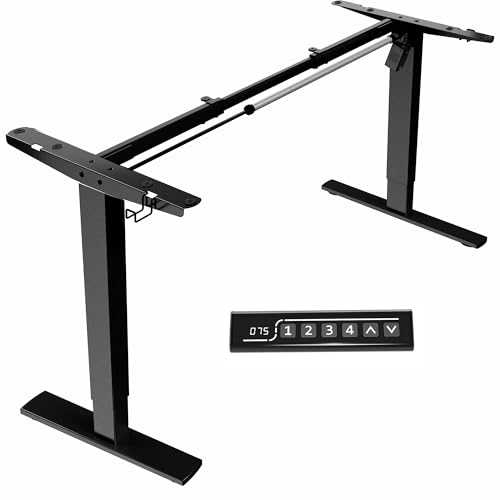
If you already own a solid, heavy tabletop, you can simply upgrade the base to this electric frame. It allows you to transform almost any surface into an ergonomic, height-adjustable knitting station.
The motor is quiet and smooth, which is important if you share your home with others. Having the ability to fine-tune the height by the millimeter means you can perfectly align the machine with your seated or standing position.
Ensure that your chosen tabletop is thick and sturdy enough to handle the clamping pressure of your machine. A thin particle-board top will eventually crack under the strain of a heavy knitting machine, regardless of how good the frame underneath is.
Key Factors for Knitting Machine Table Stability
Stability isn’t just about the weight of the table; it’s about the distribution of force. When you move the carriage, you are applying horizontal pressure that wants to tip the table over or slide the machine off its mount.
- Weight: Heavier tables are generally more stable, as they have more inertia to resist the movement of the carriage.
- Frame Material: Steel is superior to aluminum or plastic for reducing vibrations.
- Surface Texture: A slightly textured surface prevents the machine from "walking" across the table during intense sessions.
- Leg Design: Look for wide-set legs or cross-bracing that prevents the table from swaying side-to-side.
Why Weight Capacity Matters for Machine Knitting
Many knitters underestimate how much force they exert on their machines. A standard knitting machine, plus a ribber attachment, plus the weight of the yarn and your own hands, adds up quickly.
If a table is rated for 50 pounds, don’t assume that means 50 pounds of active force. You need a table that can handle the dynamic load of your carriage moving back and forth without buckling or bending.
Always check the manufacturer’s weight capacity and aim for a table that can handle at least double the weight of your machine setup. This provides a safety margin that protects your equipment from accidental damage.
Proper Ergonomics for Long Machine Knitting Sessions
We often talk about ergonomics in hand knitting—wrist angles, chair height, and lighting—but it is equally critical for machine knitting. If your table is too high, your shoulders will hunch, leading to tension headaches and neck pain.
Aim for a height where your forearms are parallel to the floor while your hands are on the carriage handle. If you can’t achieve this, adjust your chair height or use a footrest to keep your body in a neutral, relaxed alignment.
Remember that machine knitting is a repetitive motion sport. Listen to your body; if you feel strain in your wrists or back, stop and adjust your environment before you finish that next row.
Essential Tips for Securing Your Knitting Machine
Even the best table needs help keeping a machine secure. Always use the provided clamps, but consider adding a layer of high-friction shelf liner between the machine bed and the table edge.
- Check Clamps Regularly: Vibration can loosen screws over time, so give them a quick tighten every few days.
- Use C-Clamps: If your machine’s original clamps aren’t holding, heavy-duty C-clamps from a hardware store can provide extra security.
- Anchor to the Wall: If your table is against a wall, a simple bracket can prevent it from sliding backward during heavy use.
- Level the Bed: Use a spirit level to ensure your machine is perfectly flat; a crooked bed will cause uneven tension and dropped stitches.
Your knitting machine is an extension of your creative process, and it deserves a stable home that respects its mechanical needs. By investing in a sturdy, ergonomic table, you are protecting your machine from wear and yourself from unnecessary physical strain. Take the time to secure your setup properly, and you will find that your knitting becomes much more consistent and enjoyable. Happy knitting, and may your carriages always glide smoothly across your beds.