6 Best Felting Needles For Roving Repairs To Try
Repairing roving requires precision. We explore the six best felting needles to restore your fiber projects, focusing on gauge, durability, and ease of use.
Even the most meticulous knitter occasionally encounters a snag, a moth hole, or a thinning elbow in a beloved wool sweater. Needle felting is the quiet hero of garment repair, allowing you to fuse loose fibers back into the fabric structure without a single stitch. Choosing the right needle for these roving repairs is the difference between a seamless mend and a bulky, felted mess. Here are the tools that will help you restore your knitwear to its former glory.
Clover Pen Style Needle Tool: Best Overall Choice


The Clover Pen Style tool is a staple in many sewing kits for a reason: it mimics the comfortable grip of a fountain pen. When you are working on a delicate repair, such as reinforcing a thinning heel on a sock, this ergonomic shape prevents hand fatigue.
The retractable mechanism is a brilliant safety feature, especially if you have curious pets or children around your knitting nook. Because it houses three needles, it covers surface area quickly, which is perfect for patching larger worn patches on sweaters.
However, the trade-off is precision. Because it uses multiple needles simultaneously, it can be slightly too aggressive for tiny, intricate repairs where you only want to move a few fibers at a time.
Bottom line: This is your go-to for speed and comfort on medium-to-large repairs.
Groz-Beckert 38 Gauge Star Needles for Detail
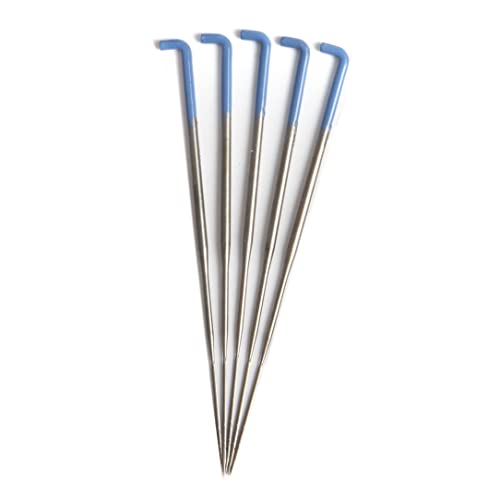
Groz-Beckert is the gold standard for industrial-grade quality, and their 38 gauge star needle is a precision instrument. The "star" shape refers to the cross-section of the needle, which features more barbs than a standard triangular needle.
This high barb count means it grabs and locks roving into your base knit significantly faster. If you are repairing a fine-gauge cardigan, you need this level of control to ensure the repair doesn’t look like a bumpy patch.
The downside is that these needles are sharper and more brittle than others. If you try to force them through a thick, dense seam, they are prone to snapping.
Bottom line: Use these for delicate, high-visibility repairs where you need a smooth, professional finish.
Ashford Felting Needle Assorted Pack for Repairs

Ashford is a name synonymous with fiber preparation, and their assorted pack is an excellent way to experiment with different gauges. Having a variety allows you to match the needle size to the weight of your yarn.
For a bulky weight wool sweater, a coarser needle will move more fiber into the fabric quickly. For a light fingering-weight shawl, you will want the finest needle in the pack to avoid damaging the existing stitches.
The main drawback is that these needles are sold in bulk without the ergonomic handles found in other sets. You will likely want to wrap the ends in tape or add a grip to make them comfortable for long sessions.
Bottom line: This is a cost-effective starter kit for those who repair a wide range of yarn weights.
Hamanaka Regular Felting Needles for Beginners

Hamanaka needles are known for their forgiving nature and high-quality steel. If you are new to repairing your own knitwear, you want a needle that doesn’t snap the moment you hit a slightly dense spot in your work.
These needles are designed to be "regular," meaning they have a moderate barb count that strikes a balance between speed and control. They are less likely to leave large, visible holes in your knitting while you are trying to felt a patch into place.
Be aware that they are not as fast as the high-gauge star needles. You will need a bit more patience when working on a repair, but the final result is usually much cleaner.
Bottom line: These are the safest choice for beginners learning to mend without creating new holes.
Schacht Spindle Company Felting Needle Set
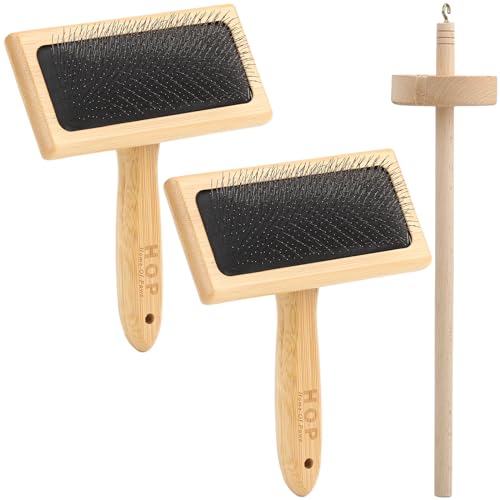
Schacht is a powerhouse in the spinning and weaving world, and their felting needles reflect that heritage. These needles are exceptionally sturdy and hold up well to the rigors of repairing dense, felted wools or heavy outerwear.
They are particularly effective when you are "re-felting" a garment that has accidentally gone through the wash. The strength of the metal allows you to work through thicker layers without the constant fear of the needle tip breaking off in your work.
The trade-off is that they are slightly thicker than specialized detail needles. They may not be the best choice for very fine lace or delicate silk-blend yarns.
Bottom line: Invest in these if you frequently repair heavy-duty woolens or dense, felted projects.
Dimensions Felting Needle Tool for Accuracy

The Dimensions tool is designed for crafters who prioritize precision above all else. It is a fantastic tool for "spot-fixing" small areas where a moth may have chewed a tiny hole in your favorite sweater.
The tool’s design allows you to see exactly where the needle is entering the fabric. This visibility is crucial when you are trying to match the direction of the knit stitches to make the repair invisible.
The main limitation is the needle gauge, which is fixed. If you find the needles aren’t catching enough fiber, you are limited by the tool’s design and cannot easily swap them out for a coarser gauge.
Bottom line: Choose this for pinpoint accuracy on small, isolated repairs.
Understanding Felting Needle Gauges and Barbs
Needle gauges work in reverse: the higher the number, the thinner the needle. A 40-gauge needle is much finer than a 32-gauge needle, which is important when matching the weight of the roving to your yarn.
The barbs are the tiny, angled notches cut into the shaft of the needle that catch the fiber and pull it into the base fabric. More barbs mean faster felting, but also more potential for creating visible holes in your knitting.
Always match your needle gauge to your yarn weight: fine needles for lace and fingering, medium for worsted, and coarse for bulky or rug-weight yarns.
Bottom line: Proper gauge selection prevents structural damage to your original knit stitches.
How to Select the Right Needle for Your Project
When choosing a needle, first assess the "density" of your repair. If you are patching a large hole, you need a coarser needle to move a lot of roving quickly into the surrounding fabric.
If you are just reinforcing a thinning area, go with a finer needle and a higher barb count to avoid distorting the surrounding stitches. Always test your needle on a swatch of the same yarn first to see how it interacts with the fiber.
Remember that superwash wools are more difficult to felt than non-superwash wools. You may need a coarser needle and more patience to get the fibers to "lock" into a superwash base.
Bottom line: Always swatch your repair technique on a scrap piece of the same yarn before tackling the garment.
Essential Safety Tips for Needle Felting Work
Needle felting is a high-risk activity for your fingers, as the needles are incredibly sharp and designed to grab fibers—including your skin. Always use a foam mat or a dense brush mat underneath your work to catch the needle tip.
Never hold the fabric directly over your fingers while felting. Keep your hands well away from the entry point of the needle, and use a thimble or a leather finger guard if you are working on a small, tight area.
If a needle does break, stop immediately and ensure you have located both pieces. Never leave a broken needle tip inside a garment, as it can be a painful surprise for the wearer later.
Bottom line: Respect the needle’s sharpness and always use a protective mat to prevent injury.
Maintaining Your Felting Needles for Longevity
Felting needles are consumables, but you can extend their life by avoiding "side-loading." This happens when you push the needle in at an angle and then pull it out; this lateral pressure is the primary cause of snapped needles.
Always enter and exit the fabric in a straight, vertical motion. If you feel resistance, do not force the needle through; instead, move to a slightly different spot or use a coarser needle.
Keep your needles clean and dry, as rust can form quickly on high-carbon steel. If you live in a humid climate, a light wipe with a silicone-treated cloth can prevent oxidation.
Bottom line: Treat your needles with a straight-on approach to keep them sharp and intact for years.
Repairing your knitwear with needle felting is a rewarding skill that extends the life of your handmade wardrobe. By understanding the balance between needle gauge, barb count, and your own project needs, you can make repairs that are virtually undetectable. Take your time, work safely, and enjoy the process of restoring your favorite pieces. Your sweaters will thank you for the extra care and attention.