7 Best Ergonomic Grips For Repetitive Motion
Discover the 7 best ergonomic grips to reduce strain. This guide evaluates top designs to improve comfort and efficiency during repetitive daily tasks.
Repetitive strain is the silent adversary of every dedicated fiber artist, often creeping in during the final rounds of a complex lace project. Choosing the right ergonomic tool isn’t just about luxury; it is a vital strategy for extending your creative lifespan. By shifting the mechanics of how you hold your hook, you can mitigate tension and keep your hands healthy for years to come. These seven options represent the gold standard for makers looking to prioritize comfort without sacrificing stitch quality.
Addi Swing Ergonomic Crochet Hooks: Best Overall
The Addi Swing hooks feature a unique, curved handle design that forces your hand into a neutral, relaxed position. When you are working on a long-term project like a temperature blanket, this structural change significantly reduces the need for a "death grip."
The handle is specifically shaped to fit the palm, which helps distribute pressure away from the delicate joints of your fingers. It is an excellent choice for those who suffer from arthritis or general stiffness after only a few rows of double crochet.
However, the unconventional shape can feel awkward for those accustomed to a standard pencil grip. If you are a die-hard pencil holder, expect a brief adjustment period while your muscle memory adapts to the swing.
Clover Amour Crochet Hook Set: Top Comfort Pick


Clover Amour hooks are widely considered the industry benchmark for a reason. The elastomer rubber handle is soft, grippy, and perfectly sized to provide enough bulk for a comfortable hold without feeling cumbersome.
The hook head itself is remarkably smooth, allowing the yarn to glide effortlessly. This is particularly helpful when working with splitty yarns like cotton or bamboo, where a rough hook surface would snag and frustrate your progress.
Because the handles are color-coded by size, they are incredibly easy to organize in your project bag. They strike the perfect balance between material quality and functional ergonomics for the vast majority of stitchers.
Tulip Etimo Red Ergonomic Hooks: Best Precision

If you are working on intricate amigurumi or fine thread crochet, the Tulip Etimo Red is your best friend. The steel tip is polished to a high sheen, ensuring that it slides into tight stitches with minimal resistance.
The cushion grip is slightly firmer than the Clover Amour, which provides more tactile feedback. This is essential when you need to maintain precise gauge on a project where every stitch count matters.
While these are on the higher end of the price spectrum, the longevity of the finish justifies the investment. You will find that these hooks stay smooth even after years of heavy use on abrasive wool fibers.
Furls Odyssey Metal Hooks: Best Weight Balance

Furls Odyssey hooks are weighted specifically to provide momentum, which can actually help reduce the effort required to pull the yarn through. The heavy, balanced feel encourages a more fluid, rhythmic motion rather than short, jerky movements.
The metallic finish is exceptionally slick, making it an ideal choice for high-speed crocheting. Because the hook is heavier, it does the work of "pulling" the yarn for you, which can be a game-changer for those with limited grip strength.
Be aware that the weight can be a drawback for some; if you are used to lightweight plastic hooks, the transition might cause temporary fatigue. It is a tool designed for those who prefer a substantial, premium feel in their hand.
Boye Ergonomic Aluminum Hooks: Best Budget Pick
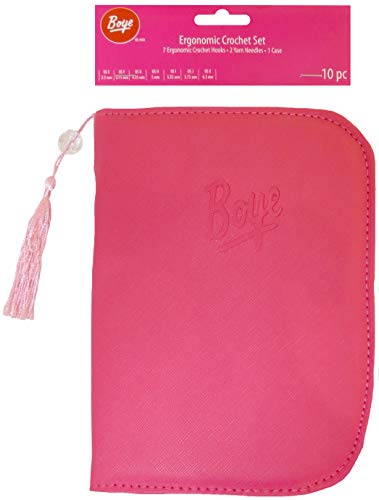
The Boye ergonomic line provides a straightforward, no-nonsense grip that is accessible to everyone. The soft-touch handle is molded directly onto the aluminum shaft, making it a durable option for those just starting their fiber arts journey.
These hooks are excellent for beginners who aren’t yet sure if they want to invest heavily in specialized tools. They provide enough ergonomic support to prevent immediate cramping while you learn how to control your yarn tension.
The main tradeoff is that the handle shape is quite basic compared to premium brands. While it is a major upgrade from a plain metal hook, it may not offer enough support for those with chronic hand conditions.
Prym Ergonomic Hooks: Best For Hand Fatigue

Prym has taken a radically different approach with a handle made from a high-quality, lightweight synthetic material. The shape is designed to be held lightly, almost like a fountain pen, which naturally discourages excessive squeezing.
The material has a slight flex to it, which absorbs some of the shock of repetitive motion. This is particularly beneficial if you find yourself "tensing up" your shoulders and hands during complex stitch patterns or colorwork.
Because the hook head is made of a unique plastic-metal hybrid, it offers a distinct glide that differs from standard aluminum. It is a fantastic option for those who find metal hooks too slippery or too cold to the touch.
Knitter’s Pride Waves Hooks: Best Grip Texture

The Knitter’s Pride Waves hooks feature a flat, textured rubber grip that prevents the hook from rotating in your hand. If you struggle with the hook spinning while you work, this tactile feedback is incredibly helpful.
The aluminum shafts are color-coded and offer a smooth, snag-free surface. They are highly reliable, offering a consistent experience across the entire range of sizes from lace to bulky weights.
The grip texture is the standout feature here, as it provides a secure hold even if your hands tend to get sweaty during long sessions. It is a practical, effective tool that keeps your hand movements steady and controlled.
Why Ergonomic Grips Matter For Repetitive Motion
Repetitive motion injuries, such as carpal tunnel or tendonitis, are common in the fiber arts because we often perform the same micro-movements thousands of times per project. A standard, thin metal hook forces your hand to remain in a cramped, pinched position.
Ergonomic grips increase the diameter of the area you are holding, which allows your hand to stay in a more open, relaxed posture. This simple change in circumference significantly reduces the force required to maintain control of the hook.
It is a misconception that ergonomic hooks are only for those with existing pain. Using them as a preventative measure is the smartest way to ensure you can continue knitting and crocheting for decades without injury.
How To Select The Right Hook Size For Your Hand
Selecting a hook is not just about the mm size required for your gauge; it is about how the handle sits in your specific hand anatomy. If you have larger hands, a thicker handle will feel much more natural and prevent you from over-gripping.
Consider your "grip style"—whether you hold your hook like a pencil or like a knife—when choosing a handle shape. Pencil holders often prefer a tapered grip, while knife-hold crocheters usually find more comfort in a thicker, rounded handle.
Don’t be afraid to try different materials, as the "drag" of a hook can impact how hard you work your muscles. A slicker hook requires less force to pull through, which is a vital ergonomic consideration for those working with sticky fibers like mohair or high-twist wool.
Tips For Stretching To Prevent Knitting Injuries
Stretching should be as much a part of your knitting routine as checking your gauge. Take five minutes every hour to gently extend your wrists and stretch your fingers wide to counteract the "claw" position.
Focus on forearm stretches by extending your arm and gently pulling your fingers back with your opposite hand. This helps release the tension that builds up in the muscles responsible for your grip.
Finally, pay attention to your posture; often, hand pain is a symptom of tension radiating from your shoulders or neck. Keep your shoulders dropped, your core engaged, and take regular breaks to reset your body before the fatigue sets in.
Investing in the right ergonomic tools is a commitment to your long-term health as a maker. While no single hook is a magic cure for all fatigue, choosing one that matches your specific grip style can make a world of difference. Listen to your hands, prioritize comfort, and remember that the best project is the one you can finish without pain. Happy stitching, and may your hands stay nimble for every project to come.