6 Best Curved Needles For Effortless Bead Loading
Discover the 6 best curved needles for effortless bead loading. Learn how these ergonomic tools streamline your projects and improve precision in every stitch.
Bead loading can turn a relaxing knitting project into a frustrating tangle if you aren’t using the right tools. When adding shimmer to lace weight yarn or weight to a beaded cuff, the geometry of your needle matters as much as the fiber itself. A curved needle acts as a natural scoop, allowing you to bypass the tedium of picking up beads one by one. Here are the six best curved needles to streamline your process and keep your hands moving comfortably.
Tulip Beading Needles: The Professional Choice


Tulip needles are the gold standard for a reason. They offer a polished finish that glides through even the stickiest mohair-blend yarns without snagging.
The curve on these is subtle, designed to maintain structural integrity while allowing you to "sweep" through a pile of seed beads. If you are working on a high-stakes project like a bridal shawl, the consistency of these needles provides peace of mind.
While they carry a premium price tag, the longevity of the steel is unmatched. They resist bending even after hours of repetitive motion.
Beadsmith Curved Needles: Best for Flexibility

Beadsmith needles are the workhorses of the beading world. They are thinner than most alternatives, which makes them ideal for passing through beads with smaller holes.
The flexibility here is a double-edged sword. While it allows you to navigate tight corners in your knitting, they can lose their shape if you apply too much pressure.
Think of these as your go-to for delicate glass beads. Just be gentle; if you force them through a stubborn bead, you might find yourself straightening them out more often than you’d like.
John James Curved Needles: Top Quality Steel

John James has been manufacturing needles for centuries, and their expertise shows in the temper of their steel. These needles feel substantial in the hand, providing a satisfying tactile feedback that lighter needles lack.
They are exceptionally smooth, which is a blessing when working with fine silk or slippery rayon yarns. You won’t find any burrs here that could fray your thread or yarn.
If you prefer a needle that feels like a precision instrument, this is your choice. They are built to last through dozens of heavy-beaded projects.
Miyuki Twisted Needles: Ideal for Tiny Beads
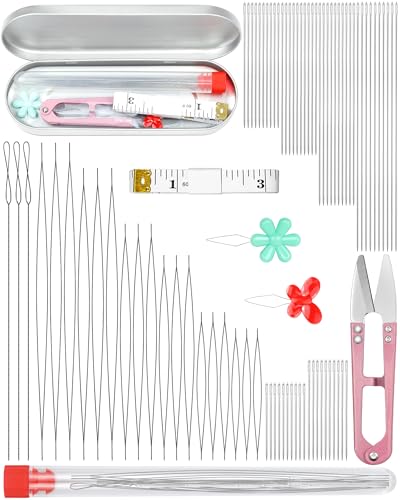
Miyuki twisted needles are essentially a wire loop that has been flattened and curved. This design is brilliant for loading beads because the eye of the needle is the entire length of the tool.
They are incredibly forgiving. Because they are collapsible, they will easily pass through beads that would be impossible for a solid steel needle to navigate.
They are not as durable as solid steel, but their utility for micro-beading is unrivaled. Keep a few spares on hand, as they will eventually lose their shape or snap under tension.
Dritz Beading Needles: Best Budget Option

Dritz is a staple in local craft stores, and their curved needles are perfectly adequate for the occasional beader. They are accessible and get the job done without any unnecessary frills.
These are great for beginners who aren’t yet sure how much beading they will incorporate into their knitting. If you only bead a few times a year, there is no need to invest in professional-grade tools.
The finish is serviceable, though not as slick as Tulip. If you find them catching on your yarn, a quick rub with a bit of beeswax will improve their glide significantly.
Darice Curved Needles: Reliable for Beginners

Darice needles are widely available and provide a consistent, reliable curve that makes learning the "scoop" method easy. They are sturdy enough to withstand the clumsy handling that often comes with a new skill.
They are slightly thicker, which makes them easier to hold for those who struggle with hand fatigue. If you have arthritis or find thin needles difficult to grip, the extra girth here is a benefit.
They are a fantastic entry point. Master your bead loading technique here before upgrading to more specialized, thinner needles.
How to Select the Right Gauge for Bead Loading
The gauge of your needle must be smaller than the hole of your bead, but large enough to accommodate your yarn. If your needle is too thick, you’ll be fighting the beads every step of the way.
Consider these factors:
- Bead size: Size 11/0 or 15/0 beads require very fine, flexible needles.
- Yarn weight: Ensure your thread or yarn can pass through the eye without bunching.
- Needle temper: Harder steel resists bending but can snap; softer steel bends but is easily straightened.
Always test your needle with a bead before you start your project. If you have to force it, you will only end up breaking the bead or fraying your yarn.
Essential Tips for Threading Curved Needles
Threading a curved needle can be tricky because the eye is often quite small. Use a wire needle threader to save your eyesight and your patience.
When working with yarn, trim the end at a sharp angle to create a point. If the yarn is fuzzy, a tiny dab of clear nail polish or beeswax on the tip can act as a "needle" to help it pass through the eye.
Don’t pull the yarn through too far. You only need enough to secure it, as a long tail will only get in your way and create tangles as you work.
Maintaining Your Needles to Prevent Corrosion
Even high-quality steel needles can develop surface oxidation if left in a humid environment. Keep your needles in a dry, airtight container when not in use.
If you notice your needle dragging, it may have a microscopic burr or a layer of skin oil buildup. Clean them with a soft cloth and a tiny bit of alcohol to restore their original slickness.
If a needle starts to rust, discard it immediately. A rusted needle will leave permanent marks on your beautiful hand-knitted fabric.
Common Mistakes When Working With Seed Beads
The most common mistake is trying to load too many beads at once. Start with a small scoop; trying to fill the entire needle will only lead to beads falling off or the needle bending under the weight.
Another error is using a needle that is too long for the project. A shorter curved needle allows for better control and precision when picking up beads from a mat.
Finally, remember that beading adds weight. If you are working on a delicate lace project, ensure your yarn is strong enough to support the added beads, or you may find your stitches stretching out of shape over time.
Finding the right curved needle is a small investment that pays off in hours of saved frustration. Whether you choose the precision of Tulip or the versatility of Miyuki, the key is to match your tool to your specific project needs. Practice your scooping technique on a scrap piece of yarn before diving into your main project. With the right needle in hand, your beaded knitting will look as professional as it feels.