7 Best Craft Scissors For Heavy Duty Cutting Tested
We tested top craft scissors to find the best for heavy-duty cutting. Discover which durable, sharp blades excel at slicing through thick materials with ease.
Every fiber artist knows the frustration of a dull blade snagging on a thick wool roving or a heavy-duty denim project bag. When you are deep into a complex construction, your tools should feel like an extension of your hands rather than a point of resistance. I have spent decades refining my workspace, and I’ve learned that the right pair of shears is just as important as the quality of your yarn. Here are seven heavy-duty options that stand up to the rigors of serious crafting.
Gingher 8-Inch Knife Edge Dressmaker Shears


These shears are the gold standard for a reason. The knife-edge grind allows the blades to slice through heavy upholstery fabrics or multiple layers of felted wool with surprising ease.
The weight of these scissors is significant, providing a sense of stability that lighter, plastic-handled shears simply cannot match. If you are cutting through thick, multi-ply cotton canvas for a project bag, the balance here prevents hand fatigue during long sessions.
However, they require a bit of maintenance. Because they are high-carbon steel, you must keep them dry and lightly oiled to prevent rust. If you aren’t diligent about care, they will lose their edge quickly.
Kai 7250 Professional 10-Inch Fabric Shears

If you frequently work with dense, heavy fibers like boiled wool or thick leather, the Kai 7250 is a powerhouse. The vanadium stainless steel is incredibly durable, holding an edge far longer than standard carbon steel.
The 10-inch length provides extra leverage, which is a lifesaver when you are cutting through thick seams or heavy batting. It feels substantial in the hand, yet the ergonomic handle design minimizes the strain on your thumb and palm.
The tradeoff here is the sheer size. For smaller, more intricate trimming tasks, these might feel like overkill or even slightly clumsy. Reserve these for your heavy-duty structural cutting.
Fiskars Amplify RazorEdge Heavy Duty Scissors

Fiskars introduced a clever motion-sensing technology in these shears that actually amplifies your cutting power. When you hit a thick section of fabric, the blades adjust to ensure a clean, continuous cut rather than a jagged chew.
This is a fantastic entry point for the knitter who wants industrial performance without the high price tag of professional-grade shears. They are particularly good for cutting through thick, sticky synthetic fibers that often cause other blades to jam.
Be aware that the plastic components are not as long-lasting as all-metal shears. If you are a heavy user, expect to replace these every few years rather than passing them down as an heirloom.
Wiss W20W Industrial Inset Heavy Duty Shears

The Wiss W20W is a classic "workhorse" tool often found in professional tailoring shops. These are built for one purpose: cutting heavy materials all day, every day, without complaint.
The inset bolt design keeps the blades perfectly aligned even under heavy pressure. If you are cutting through layers of heavy denim or dense canvas for tote bags, these will not wiggle or flex.
They are heavy and utilitarian, lacking the refined aesthetics of some boutique brands. If you prioritize function over form, these are an excellent, no-nonsense investment for your studio.
LDH Scissors Midnight Edition Fabric Shears
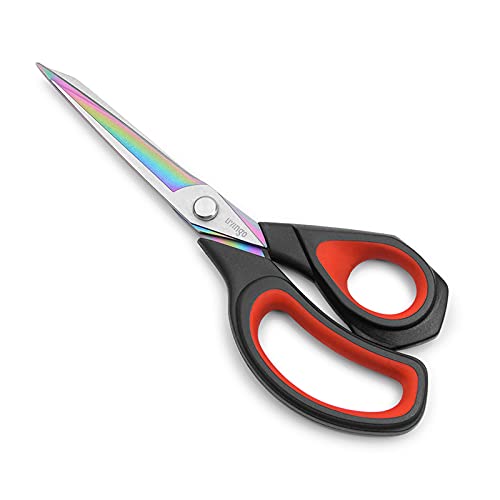
These shears are as beautiful as they are functional, featuring a sleek, matte black finish that hides fingerprints and wear. Beyond the looks, the high-carbon steel is ground to a very fine edge that feels exceptionally smooth during a cut.
I find these particularly useful when working with delicate but thick materials, like heavy silk velvet. They provide a clean, precise snip that doesn’t pull or distort the weave of the fabric.
They are a premium purchase, and you are paying for the craftsmanship and the aesthetic. Keep these away from paper or wire; they are strictly for your high-end fiber projects.
Westcott 8-Inch Titanium Bonded Industrial

Titanium-bonded blades are incredibly resilient, resisting the sticky residue that builds up when you cut through heavy fusible interfacings. This makes them a top choice for bag-making and structural knitting projects.
The grip is comfortable, and the weight is well-distributed. They offer a great balance of performance and affordability for the knitter who needs a reliable tool that doesn’t require constant maintenance.
The downside is that once the titanium coating eventually wears down, the underlying steel may not hold an edge as well as a pure carbon steel blade. They are excellent, but they are not necessarily a "forever" tool.
Havel’s Sewing 8-Inch Heavy Duty Serrated
Serrated blades are a secret weapon for any fiber artist working with slippery or thick materials. The tiny teeth grip the fabric, preventing it from sliding away from the blade as you cut.
If you are cutting through thick, slick synthetic linings or multiple layers of slippery fabric, these will change your life. They provide a level of control that smooth-edged blades simply cannot offer.
Because of the serrations, they are not ideal for fine, precision trimming where you need a perfectly smooth edge. They are specialized tools, best kept in your kit specifically for those difficult, slippery materials.
How to Choose the Right Blade for Fiber Crafts
Choosing the right shear depends entirely on what is on your cutting table. Consider the material thickness, the density of the weave, and the frequency of your cutting.
- Carbon Steel: Best for precision and sharpness, but requires regular oiling.
- Stainless Steel: More resistant to rust, but requires more frequent sharpening.
- Titanium Bonded: Excellent for resisting adhesive buildup from interfacings.
- Serrated Blades: Essential for slippery or thick, shifting fabrics.
Don’t be fooled by the "heavy-duty" label on cheap craft store scissors. If the pivot point feels loose or the blades flex when you squeeze the handles, they will eventually ruin your fabric. Invest in a pair that feels solid and remains rigid under pressure.
Caring for Your Scissors to Maintain Sharpness
Your scissors are a precision instrument, not a utility knife. The most common mistake I see is using fabric shears to cut paper, wire, or plastic, which will dull the edge almost instantly.
- Designate: Keep a pair of "junk" scissors for paper and wire, and keep your good shears strictly for fabric.
- Clean: Wipe the blades with a soft, dry cloth after every use to remove lint and dust.
- Oil: Place a tiny drop of sewing machine oil at the pivot point once a month to keep the movement smooth.
- Store: Keep them in a sheath or a dedicated drawer to prevent the tips from getting banged up.
If your shears start to chew the fabric instead of slicing through it, it is time for a professional sharpening. Do not attempt to sharpen them yourself unless you have the proper tools and training.
Essential Tips for Safe Heavy Duty Fabric Cuts
Heavy-duty cutting requires a stable surface and proper body mechanics. Always ensure your cutting mat is on a flat, sturdy table that is at a comfortable height for your posture.
When cutting, keep your wrist straight and let the motion come from your elbow and shoulder. If you find yourself twisting your wrist to get through a layer of fabric, you are likely using too much pressure or the blade is dull.
Always cut away from your body, and never place your fingers in the path of the blade. It sounds obvious, but when you are tired after a long day of knitting, it is easy to become complacent. Stay focused, work slowly, and respect the edge of your tools.
Finding the perfect pair of shears is a journey, much like finding the right yarn for a specific pattern. Whether you prioritize industrial strength or ergonomic comfort, the right tool will make your time in the studio far more enjoyable. Take the time to care for your blades, and they will support your creativity for years to come. Happy crafting, and may your cuts always be clean and effortless.