6 Best Glass Beakers For Dye Solution Mixing
Discover the 6 best glass beakers for precise dye mixing. Learn which borosilicate options offer the durability and chemical resistance your projects require.
Hand-dyeing your own yarn is a transformative experience that turns a simple skein of undyed wool into a bespoke work of art. To achieve professional results, you need reliable equipment that can withstand the chemical and thermal stresses of the dye bath. Glass beakers are the gold standard for mixing concentrated dye stocks because they offer clarity, precision, and chemical resistance. Choosing the right vessel ensures your colors remain consistent from the first ounce to the last.
Pyrex Borosilicate Glass Beaker: Best Overall Pick


When you are working with expensive hand-dyed gradients, you cannot afford equipment failure. Pyrex remains the industry gold standard because its borosilicate composition handles rapid temperature shifts without shattering.
For the knitter who frequently experiments with acid dyes, this durability is non-negotiable. You’ll often find yourself heating water to dissolve dye powders before adding them to your main vat. Pyrex holds up to this thermal shock better than any alternative.
The trade-off is the price point, which is higher than generic laboratory glass. However, for a tool that will last a decade in your studio, the investment pays for itself in peace of mind.
Karter Scientific 1000ml Tall Form Graduated Beaker

Tall form beakers are a secret weapon for knitters who need to mix larger volumes of dye stock. The narrow profile allows for better swirling and agitation, which is essential for ensuring your dye powder is fully dissolved.
If you are mixing a large batch of navy or black dye—colors notorious for leaving undissolved "speckles" on your yarn—this shape is your best friend. The tall walls also help prevent accidental splashing when you are pouring concentrated solutions into your dye pot.
Keep in mind that the tall form can be slightly top-heavy when empty. Be sure to place it on a stable, flat surface in your studio to avoid tipping.
StonyLab Heavy Duty Borosilicate Glass Beaker Set

Buying a set is often the most economical way to stock your dye kitchen. StonyLab provides a range of sizes, which is vital because you rarely use the same amount of dye for a 50-gram mini-skein as you do for a 1,000-yard sweater quantity of yarn.
Having a variety of sizes allows you to mix your primary colors in smaller beakers and then combine them into a larger one for your final blend. This modular approach prevents you from wasting expensive dye by over-mixing.
The "heavy-duty" designation means these beakers have slightly thicker walls. While this makes them sturdier, they do take a bit longer to heat up if you are using a hot plate.
Eisco Labs Low Form Griffin Beaker for Dye Mixing

The Griffin style, or "low form," is the classic beaker shape you likely recognize from science classes. Because it has a wider base and a lower profile, it is incredibly stable and difficult to knock over.
This is the ideal choice if your dye studio is a shared space, like a kitchen counter or a busy craft room. The wide mouth also makes it very easy to stir with a glass rod or stainless steel spoon without hitting the sides.
The only downside is the wider surface area, which can lead to faster evaporation if you are leaving your dye stock sitting out. Always keep a cover—even a simple piece of plastic wrap—over the top if you aren’t using the solution immediately.
United Scientific Supplies Glass Beaker Essentials
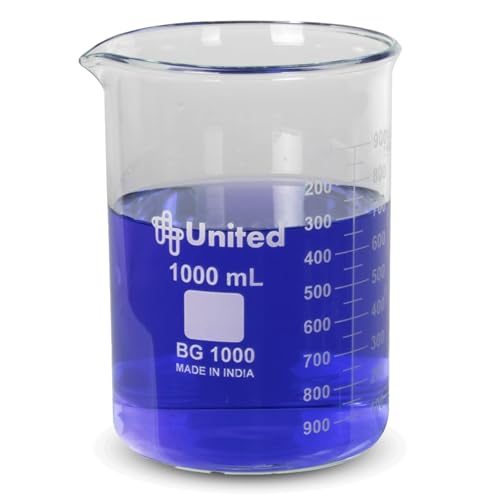
United Scientific supplies offer a balance of laboratory-grade precision and affordability. These beakers feature clear, easy-to-read graduation marks that are essential for accurate color math.
When you are trying to replicate a specific shade of "heathered moss" or "deep plum," accuracy is everything. Even a slight miscalculation in your stock solution can result in a dye lot that doesn’t match your previous batch.
These beakers are reliable workhorses. They aren’t flashy, but they provide the exact measurements you need to keep your fiber arts projects consistent.
Haws 500ml Borosilicate Beaker for Small Batches

Not every dye project requires a gallon of liquid. If you are experimenting with small-batch speckling or hand-painting a single pair of socks, a 500ml beaker is the perfect size.
Large beakers can be cumbersome when you only need to mix 100ml of dye. A smaller vessel allows for more precise stirring and pouring, reducing the risk of spilling concentrated pigment on your workspace.
The 500ml size is also much easier to clean in a standard kitchen sink. It’s a manageable, versatile size that every dyer should have in their rotation.
Essential Features for Safe Dye Solution Mixing
When selecting your glassware, look for high-quality borosilicate glass with clearly etched graduations. Avoid plastic beakers, as they can stain permanently and harbor dye residues that might contaminate future color batches.
The presence of a well-defined pour spout is also critical. You need a controlled stream when adding dye to your yarn bath to avoid creating sudden, dark "blotches" on the fiber.
- Borosilicate glass: Resists thermal shock and chemical corrosion.
- Graduated markings: Essential for consistent color recipes.
- Pour spout: Allows for controlled, mess-free application.
- Wide base: Provides stability to prevent spills of concentrated pigment.
Why Borosilicate Glass is Vital for Fiber Dyes
Dyeing yarn often involves working with vinegar or citric acid to set the color. Acidic environments can etch lower-quality glass over time, making it cloudy and difficult to clean.
Borosilicate glass is specifically engineered to be chemically inert. This means it won’t react with your dyes or acids, ensuring that the color you see in the beaker is exactly what you get on your yarn.
Furthermore, borosilicate handles the heat of a microwave or hot plate without cracking. Since many dyers use heat to set their colors, this thermal resilience is a non-negotiable safety feature.
Proper Maintenance and Cleaning of Glass Beakers
Never use the same glass beakers for food preparation that you use for dyeing. Even if you wash them thoroughly, trace amounts of dye can linger in microscopic surface imperfections.
After each session, rinse your beakers with warm water and a mild dish soap. If you notice staining from dark pigments, a brief soak in a solution of vinegar and water usually clears it right up.
Always inspect your beakers for hairline cracks before each use. A small fracture can lead to a catastrophic break when the glass is heated, which is the last thing you want when dealing with staining dyes.
Safety Tips for Handling Concentrated Dye Powders
Concentrated dye powders are incredibly fine and can easily become airborne. Always wear a dust mask or respirator when measuring your pigments to avoid inhaling the particles.
Always add the powder to the water, not the other way around, to minimize dust clouds. If you spill powder on your counter, wipe it up with a damp paper towel rather than sweeping it, which just sends the particles into the air.
Finally, keep your dye station organized. By using your beakers to hold only the specific color you are working with, you reduce the risk of cross-contamination and keep your workspace safe for both you and your fiber.
Investing in high-quality borosilicate beakers is one of the smartest moves you can make as a fiber artist. These tools provide the precision and safety required to turn your creative vision into vibrant, beautiful yarn. Treat your equipment with care, measure your pigments accurately, and your dye studio will become a place of endless color exploration. Happy dyeing, and may your colors always strike exactly as you intended.