7 Best Flexible Cords For Interchangeable Sets Tested
We tested seven top interchangeable cords to find the best options. Discover which cables offer the smoothest joins, ideal flexibility, and no-kink durability.
Choosing the right interchangeable cable is just as critical as selecting the perfect yarn for your project. A stiff, kinky cord can turn a relaxing evening of knitting into a frustrating battle against your own tools. After two decades at the needles, I have learned that the connection between needle and cord dictates the entire flow of your work. This guide breaks down the top contenders on the market to help you find the perfect match for your knitting style.
ChiaoGoo Red Twist: The Gold Standard for Cables


The ChiaoGoo Red Twist cable is arguably the most recognizable cord in the knitting world, and for good reason. It features a multi-strand steel cable coated in nylon, offering a unique combination of strength and flexibility.
Because of the steel core, these cables have zero "memory," meaning they won’t hold onto the coiled shape they took while inside the packaging. They lay flat immediately, which is a massive advantage when you are working on a large blanket or a wide shawl where you don’t want the cord fighting your tension.
The connection point is incredibly smooth, allowing stitches to glide from the cord to the needle without snagging. If you are a knitter who works with lace-weight yarn or delicate mohair, this seamless transition is a lifesaver.
Bottom line: If you want a reliable, "set it and forget it" cable that handles everything from heavy wools to fine lace, this is the industry benchmark.
HiyaHiya Steel Cords: Best for Zero Memory Flow

HiyaHiya cables are famous for their remarkable suppleness, feeling more like a soft thread than a rigid plastic tube. They are incredibly thin and flexible, which makes them a favorite for those who prefer the magic loop method.
Because they are so pliable, they don’t exert pressure on your wrists during long knitting sessions. If you are knitting socks or sleeves on a long cord, the lack of resistance from the cable allows your stitches to move freely around the loop.
However, because they are so thin, they can sometimes feel a bit "floppy" to knitters who are used to more structured cords. They don’t have the same weight as the ChiaoGoo cables, which some knitters find makes them feel less substantial in the hand.
Bottom line: Choose these if you prioritize comfort and fluid movement, especially for small-circumference knitting where flexibility is paramount.
KnitPicks Options Cables: Best Value for Beginners

KnitPicks cables are the workhorse of the knitting community, offering a reliable, affordable option for those building their first interchangeable set. They are made of a clear, flexible plastic that is easy to manage and durable enough for daily use.
These cables are particularly good for beginners because they aren’t overly stiff, but they do have a bit of "memory" compared to steel-core options. You might find them curling slightly after being stored, but a quick dip in warm water usually relaxes them back into shape.
While they aren’t the most high-tech cables on the market, they get the job done without breaking the bank. They are perfect for students or knitters who want to experiment with different needle sizes without a massive financial commitment.
Bottom line: For the budget-conscious knitter who needs a dependable, functional cable, KnitPicks is the reliable entry point.
Lykke Interchangeable Cords: Best Aesthetic Pick

Lykke cords are designed to complement their beautiful driftwood and bamboo needle tips, featuring a sleek, professional look. They are soft and pliable, making them a joy to work with during long, meditative knitting sessions.
Beyond their looks, they offer a very secure connection that rarely loosens during use. There is something to be said for tools that are as beautiful as the projects they create, and Lykke excels at balancing form and function.
They do have a slightly different "feel" than steel cables, providing a bit more friction which can be helpful if you are working with slippery materials like silk or bamboo yarn. If you find your stitches sliding off your needles too easily, these cords provide just enough grip to keep your work stable.
Bottom line: If you value a beautiful aesthetic and a reliable, grippy feel, these cords are a sophisticated addition to your kit.
Addi SOS Lifeline Cords: Best for Complex Lace
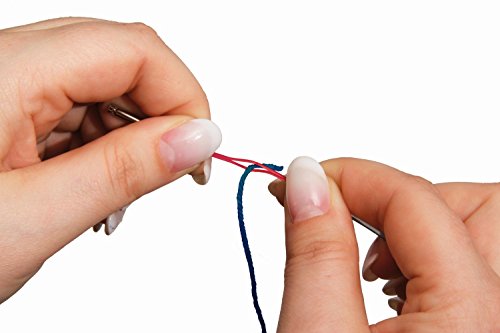
The Addi SOS cable is a genius innovation that features a small hole near the needle-to-cord join. This hole allows you to thread a "lifeline"—a piece of scrap yarn—directly into your knitting as you work.
For those tackling complex lace charts, this is a game-changer. If you make a mistake, you can easily rip back to the exact row where your lifeline is inserted, saving hours of potential rework.
The cords themselves are very durable, though they are a bit stiffer than the HiyaHiya or ChiaoGoo options. You are trading a bit of flexibility for the immense peace of mind that comes with a built-in safety net.
Bottom line: If you are an intermediate or advanced knitter working on intricate lace, the SOS cable is an essential tool for your sanity.
Seeknit Kinki Amibari Cords: Best Bamboo Pairing
Seeknit cables are designed specifically to pair with their high-quality Japanese bamboo needles. They are lightweight and remarkably flexible, maintaining a natural feel that matches the organic texture of bamboo.
These cables are excellent for knitters who prefer a "quieter" knitting experience. Because they are so soft, they don’t create that clicking sound against the needles, which can be a relief if you knit in public spaces or around others.
They do require a bit more care than steel cords, as they can be prone to kinking if stored improperly. However, for those who love the warmth and grip of bamboo, these cords are the natural extension of that experience.
Bottom line: Pair these with bamboo needles for a lightweight, silent, and harmonious knitting experience.
Lantern Moon Cords: Best Luxury Nylon Coated Set

Lantern Moon cords are the epitome of luxury, featuring a nylon-coated stainless steel core that feels like silk. They are designed to be incredibly smooth, allowing stitches to glide effortlessly across the join.
The quality of the materials is evident the moment you touch them; they are flexible yet maintain their structural integrity perfectly. They are designed to work with the Lantern Moon interchangeable system, which is known for its precision engineering.
While they are a premium investment, the experience of using them is unparalleled for those who knit with high-end fibers like cashmere or alpaca. They offer a smooth, snag-free transition that protects delicate yarn fibers from unnecessary wear.
Bottom line: If you treat your knitting as a luxury hobby and work with high-end yarns, these cables offer the premium experience you deserve.
Anatomy of a Cable: Swivel vs. Fixed Connections
The connection point is where the cord meets the needle tip, and it is the most common place for snags to occur. A fixed connection is rigid, meaning the cord does not rotate independently of the needle.
A swivel connection, by contrast, allows the cord to rotate within the needle base. This is a massive advantage if you tend to twist your needles while you work, as it prevents the cable from coiling up as you knit.
If you are a fast knitter who experiences a lot of cable twisting, a swivel cord can significantly reduce hand fatigue. However, some knitters prefer fixed connections for the sense of stability they provide when working with heavy projects.
Bottom line: Choose a swivel cord if you want to eliminate cable twisting, but stick to fixed if you prefer a solid, non-moving feel.
How to Prevent Cable Kinking and Maintain Shape
Cables often develop "memory" if they are stored in tight coils for extended periods. To keep your cables in top shape, try storing them in a large, circular case that allows them to lay flat rather than being folded.
If your cable does develop a kink, do not force it. Instead, submerge it in a bowl of warm (not boiling) water for a few minutes, then straighten it out while it cools. This resets the plastic and removes the stubborn bends.
Always ensure your cable is fully tightened to the needle using the provided key or tightening tool. A loose connection is the primary cause of stitches catching, which can lead to dropped stitches or even snapped cables over time.
Bottom line: Proper storage is the secret to longevity; treat your cables with care, and they will remain a reliable part of your kit for years.
Troubleshooting Common Interchangeable Cable Snags
A snag at the join usually happens for one of two reasons: either the cable isn’t tightened all the way, or there is a slight burr on the metal connection. First, check your tightening tool to ensure the connection is flush.
If the connection is tight but you still feel a snag, run your fingernail over the join to feel for any rough edges. Sometimes, a tiny bit of clear nail polish or a very fine-grit sanding block can smooth out a problematic join.
If you are knitting with very thin yarn, it might be slipping into the microscopic gap between the cord and the needle. In this case, wrapping a tiny piece of medical tape around the join can create a smooth transition until you finish the project.
Bottom line: Don’t let a snag ruin your rhythm; check the connection, smooth the edges, and keep your tension consistent to prevent the yarn from catching.
Finding the right cable is a personal journey that depends entirely on your unique knitting style and the projects you love most. Whether you prioritize the zero-memory performance of steel or the comfort of flexible nylon, there is a perfect match for every set of hands. Don’t be afraid to experiment with different brands until you find the one that feels like an extension of your own fingers. Happy knitting, and may your joins always be smooth and your stitches perfectly even.