6 Best Fabric Scissors For Clean Fringe Cuts
Achieve perfect fringe with our top 6 fabric scissors. Discover durable, sharp blades designed for clean, precise cuts on any textile project you undertake.
Achieving a crisp, uniform fringe on a hand-knitted shawl or a woven tapestry requires more than just patience; it demands a tool that slices through fibers rather than chewing them. Dull blades are the silent enemy of clean edges, often leaving behind frayed ends that ruin the drape of your finished piece. Investing in a high-quality pair of shears is a foundational step for any maker who values the final presentation of their work. This guide explores the best options to ensure your fringe looks as professional as your stitch work.
Gingher 8-Inch Knife Edge Dressmaker Shears


The Gingher 8-inch shears are the gold standard for many seasoned crafters, and for good reason. Their knife-edge grind allows the blades to meet with surgical precision, which is vital when you are trimming a thick wool fringe that has been freshly blocked.
These shears feel substantial in the hand, providing the necessary leverage to cut through multiple strands of yarn at once without the blades shifting. Because they are forged from high-quality steel, they hold their edge through long sessions of finishing work.
However, keep in mind that these require regular oiling and careful handling to maintain their performance. If you drop them on a hard floor, the alignment can be compromised, which is a risk you take with precision tools.
Kai 7230 9-Inch Professional Dressmaking Shears

If you struggle with hand fatigue during long finishing sessions, the Kai 7230s are a game-changer. These shears are remarkably lightweight, yet they feature a vanadium stainless steel blade that makes cutting through heavy, plied yarns feel effortless.
The ergonomics of these scissors are designed for those who spend hours prepping fringe for elaborate wall hangings or heavy garments. The smooth action prevents the "bunching" of fibers that often happens when you use standard household scissors.
While they come at a higher price point, the durability of the blade edge is unmatched. They are an investment in your comfort and the longevity of your project’s aesthetic.
Wiss W8 8-Inch Industrial Strength Fabric Shears

Wiss shears are the workhorses of the sewing room, built to withstand heavy-duty use. For a knitter, this means they can handle even the coarsest, most rustic highland wools without hesitation.
The industrial-strength construction ensures that the blades don’t flex, even when you are cutting through a dense fringe of thick, unspun roving. This rigidity is critical for ensuring that every strand in your fringe is cut to the exact same length.
The tradeoff here is weight; they are heavier than most modern alternatives. If you have any issues with wrist strain, you might find these a bit cumbersome for marathon finishing sessions.
LDH Scissors Midnight Edition Fabric Shears
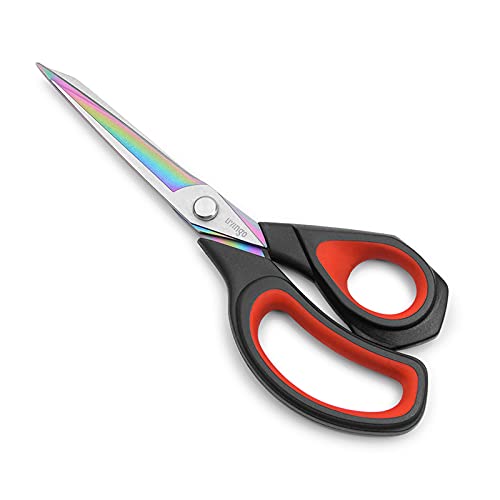
The LDH Midnight Edition shears are as beautiful as they are functional, featuring a matte black finish that looks stunning on any craft table. Beyond the aesthetics, they offer a very precise, sharp point that is excellent for trimming individual stray fibers in a fringe.
These scissors are balanced exceptionally well, providing a fluid motion that makes clean, one-shot cuts possible. This is particularly helpful when working with delicate fibers like silk or mohair, where you don’t want to pull or snag the yarn.
Because they are so sharp, they are quite unforgiving. You must be disciplined about using them exclusively for fiber and fabric, as even a single cut through paper will dull that fine edge quickly.
Fiskars Amplify RazorEdge Fabric Shears
Fiskars is a household name, but the Amplify line is a significant step up from their standard office models. These shears use a unique sensing mechanism that detects the thickness of the material and adjusts the blade tension accordingly.
This is incredibly useful when you are trimming a fringe that varies in density, such as when you are transitioning from a thick cable pattern to a thinner stockinette border. You get a consistent cut regardless of the yarn weight.
They are a more modern, plastic-heavy design compared to traditional forged steel shears. While they are highly effective, they may not offer the same "heirloom" feel that some makers prefer for their primary toolset.
Westcott 8-Inch Titanium Bonded Sewing Shears

Westcott’s titanium-bonded blades are known for their extreme hardness, which helps them stay sharp for a long time. For a knitter, this means you can cut through abrasive fibers like linen or hemp without worrying about the blades losing their bite.
The titanium coating also makes the blades resistant to the natural oils and residues found in some untreated wools. This keeps the cutting action smooth and prevents the buildup that can sometimes make shears feel "sticky."
They are a fantastic mid-range option for knitters who want professional performance without the maintenance requirements of high-carbon steel. They are reliable, sturdy, and consistently deliver a clean edge.
Why Sharp Blades Are Essential for Clean Fringe
A clean fringe is defined by the absence of "whiskers" or frayed ends at the tips of your yarn. When you use dull scissors, the blades push the fibers aside rather than slicing them, resulting in a jagged, uneven mess.
Sharp blades act like a guillotine, cleanly severing the fiber structure in a single motion. This is especially important for natural fibers like wool or alpaca, where the microscopic scales on the fiber can catch and fray if the cut isn’t clean.
Think of it like pruning a plant; a clean cut heals and looks intentional, while a crushed stem looks damaged. Your fringe is the final detail that frames your work, and sharpness is the primary factor in that presentation.
How to Maintain Your Scissors for Longevity
The most important rule of scissor maintenance is simple: never cut paper with your fabric shears. Paper contains fillers and clays that are highly abrasive and will dull your precision blades in a matter of minutes.
Store your shears in a dry place, preferably in a sheath or their original box, to protect the blades from nicks and moisture. If you notice the action becoming stiff, a tiny drop of sewing machine oil at the pivot point will restore that smooth, buttery feel.
If your blades do lose their edge, have them professionally sharpened by a qualified service. Attempting to sharpen high-quality shears at home with a kitchen pull-through sharpener will almost certainly ruin the blade geometry.
Choosing the Right Blade Length for Your Needs
Blade length dictates how many strands you can cut in a single pass. For a standard fringe on a scarf, an 8-inch shear is usually the "sweet spot" that offers a good balance between control and cutting capacity.
If you are working on large-scale projects like tapestries or heavy blankets, a longer 9-inch blade allows for wider, more uniform cuts. This reduces the number of passes you need to make, which in turn reduces the chance of creating uneven lengths.
Conversely, if you are doing delicate detail work on small items like baby booties or lace ornaments, shorter blades offer better maneuverability. Always match your tool size to the scale of the project you are finishing.
Testing Fabric Shears for Precision Cutting
To test if your shears are truly ready for fringe work, perform the "hanging fabric test." Hold a single layer of lightweight cotton or a scrap piece of yarn taut and attempt to cut it with the very tip of the blades.
If the scissors fold the material or leave a frayed edge, the blades are either dull or the pivot tension is too loose. A quality pair of shears should slice cleanly from the heel all the way to the very tip of the blades.
Remember that different fibers have different cutting characteristics. Always test your shears on a scrap of the actual yarn you are using for your project before you commit to cutting your final, finished fringe.
Taking the time to select and care for a dedicated pair of fabric shears will elevate the final appearance of your knitting projects significantly. By choosing a tool that suits your specific fiber types and project scale, you ensure that every fringe is as crisp and intentional as the stitches themselves. Treat these tools with the respect they deserve, and they will serve your craft for decades to come. Happy making, and may your edges always be sharp.