6 Best Warping Reels For Long Warp Chains To Try
Master long warp chains with ease. We review the six best warping reels, highlighting essential features for efficiency, stability, and improved precision.
Measuring a long warp chain is a rite of passage for every weaver, transitioning you from simple scarves to complex, multi-yard projects. Without a reliable warping reel, you are essentially fighting a losing battle against tangles and uneven tension. Choosing the right tool isn’t just about convenience; it’s about ensuring your warp threads are consistent from the first inch to the last. Here are six stellar options to help you streamline your process and master the art of the long warp.
Schacht Cricket 4-Yard Warping Reel: Top Pick
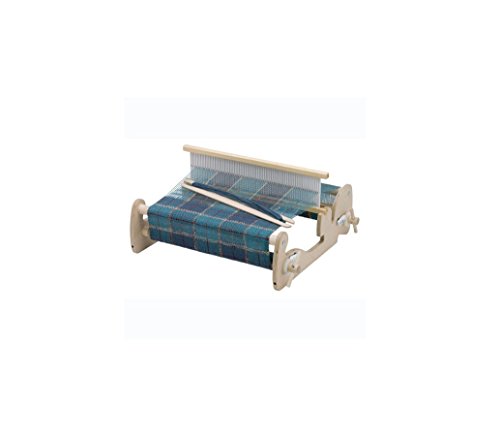

The Schacht Cricket reel is a masterclass in simplicity and functional design. It is specifically engineered to fit the needs of weavers who frequently work on smaller looms but occasionally need to scale up for longer projects.
Its compact footprint makes it a favorite for those working in shared craft spaces or smaller home studios. Because it is lightweight, you can easily move it from a tabletop to a corner when not in use.
The bottom line: If you value ease of assembly and a reliable, no-fuss experience, this is the gold standard for your collection. It won’t handle massive industrial-length warps, but for a 4-yard project, it performs flawlessly.
Leclerc Vertical Warping Mill: Best for Space
Vertical mills are the secret weapon of the space-conscious weaver. By utilizing vertical height rather than horizontal floor space, the Leclerc model allows you to measure long warps without turning your living room into a weaving warehouse.
The rotating frame makes it incredibly easy to wind long chains without constantly walking in circles. You simply feed the yarn as the mill spins, maintaining a rhythmic pace that keeps your tension consistent.
The tradeoff here is the learning curve of a vertical motion versus a horizontal one. If your floor space is at a premium, the vertical design is worth every penny of the investment.
Ashford 11-Yard Warping Reel: Best for Length
When you decide to tackle a project that requires significant length, like a series of table runners or a long-form blanket, the Ashford 11-yard reel becomes essential. It is built to handle substantial yardage without buckling under the pressure.
The sturdy construction ensures that the reel doesn’t wobble or flex when you are under high tension. This stability is crucial; any movement in the reel can lead to uneven warp lengths, which creates a nightmare during the threading process.
Choose this if you are planning large-scale production runs. It is built for the long haul and provides the structural integrity needed for demanding, high-yardage warps.
Glimakra Large Warping Mill: Best for Tension

Glimakra is legendary in the weaving world for a reason: they understand the physics of tension better than almost anyone. Their large warping mill is designed to keep your threads taut and uniform throughout the entire winding process.
The build quality is substantial, which means it stays firmly planted on the floor even when you are winding at a brisk pace. This prevents the "shifting" that often plagues cheaper, lighter reels.
If you struggle with uneven tension during your warp preparation, this mill will solve that problem immediately. It is an investment, but it is one that pays off in the quality of your finished fabric.
Kromski 11-Yard Warping Reel: Best for Stability
The Kromski reel is a beautiful piece of equipment that looks as good as it functions. Its wide base and heavy-duty wooden construction provide a level of stability that is rare in the consumer market.
Stability is the most underrated feature of a warping tool. When you are winding a long chain, the last thing you want is the reel tipping or vibrating as the yarn builds up.
For the weaver who appreciates craftsmanship and rock-solid performance, the Kromski is a top-tier choice. It handles long warps with grace and remains steady no matter how fast you wind.
Louet 10-Yard Warping Mill: Best Professional
The Louet warping mill is designed for the serious maker who treats weaving as a professional pursuit. It features precise engineering that allows for smooth rotation and easy adjustment of the pegs.
This mill is designed to minimize friction, which is vital when working with delicate fibers like silk or fine, high-twist wool. If your yarn is prone to snapping or snagging, the Louet’s smooth surfaces will be a relief.
This is the ultimate upgrade for the advanced weaver. While it carries a higher price tag, the efficiency gains in your workflow will make it feel like a bargain within a few projects.
Key Factors for Choosing a Quality Warping Reel
When shopping for a reel, ignore the marketing fluff and look at the base construction. A heavy base is non-negotiable for anyone winding warps longer than three yards.
Consider the peg spacing and material as well. Smooth, sanded wood is essential to prevent fiber snagging, especially if you work with delicate, hand-dyed singles or lace-weight yarns.
- Weight: Heavier is almost always better for stability.
- Material: Hardwood lasts longer and resists warping over time.
- Capacity: Ensure the reel fits your longest project, not just your average one.
Understanding Warp Chain Tension and Efficiency
Warp chain tension is the foundation of a good shed. If your tension is inconsistent during the winding process, you will inevitably end up with "tight" and "loose" threads that make the beating process frustrating and the final fabric uneven.
Efficiency comes from rhythm. Once you find a comfortable pace, maintain it throughout the entire winding process. Don’t stop and start, as this is where tension fluctuations usually occur.
Always check your tension by gently tugging on the warp chain as you wind. If you feel a slack section, stop and adjust before continuing to the next peg.
Essential Maintenance for Your Warping Equipment
Wood is a living material; it reacts to the humidity and temperature of your home. Keep your reel away from direct heat sources or damp basements to prevent the wood from drying out or swelling.
If your reel starts to squeak or feel "sticky" during rotation, a tiny bit of furniture wax on the pivot point works wonders. Avoid heavy oils that might stain your yarn.
- Dusting: Keep it clean to avoid transferring dirt to your clean warp.
- Tightening: Check screws and bolts periodically to ensure they haven’t loosened.
- Storage: Cover your reel when not in use to keep it in pristine condition.
Common Mistakes When Measuring Long Warp Chains
The biggest mistake beginners make is trying to wind too fast. Speed is not a substitute for accuracy; a miscounted turn at the beginning of a 10-yard warp will ruin the entire project.
Another common error is failing to secure your crosses properly. The cross is what keeps your threads in order; if it slips, you are looking at hours of untangling before you can even begin to thread your loom.
Always use a secondary tie to secure your cross before removing the warp from the reel. Take your time, count twice, and trust your tools.
Investing in a quality warping reel is one of the most significant upgrades you can make for your weaving practice. By choosing a tool that matches your project length and workspace, you eliminate the technical hurdles that often lead to weaver’s block. Remember that the best tool is the one that allows you to focus on the beauty of your fiber rather than the mechanics of the setup. Happy weaving, and may your tension always be perfectly balanced.