6 Best Gauge Calculators For Custom Sizing To Use
Find the perfect fit with our top 6 gauge calculators. Learn how these essential tools simplify custom sizing for jewelry, welding, and precise metalwork.
Achieving the perfect fit in a hand-knit garment is rarely a matter of luck; it is a discipline rooted in precise math and accurate gauge. Many knitters fear the numbers, but the right digital tool can transform a daunting calculation into a simple, reliable step. These six calculators offer varying approaches to scaling patterns, helping you move from a loose idea to a wearable masterpiece. By mastering these tools, you ensure that your hours of hard work result in a garment that actually fits your body.

Smart Knit: The Best Mobile Gauge Calculator

Smart Knit shines because it keeps your math tethered to your phone, right where your project bag lives. It is designed for the knitter who needs to convert gauge mid-row while sitting in a coffee shop or waiting for a train.
The interface is remarkably clean, focusing on the essential relationship between stitch count and desired width. If you are working with a tricky fiber like alpaca, which tends to grow after washing, this app allows for quick adjustments to your stitch counts before you commit to the body of a sweater.
The trade-off here is simplicity; it doesn’t offer the deep, multi-variable project management found in more complex software. However, for a quick check on whether your swatch meets the pattern’s requirements, it is an indispensable mobile companion.
The Knitter’s Graph Paper: Precision Tool
Sometimes, a digital calculator isn’t enough, and you need to visualize the geometry of your fabric. This tool allows you to map out your stitch and row counts on a grid, which is vital for complex colorwork or custom-shaped armholes.
Seeing your gauge laid out on a grid helps you understand how different needle materials—like slick metal versus grippy bamboo—might affect your stitch tension. When you can see the math visually, you are less likely to make a catastrophic error in your shaping.
It is a more manual process than an automated calculator, but the control it provides is unmatched. Use this when you are designing your own patterns or making significant modifications to a standard template.
Knitulator: Simple Math for Custom Sizing

Knitulator is the "no-nonsense" option for knitters who just want the answer without the fluff. It handles the basic conversions between inches, centimeters, and stitch counts with impressive speed.
If you find yourself constantly converting a pattern’s gauge to match your own unique tension, this is your best friend. It removes the human error that usually happens when you are tired and trying to do long division at 11 p.m.
The downside is its lack of advanced features like yarn estimation or complex shaping templates. It is a specialized tool for a specific job, and it does that job perfectly every time.
Gauge Calc: Best Web App for Quick Results
Gauge Calc is a browser-based powerhouse that doesn’t require a download or an account. It is ideal for the knitter who prefers to work at a desktop computer while planning out their next big project.
It is particularly useful when you are trying to substitute yarn. If you are swapping a heavy wool for a lighter silk blend, you can input your new gauge and see exactly how many stitches you need to cast on to maintain the intended size.
Because it is web-based, it lacks the convenience of offline access, but the speed of its calculation engine is its greatest strength. It is a reliable tool to keep bookmarked in your browser for whenever you are deep in the planning phase.
Wooly: The Integrated Gauge and Pattern App
Wooly goes beyond simple math by integrating your gauge with your pattern notes. It acts as a digital project journal, keeping your swatches, needle sizes, and modifications in one cohesive place.
This is a game-changer for knitters who work on multiple projects simultaneously. You can track your gauge for a sweater in one tab and your sock tension in another, ensuring you never accidentally use the wrong needle size for a project you haven’t touched in weeks.
The learning curve is steeper than a simple calculator, but the long-term organization is worth the effort. It is the best choice for the dedicated maker who wants to build a library of their own knitting history.
Knitting Chart: Advanced Scaling Features

Knitting Chart is for the technical knitter who wants to manipulate every single stitch. It offers sophisticated features for scaling patterns up or down based on your specific gauge, which is essential for inclusive sizing.
If you are a plus-sized knitter or someone who needs to adjust standard patterns for a custom fit, this tool provides the logic to make those changes gracefully. It helps you calculate increases and decreases across a row, ensuring your shaping remains symmetrical and professional.
It is an advanced tool that requires some patience to master. However, the ability to customize any pattern to your exact measurements is the ultimate goal of any serious knitter.
Why Gauge Accuracy is Vital for Your Fit
Gauge is the foundation of every garment, yet it is the most frequently ignored step by beginners. A difference of even half a stitch per inch can be the difference between a sweater that fits perfectly and one that is two sizes too big.
When you ignore gauge, you are essentially gambling with your yarn and your time. If you knit with a loose tension, your fabric will be drapey but prone to stretching; if you knit tight, you might end up with a stiff, armored garment that feels uncomfortable to wear.
The reality is that your gauge changes based on your mood, your needles, and your yarn. Always measure your swatch after it has been blocked, as the water and heat will permanently alter the fiber’s structure.
How to Measure Your Swatch Like a Pro
Measuring a swatch requires more than just laying a ruler across the top. You must measure the center of the swatch, avoiding the edges where the tension is often distorted by the turning of the needles.
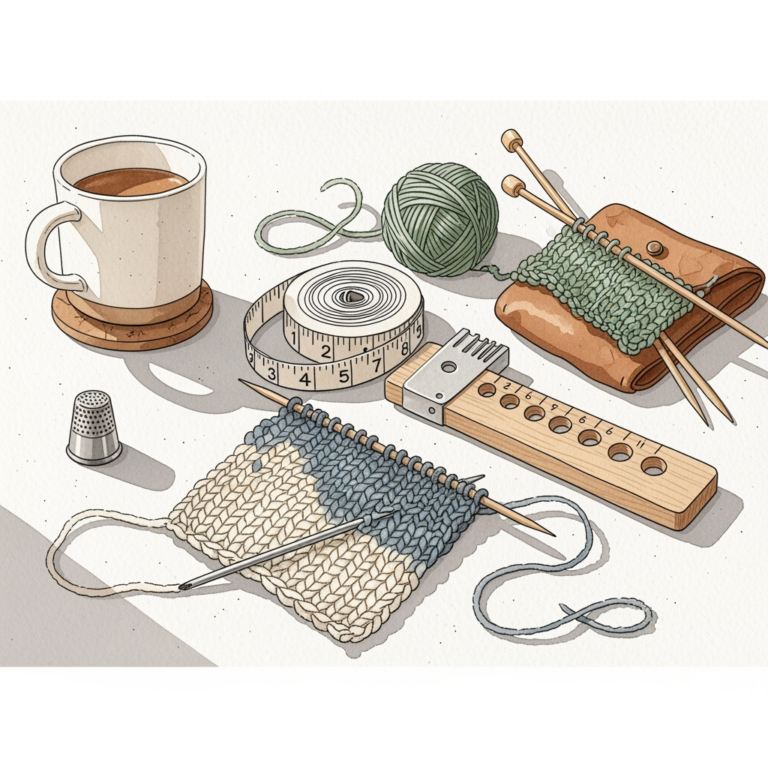
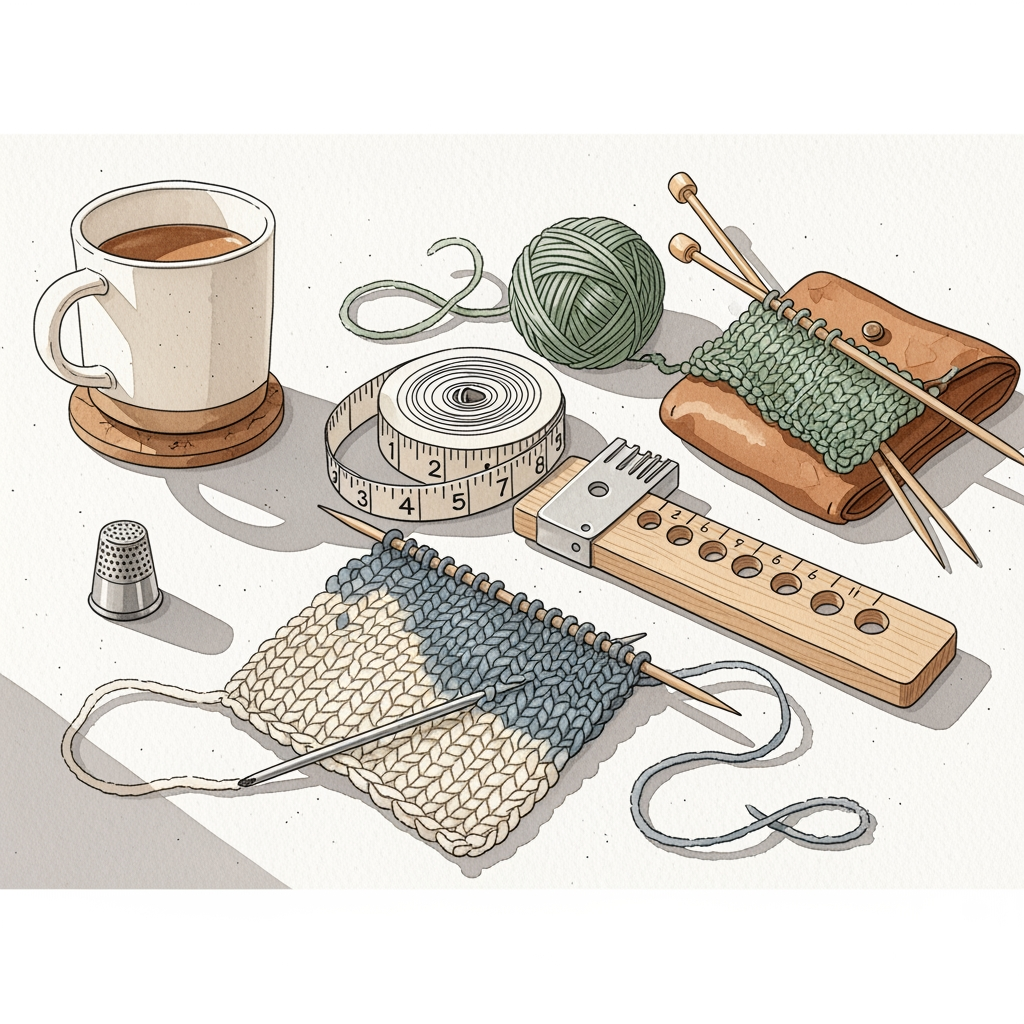
Use a dedicated gauge ruler or a clear plastic square to ensure you are counting stitches over a full four-inch (10cm) span. If you only count over one inch, you are likely to introduce significant errors into your calculations.
- Count the "V" shapes for knit stitches.
- Measure flat, without stretching the fabric.
- Use a contrasting pin to mark your start and end points.
Scaling Patterns: Adjusting for Your Size
Scaling a pattern is not just about adding more stitches; it is about maintaining the integrity of the design. You must calculate the percentage of increase needed and apply it across the stitch counts for the body, sleeves, and neckline.
If you are increasing the size, consider where the extra fabric needs to go. Adding width to the body is different from adding depth to the armscye, and failing to account for this will result in a garment that hangs poorly.
Always write down your modified numbers as you go. Relying on memory is the fastest way to find yourself with two different-sized sleeves at the end of a project.
Troubleshooting Common Gauge Math Errors
The most common error is failing to account for the "transition" zone between your ribbing and your stockinette. These two patterns often have different gauges, and a good calculator will help you determine if you need to change needle sizes between sections.
Another frequent mistake is assuming that your gauge will remain constant throughout the entire project. As you get tired or as the weight of the garment pulls on your wrists, your tension will naturally shift.
If your math seems off, re-measure your swatch. It is much easier to re-knit a four-inch square than it is to frog an entire sweater because you didn’t trust the numbers.
Mastering these gauge calculators is the single most effective way to elevate your knitting from a hobby to a craft. By removing the guesswork, you gain the confidence to substitute yarns, resize patterns, and create garments that feel like they were made specifically for you. Embrace the math, trust your swatches, and enjoy the process of creating something that truly lasts.