7 Best Yarn Guides For Keeping Tension Consistent
Master consistent tension with our guide to the 7 best yarn tools. Learn how these essential accessories help stabilize your gauge for professional results.
Achieving consistent tension is the hallmark of a professional-looking hand-knit garment, yet it remains the most common hurdle for knitters of all levels. Whether you are struggling with "rowing out" in stockinette or fighting to keep your floats even in Fair Isle, the right tool can fundamentally change your relationship with your yarn. Yarn guides are not just accessories; they are mechanical stabilizers that offload the physical work of tensioning from your fingers. This guide explores the best tools available to help you master your stitch uniformity once and for all.
Clover Yarn Guide Ring for Consistent Tension
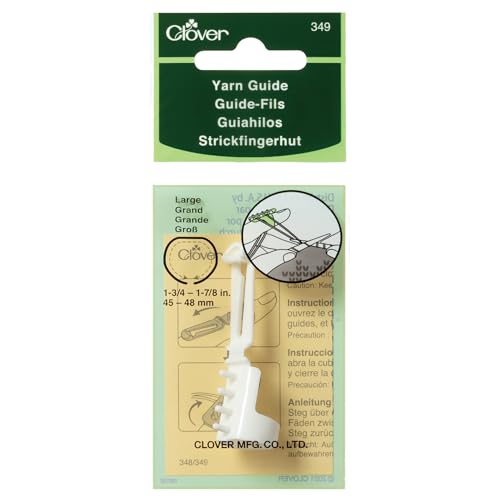

The Clover Yarn Guide Ring is a classic for a reason: its simplicity makes it an excellent entry point for those new to using tensioning tools. It features a simple wire coil that sits atop a ring, allowing the yarn to glide through the loop without constant manipulation by your index finger.

If you find yourself with "death grip" syndrome—where you hold the yarn so tightly your hand cramps after twenty minutes—this tool is a lifesaver. It physically separates the yarn from your skin, which is particularly helpful if you are working with sticky wools or mohair blends that tend to grab onto your skin.
However, keep in mind that the wire coil is fixed. If you are working with heavy, bulky yarn, it may feel a bit snug, potentially causing drag that leads to uneven tension. It works best with fingering to light worsted weight yarns.

Prym Ergonomic Knitting Thimble for Yarn Control
The Prym Ergonomic Knitting Thimble takes a different approach by focusing on comfort and multi-strand management. Its unique, contoured shape is designed to sit securely on the finger without digging in, which is a common complaint with basic metal rings.
This thimble is particularly effective for those who struggle with "yarn friction," where the yarn burns or creates calluses on the skin during long sessions. The plastic construction is smooth and snag-free, making it an excellent choice for delicate fibers like silk or high-twist merino.
Be aware that the ergonomic shape is somewhat bulky compared to a simple wire ring. If you have very small hands or are working on tiny circular needles, you might find it interferes with your needle movement until you get used to the positioning.
Tulip Yarn Guide Ring with Adjustable Open Loop
Tulip is known for precision, and their yarn guide ring is no exception. The standout feature here is the adjustable open loop, which allows you to widen or narrow the path the yarn travels through based on the diameter of your strand.
This is a game-changer for knitters who switch between projects frequently. If you are working on a sock project with a thin 4-ply yarn in the morning and a chunky cable hat in the evening, you can adjust the loop to maintain the perfect amount of drag.
The metal is high-quality and exceptionally smooth, meaning it won’t fray or catch even the most delicate hand-dyed yarns. It is a slightly higher price point, but the durability and versatility make it a long-term investment for your knitting kit.
Pony Knitting Thimble for Two-Color Work Ease

The Pony Knitting Thimble is a specialized tool designed specifically for stranded colorwork, featuring two separate guides to keep your colors distinct. This prevents the yarns from tangling in your lap or getting twisted together as you move across the row.
When you are working with two colors, keeping them separated is half the battle for tension. By feeding one color through each guide, you ensure that both strands are held at an identical distance from your needle, which is critical for preventing one color from "pulling" and distorting the fabric.
It does require a bit of a learning curve to get the yarn threaded properly while holding your needles. Once you master the rhythm, however, your floats on the back of your work will become significantly more uniform.
Susan Bates Yarn Feeder for Tension Regulation
The Susan Bates Yarn Feeder is a straightforward, no-nonsense tool that clips onto your finger to provide a consistent feed. It acts as a tension regulator, forcing the yarn to follow a specific path before it reaches your knitting needles.
This is particularly useful for beginners who are still learning how much "pull" to apply to the yarn. By using the feeder, you remove the human error variable, effectively letting the tool handle the tension while you focus on your stitch formation and needle entry.
While it is highly functional, it is made of plastic and may feel less "premium" than metal options. For the price, it is an incredibly effective tool for those who want to see immediate improvements in their gauge without a steep learning curve.
Addi Knitting Thimble for Smooth Yarn Guidance
Addi is legendary for their needle quality, and their knitting thimble maintains that reputation for smoothness. The design is minimalist and focuses on providing a frictionless path for the yarn, which is ideal for knitters who use very slick needles.
If you are using nickel or polished brass needles, your yarn is already moving quickly. This thimble helps you maintain control without adding unnecessary drag, ensuring your tension remains tight and even without feeling like you are "fighting" the yarn.
It is a great choice for speed knitters. Because the yarn flows so effortlessly through the guide, you can maintain a high pace without the risk of the yarn slipping off your finger or losing its tension.
Boye Yarn Guide for Multi-Strand Colorwork
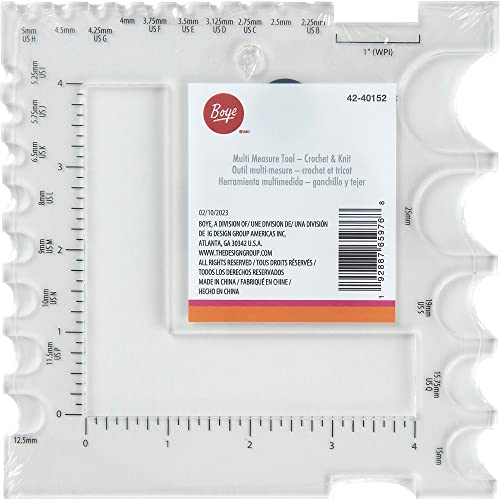
The Boye Yarn Guide is another excellent option for those tackling complex colorwork patterns. It features multiple guide slots, allowing you to manage two or even three colors simultaneously with ease.
This tool is particularly helpful for "Continental" style knitters who hold the yarn in their left hand. By keeping the strands separated at the finger level, it prevents the yarns from twisting together, which is the most common cause of uneven tension in stranded knitting.
It is lightweight and unobtrusive, making it easy to forget you are even wearing it. If you have been intimidated by colorwork because of the mess of tangled yarn, this is the tool that will help you finally conquer those patterns.
Why Yarn Guides Help Improve Your Stitch Uniformity
Stitch uniformity is largely about maintaining the same amount of "drag" on your yarn for every single loop you pull through. When you hold yarn with your bare fingers, your tension naturally fluctuates based on fatigue, the texture of the yarn, and how often you reach for your coffee.
Yarn guides provide a mechanical constant. By forcing the yarn to pass through a specific loop or coil, you ensure that the same amount of friction is applied to every stitch. This is especially important when working with different fiber types.
For example, slippery silk yarn often requires more tension control than a grippy, woolen-spun yarn. A guide allows you to wrap the yarn in a way that compensates for these natural fiber properties, leading to a much more professional, even fabric.
How to Properly Adjust Tension for Your Knitting
Adjusting tension is not just about the tool; it is about how you wrap the yarn around your fingers. Start by threading the yarn through the guide, and then experiment with how many times you wrap it around your index finger behind the guide.
If your stitches are still too loose, add an extra wrap around your finger to increase the drag. If your stitches are too tight and you are struggling to insert your needle, reduce the number of wraps.
Remember, your gauge will change based on the needle material and the yarn’s ply. Always knit a swatch using your chosen yarn guide to see how it affects your personal gauge; you may find you need to go up or down a needle size to compensate for the change in tension.
Troubleshooting Common Yarn Guide Setup Mistakes
The most common mistake is threading the yarn through the guide at too sharp an angle, which creates too much friction and makes your hands tired. Ensure the yarn travels in a relatively straight line from your ball of yarn to the guide, and then to your needle.
Another frequent issue is placing the guide too close to the tip of your finger, which can interfere with the needle’s movement. Position the guide further down toward the base of your fingernail or even on the middle knuckle if it feels more natural.
Finally, don’t be afraid to stop and re-thread if you feel a snag. If you are using a guide and your yarn is still bunching up, check that the guide itself isn’t catching on the yarn’s ply. Sometimes, a quick polish of the metal guide with a soft cloth can remove microscopic burrs that cause snagging.
Mastering your tension is a journey that combines muscle memory with the right mechanical support. By experimenting with these various yarn guides, you can find the perfect balance that suits your unique knitting style and project needs. Don’t be discouraged if it takes a few rows to adjust; once you find your rhythm, your stitch quality will reach new heights. Happy knitting, and may your tension always be perfectly consistent.