7 Best Hand Carding Paddles for Fine Wool
Discover the top 7 hand carding paddles for fine wool. This guide compares tpi, grip, and weight to help you achieve smooth, consistent fiber preparation easily.
Preparing fine wool requires a delicate touch and tools that respect the integrity of the fiber’s crimp and staple length. When you are spinning for a lace-weight project, the quality of your prep work determines the final drape and stitch definition of your fabric. Selecting the right hand carders is the first step in ensuring your handspun yarn is smooth, consistent, and a joy to knit with. Here are the top tools that help you achieve that professional-grade batt.
Strauch Fine Wool Hand Carding Paddles: Best Overall
Strauch is widely considered the gold standard for a reason: the precision of their carding cloth is unmatched. These paddles are designed to handle fine fibers like Merino or Rambouillet without shredding the delicate staple.


The ergonomic handles are a lifesaver if you are prepping enough fiber for a full-sized sweater project. When you spend hours carding, the balance of the paddle prevents wrist fatigue, much like choosing a lightweight carbon needle for long-term comfort.
Bottom line: If you want a tool that will last a lifetime and consistently produce airy, cloud-like batts, invest in Strauch. They are an investment, but your fiber will thank you.
Patrick Green Single-Wide Cotton Carders Review
Don’t let the name "cotton carders" fool you; these are exceptional for fine, short-staple wools. Because they are designed for the high-density requirements of cotton, the TPI (teeth per inch) is exceptionally high.
When working with very fine, greasy wools that tend to clump, the density of these teeth helps separate every single lock. It’s similar to using a fine-toothed comb to detangle delicate mohair lace; you need that density to avoid knots.

Bottom line: These are ideal for the spinner who loves working with very fine, short-staple fleeces. They provide a level of control that coarser carders simply cannot match.
Ashford Fine Wool Carders: The Reliable Standard

Ashford has been a staple in fiber studios for decades, and their fine wool carders are a workhorse. They are accessible, durable, and perform exactly as expected every single time.
If you are new to processing your own fleece, these are the perfect entry point. They aren’t overly complicated, and the construction is robust enough to handle the occasional learning curve mishap.
Bottom line: You cannot go wrong with Ashford if you want a dependable, no-nonsense tool. They are the "standard" for a reason, providing consistent results for a variety of fine-tooled projects.
Howard Brush 72 TPI Hand Carders for Fine Fiber
Howard Brush is synonymous with high-quality carding cloth, and their 72 TPI (teeth per inch) paddles are a sweet spot for many fine wools. They provide enough density to open up the fiber without being so tight that they feel "sticky" to use.
When you are dealing with a fiber that has a lot of crimp, like Corriedale or fine crossbreeds, these paddles help align the fibers without stripping out the natural loft. You get a batt that spins into a lofty, warm yarn, which is perfect for cozy winter accessories.
Bottom line: These are an excellent middle-ground choice. If you find higher TPIs too difficult to clear, the 72 TPI configuration offers the perfect balance of control and ease of use.
Clemes & Clemes Fine Wool Hand Carding Paddles
Clemes & Clemes produces beautiful, handcrafted tools that feel like a luxury in your hands. Beyond the aesthetics, the geometry of their paddles is specifically tuned for efficient fiber transfer.
The way the teeth are angled allows for a smooth, rolling motion that minimizes fiber breakage. This is crucial when you are spinning for high-twist yarns where any broken fiber ends will manifest as pills in your finished knit.
Bottom line: These paddles are for the artisan who appreciates tool quality as much as the final yarn. They are highly efficient and reduce the amount of physical effort required to create a perfect batt.
Schacht Spindle Company Fine Wool Hand Carders
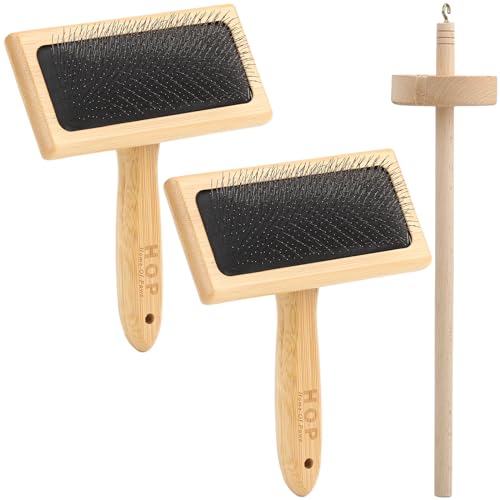
Schacht is known for thoughtful engineering, and their hand carders reflect that focus on the user experience. The curvature of the paddle is designed to facilitate a natural flicking motion that is very gentle on fine wool.
If you have a history of hand strain or arthritis, the design of these paddles might be the most comfortable option. They feel light and nimble, allowing you to work through your fleece with minimal resistance.
Bottom line: Choose Schacht if comfort is your primary concern. Their design philosophy centers on making the process as ergonomic as possible without sacrificing the quality of the carded batt.
Louet Fine Wool Carding Paddles: Expert Choice

Louet tools are designed for those who want to process large amounts of fiber quickly without sacrificing quality. Their fine wool paddles are exceptionally well-made and handle high volumes of fiber with ease.
If you are the type of knitter who likes to spin enough yarn for a full-length cardigan, you need tools that can keep up with your pace. Louet provides that efficiency while maintaining the fine-tooth density required for delicate wools.
Bottom line: These are for the serious fiber artist. If you prioritize productivity and high-performance tools, Louet is an excellent choice for your studio.
Understanding Carding Cloth TPI for Fine Wools
TPI stands for "teeth per inch," and it is the most critical spec when shopping for carders. For fine wools, you generally want a higher TPI, typically ranging from 72 to 120.
Think of TPI like needle gauge; just as you wouldn’t use a size 10 needle for lace weight yarn, you shouldn’t use a low-TPI carder for fine wool. Low TPI will let fine fibers slip through, resulting in a lumpy, uneven batt.
- 72 TPI: Versatile, good for fine to medium wools.
- 100-120 TPI: Essential for very fine, short-staple fibers like Merino or Angora.
How to Properly Clean and Maintain Your Carders
Your carders are an investment, and they require regular cleaning to stay effective. Never leave fiber in the teeth for extended periods, as the natural oils (lanolin) can attract dust and eventually gum up the mechanism.
Use a dedicated carding brush or a stiff-bristled cleaning tool to remove stray fibers after every session. If the teeth become bent, use a small needle or a specialized carding comb to gently nudge them back into alignment.

Pro tip: Keep your carders in a dry environment to prevent the metal teeth from oxidizing. A little care here ensures your tools remain as sharp and effective as the day you bought them.
Essential Tips for Processing Fine Wool Batts
When carding fine wool, the golden rule is "less is more." Do not overload your paddles; if you have to force the paddles together, you are working with too much fiber.
- Work in thin layers: This prevents fiber breakage and results in a more consistent yarn.
- Focus on alignment: Use the carders to gently align the fibers rather than trying to "comb out" massive tangles.
- Check for neps: If you see small knots or "neps" forming, stop and re-card that section.
By taking your time, you ensure that the resulting batt is smooth and easy to draft. This patience pays off when you reach the spinning wheel, as a well-prepped batt makes for a much more enjoyable and efficient spinning experience.
Investing in high-quality hand carders is a transformative step for any spinner who values the tactile joy of fine wool. By matching the TPI to your specific fiber and maintaining your tools with care, you set the stage for superior yarn quality. Take the time to choose the tool that fits your hand and your workflow, and your finished knits will show the difference in every stitch. Happy spinning and even happier knitting.