7 Best Stitch Counters For Row Tracking To Try
Struggling to keep track of your knitting progress? Discover our top 7 stitch counters that ensure precision and help you master every complex row pattern.
Every knitter knows the sinking feeling of realizing you’ve lost your place in a complex lace repeat or a long stockinette sleeve. Keeping track of rows is the difference between a perfectly fitted garment and a project that needs to be ripped back to the cast-on edge. Whether you are working with slippery silk or grabby wool, having a reliable counting system is essential for your sanity. Here are the seven best tools to ensure your row count stays as accurate as your gauge.
Cocoknits Maker’s Keep: Best Wearable Counter
The Maker’s Keep is essentially a magnetic slap bracelet that keeps your notions—and your row counter—within arm’s reach. It is a brilliant solution for knitters who find themselves constantly misplacing their tools between the sofa cushions.
The magnetic surface is strong enough to hold a metal row counter or a few tapestry needles securely. Because it stays on your wrist, you never have to break your rhythm to reach for a counter sitting across the room.
If you are working on a project with frequent increases or decreases, having your counter attached to your wrist makes the transition between stitches seamless. It is a bit of an investment, but for those who knit in multiple locations, it is a game-changer.
Clover Kacha-Kacha: The Classic Clicker Choice
The Clover Kacha-Kacha is the gold standard for tactile feedback. The satisfying "click" sound confirms the count, which is invaluable when you are deep in a meditative knitting flow and don’t want to look at a screen.
The button is large and easy to press, even if you are working with bulky yarn or have stiff fingers. It also features a locking mechanism, which prevents the number from accidentally shifting if it gets tossed into your project bag.
While it lacks digital bells and whistles, its simplicity is its greatest strength. It won’t run out of batteries, and it’s robust enough to survive being dropped on hard floors repeatedly.
KnitIQ Digital Finger Counter: Best for Accuracy


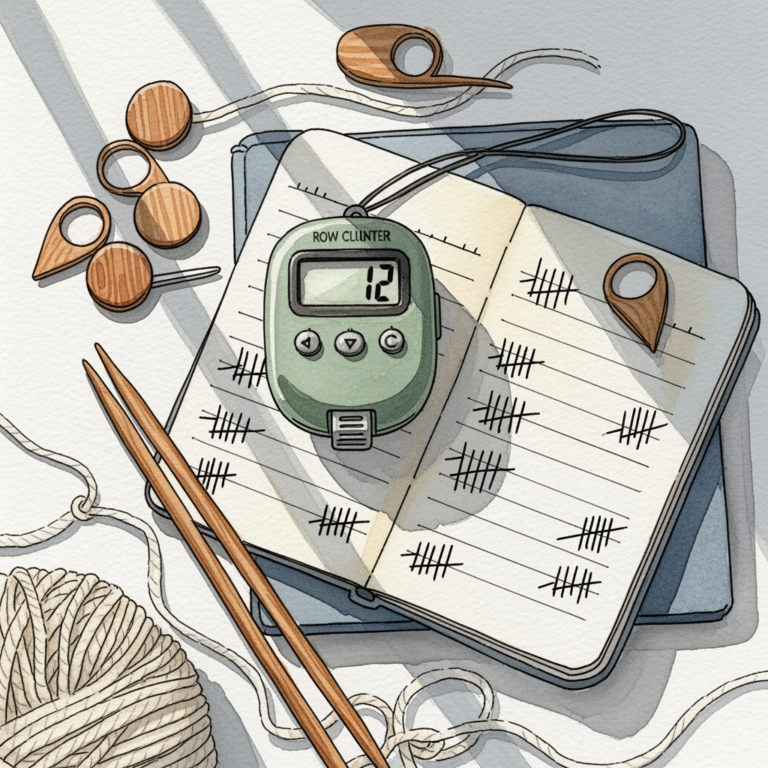
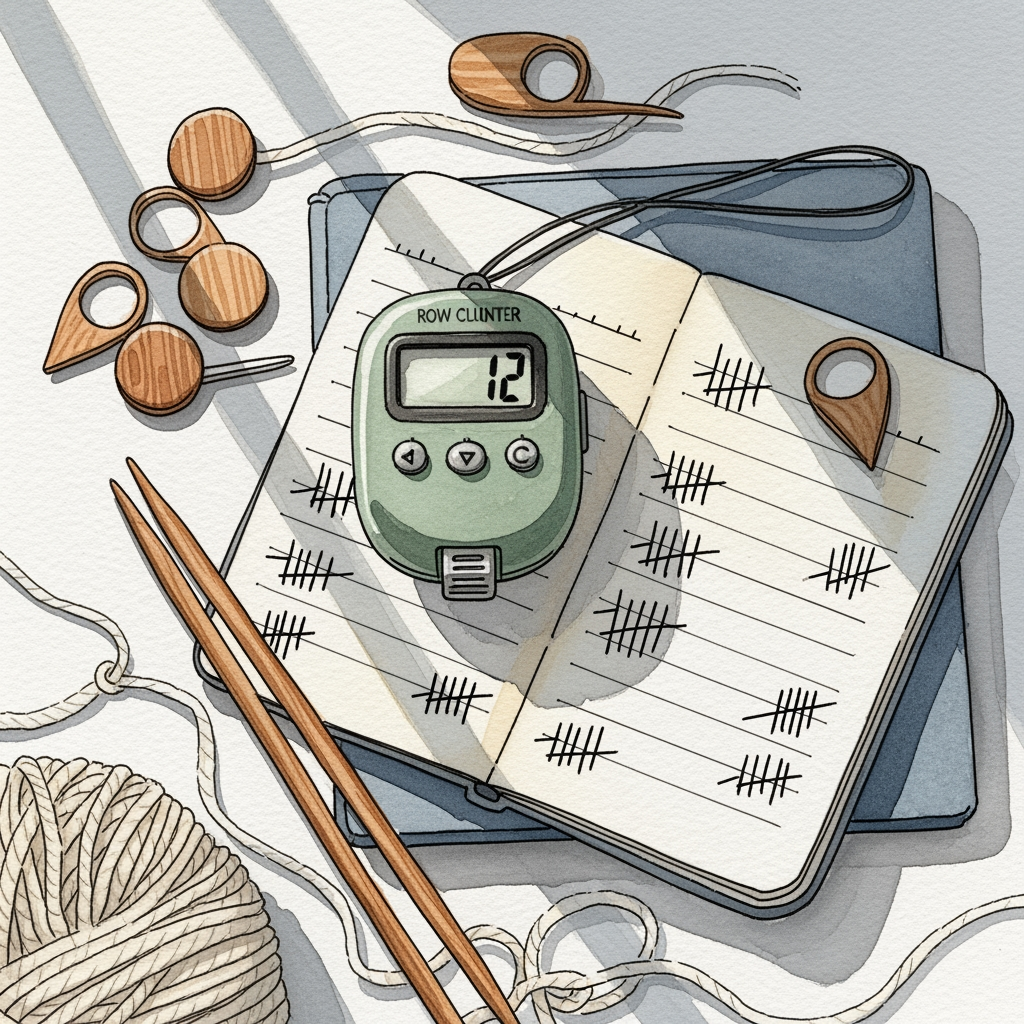
If you prefer a digital display, the KnitIQ finger counter offers a clear, high-contrast screen that is easy to read in low light. It slides onto your finger like a ring, keeping your hands free for complex cable work.
The digital interface is intuitive, and the reset button is positioned to avoid accidental clearing. This is particularly helpful when you are working on long, repetitive rows where you might lose track of which row you are currently on.
Because it is digital, it can track higher numbers without the mechanical wear of a clicker. For projects like large blankets or sweaters with long sections, this precision is worth the slight learning curve of adjusting to a digital interface.
Row Counter Ring: The Minimalist Jewelry Option
These small, adjustable rings are designed to be worn on your finger while you knit. They utilize small rotating dials to track your rows, making them incredibly discreet and lightweight.
They are perfect for knitters who want to keep their setup minimal, especially when working on the go. Since they are worn on the hand, you don’t have to put your needles down to record your progress.
However, keep in mind that the dials can be small and sometimes stiff. If you have dexterity issues, you might find them slightly fiddly compared to a larger, button-based counter.
Knitter’s Pride Mindful Collection Row Counter

This counter brings a sense of intention to your craft, featuring the aesthetic and high-quality build Knitter’s Pride is known for. It is a sturdy, reliable tool that feels substantial in the hand without being cumbersome.
The design is focused on ease of use, with a smooth action that doesn’t distract from the rhythm of your purls and knits. It’s a great choice for knitters who appreciate tools that look as good as they perform.
It is particularly well-suited for those who work with delicate fibers like alpaca or mohair, where you want a tool that won’t snag your yarn. It’s a reliable, elegant addition to any project bag.
Susan Bates Handheld Counter: The Budget Pick

The Susan Bates handheld counter is a classic for a reason: it is affordable, functional, and nearly indestructible. It’s the tool many knitters start with and often continue to use for years.
The side-mounted wheel is easy to turn with your thumb, allowing for quick adjustments without interrupting your tension. It’s a purely mechanical device, meaning it is immune to the common glitches of digital tools.
While it isn’t as "pretty" as some of the newer options, it gets the job done reliably. If you are a beginner on a budget, this is the most practical place to start your journey.
Smart Knit Counter App: The Modern Digital Tool
Apps like the Smart Knit Counter turn your smartphone or tablet into a sophisticated project manager. They allow you to track multiple projects simultaneously and can even sync with patterns.
The benefit here is the ability to add notes—such as "increased on row 12"—directly into your log. This is invaluable for complex colorwork or lace where you need to remember specific instructions for each section.
The downside is the reliance on a battery-powered device. If your phone dies, your count goes with it, so keep a backup method if you’re heading out for a long day of knitting.
How to Choose the Best Counter for Your Knitting
Choosing the right counter depends heavily on your personal knitting style and the complexity of your project. If you are working on a simple scarf, a basic mechanical counter is more than enough.
For intricate lace or cables, consider the following factors:
- Tactile feedback: Do you need to hear or feel the click to be sure you counted?
- Portability: Do you knit mostly at home or on the bus?
- Multi-tasking: Do you have multiple projects on the needles at once?
If you find yourself constantly resetting your counter by accident, look for models with a locking feature. If you knit at night, a backlit digital counter or app is essential.
Analog vs. Digital Counters: Which Is Better?
Analog counters offer a tactile, battery-free experience that never fails. They are the "reliable old truck" of the knitting world, perfect for those who want to avoid screens and charging cables.
Digital counters, conversely, offer advanced features like project notes and large, easy-to-read displays. They are the "modern sedan," offering comfort and extra functionality at the cost of needing power.
Ultimately, neither is strictly better; it comes down to whether you prefer simplicity or convenience. Many experienced knitters keep one of each in their kit to suit the specific needs of the project.
Pro Tips for Maintaining Your Row Count Habit
The biggest challenge with row counters isn’t the tool—it’s the habit of using it. Make it a rule to click the counter before you put your needles down, no matter how tired you are.
- Tie it to a trigger: Click the counter the moment you finish the last stitch of a row, before you even move your hands.
- Keep it attached: If you use a handheld counter, attach it to your needle case or project bag with a locking stitch marker.
- Double-check: Every few inches, count your rows manually against your counter to ensure you haven’t skipped a beat.
Consistency is the key to accuracy. If you make the counter part of your knitting muscle memory, you’ll never have to worry about losing your place again.
Finding the right row counter is a personal journey that evolves as your knitting skills grow. Whether you prefer the satisfying click of a mechanical counter or the digital convenience of an app, the best tool is the one you actually remember to use. Start by evaluating your current project needs and see which of these options fits your unique workflow. Happy knitting, and may your row counts always be accurate and your tension perfectly even.