6 Best Sewing Pins For Securing Pompom Attachments
Secure your pompom projects with ease. We review the 6 best sewing pins designed to hold delicate attachments firmly in place without damaging your fabric.
Attaching a pompom is the final, high-stakes moment of a long knitting project that can either perfect your hat or leave it looking lopsided. Using the wrong pins during the attachment process often leads to shifting, uneven tension, or even snagged yarn fibers. Selecting the right tool ensures your pompom sits centered and secure, maintaining the professional finish your hard work deserves. Here are the top six pin choices to help you master the art of the perfect pompom placement.
Clover Patchwork Pins: Best for Thick Pom Poms


Clover Patchwork Pins are the gold standard when you are dealing with high-density, faux fur or heavy wool pompoms. Their ultra-fine, heat-resistant shafts glide through the dense core of a pompom without forcing the fibers apart or creating unsightly gaps.
Because these pins are incredibly sharp, they pierce through the thickest pompom bases with minimal resistance. This is crucial when you are trying to hold a heavy pompom in place while simultaneously threading your tapestry needle through the hat’s crown.
The tradeoff here is that their thin gauge means they can bend if you are too forceful. Always insert them straight into the core rather than at an angle to maintain their structural integrity.
Dritz Extra-Long Quilting Pins: Best for Stability

When you are working with a large-scale pompom, standard-length pins simply aren’t long enough to reach through the pompom and anchor firmly into the knit fabric. Dritz Extra-Long Quilting Pins provide the reach necessary to bridge the gap between the pompom’s core and the hat’s crown.
The extra length allows you to pin the pompom from multiple angles, creating a stable "cross" pattern that prevents the pompom from wobbling. This is a game-changer for those who wear their hats frequently and want to avoid the "floppy pompom" syndrome.
Be mindful that these pins are thicker than silk pins, so they are best suited for heavier weight yarns like Aran or Chunky. Avoid using them on delicate, fine-gauge lace hats where the thicker shaft might leave a visible hole.
Bohin Glass Head Pins: Best for Delicate Knits

If your project involves a fine-gauge hat made of cashmere or alpaca, you need a pin that respects the fiber integrity. Bohin Glass Head Pins are renowned for their smooth, polished finish that won’t snag or fray delicate yarn plies.
The glass heads are heat-resistant, meaning if you happen to be steam-blocking your hat with the pompom temporarily pinned on, the heads won’t melt. This is a subtle but vital feature for those who demand a professional finish in every step of the process.
While they are slightly shorter than quilting pins, their superior sharpness makes them the safest choice for high-end fiber projects. Treat these as your "precision" pins rather than your "heavy-duty" anchors.
Singer Heavy Duty T-Pins: Best for Secure Hold

T-Pins are a staple in blocking, but they are also the secret weapon for a rock-solid pompom attachment. Their unique "T" shape provides a mechanical stop that prevents the pin from sliding entirely through the pompom base.
These are ideal if you are a beginner who finds that your pompom keeps shifting while you are trying to tie off your yarn tails. The wide head gives you something to grip, making it easier to pull the pin out once your attachment stitches are secure.
Because they are quite thick, use them only on the underside or the dense center of the pompom. Never push them through the visible knit fabric of the hat, as they are large enough to distort your stitches.
Collins Long Ball Point Pins: Best for Wool Yarn
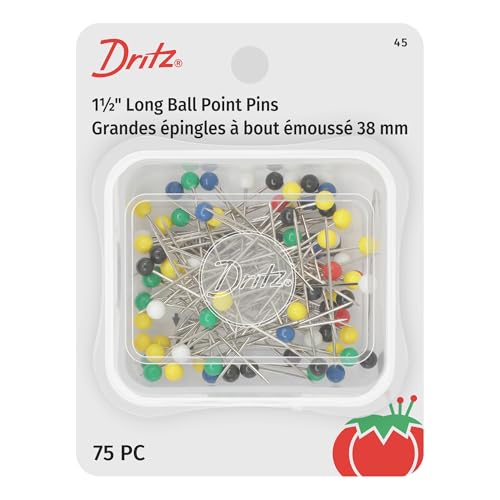
Wool yarn has a tendency to "grab" onto metal pins, which can make removing them a frustrating tug-of-war. Collins Long Ball Point Pins feature a rounded tip that pushes the fibers of your yarn aside rather than piercing them.
This design is particularly effective when you are attaching a pompom to a hat made of loosely spun, single-ply wool. The ball point prevents the pin from splitting the yarn strand, which keeps your stitches looking neat and prevents pilling.
These pins offer a great balance between length and ease of use. They are the perfect middle-ground tool for the average knitter who works with standard worsted-weight wools.
Taylor Seville Magic Pins: Best for Easy Grip

The Taylor Seville Magic Pins feature a comfort-grip, heat-resistant silicone head that is significantly easier to handle than traditional flat or glass heads. If you have arthritis or find it difficult to manipulate tiny pins, these are a literal lifesaver.
The "Magic" aspect refers to the ergonomic head, which provides excellent leverage when pushing through thick pompom bases. You can easily see them against the yarn, which helps ensure you don’t accidentally leave one inside the pompom after you finish sewing.
While they are slightly more expensive than basic pins, the tactile feedback and ease of handling are worth the investment. They stay put once placed, providing a reliable reference point while you sew.
Why Pom Pom Attachment Requires Specialized Pins
Attaching a pompom is not merely about aesthetic placement; it is a structural challenge that requires keeping a bulky, heavy object immobile against a curved, flexible surface. Using standard sewing pins often results in the pompom sliding during the crucial moments when you are securing the yarn tails.
Specialized pins allow you to create a "temporary anchor" that mimics the final position of the pompom. This lets you step back, check the symmetry, and adjust the angle before you commit to the permanent sewing process.
- Stability: Keeps the pompom centered on the crown.
- Safety: Prevents the pompom from shifting while using sharp needles.
- Precision: Allows for fine-tuning the height of the pompom.
How to Choose the Right Pin Length for Your Project
The rule of thumb for pin length is simple: the pin must be long enough to pass through the entire pompom base and at least half an inch into the knit fabric of the hat. A pin that is too short will pop out the moment you move the hat, while one that is too long becomes unwieldy.
Consider the density of your pompom:
- High-density faux fur: Requires longer, thinner pins (2 inches or more).
- Low-density yarn pompom: Can be managed with shorter, standard pins.
- Delicate knit fabric: Always prioritize thin-gauge pins to avoid snagging.
Safety Tips for Securing Pompoms to Finished Hats
The most important safety tip is to always count your pins before and after you attach the pompom. It is incredibly easy for a pin to get buried deep within the pompom fibers, where it can cause a painful surprise for the wearer.
If you are gifting the hat, consider using removable stitch markers or safety pins instead of straight pins for the final attachment. These are much safer and provide a more secure hold if the pompom needs to be removed for washing.
- Count your pins every time you start and finish.
- Use bright-colored heads to make them easy to spot.
- Avoid leaving pins in for more than a few minutes.
Troubleshooting Common Pom Pom Attachment Issues
If your pompom keeps tilting, you likely haven’t secured it from enough directions. Try using four pins in a square formation to lock the base in place before you start your whip-stitch attachment.
If you find that your pins are leaving holes in your hat, you are likely using a pin that is too thick for the yarn weight. Switch to a finer-gauge silk pin and see if the distortion disappears.
Lastly, if the pompom feels "loose" even after sewing, you may need to use a thicker anchor thread, such as a doubled-up strand of the original yarn. The pins are for positioning, but the sewing thread is what provides the actual structural support.
Mastering the final steps of your project is just as important as the knitting itself, and choosing the right pins is a key part of that process. By matching your pins to the weight of your pompom and the delicacy of your yarn, you ensure a secure and professional result every time. Take your time with the placement, and remember that a well-anchored pompom is the hallmark of a truly finished garment. Happy knitting, and enjoy the satisfaction of that perfect pompom finish.