7 Best Stitch Counters For Tracking Complex Charts
Master complex knitting charts with ease. We review the 7 best stitch counters to help you track patterns accurately, boost efficiency, and avoid errors.
Tracking rows in complex lace or intricate colorwork is often the difference between a finished masterpiece and a frustrating tangle of ripped-out stitches. Even experienced knitters find that relying on memory alone leads to "row-blindness," especially when switching between different chart repeats. The right counter doesn’t just record numbers; it integrates into your rhythm to keep your focus on the tension and the pattern. Choosing the right tool requires balancing your personal knitting style with the specific demands of your project.
Cocoknits Maker’s Keep: Best Wearable Counter
The Cocoknits Maker’s Keep is essentially a magnetic slap bracelet that keeps your notions exactly where you need them. For those working on complex charts, it serves as an anchor, holding your stitch markers and a magnetic row counter right on your wrist.
This tool shines when you are constantly moving between a chart on a stand and your needles. By having the counter attached to your body, you eliminate the frantic search for a tool that has rolled off the couch or hidden under a skein of yarn.
The trade-off here is the bulk; some knitters find a wrist-worn device distracting during long sessions of lace knitting. However, if you are prone to losing small accessories, the convenience of having your counter permanently attached to your person is a massive workflow upgrade.
Knitter’s Pride Rainbow Row Counter: Best Value


These classic, inexpensive sliding counters are a staple for a reason. They are simple, durable, and require no batteries, making them perfect for knitters who prefer a low-tech approach to their craft.
Because they slide onto your needle, they are always front-and-center while you work. If you are knitting a complex cable pattern where you need to reference your row count every time you pick up your work, having the number right there on the needle is incredibly efficient.
One drawback is that they can add a bit of weight to one side of your needle, which might be noticeable if you are knitting with very fine lace-weight yarn. They are best suited for projects on medium-weight needles where the slight imbalance won’t impact your gauge.
Clover Kacha-Kacha Clicker: Best Tactile Choice
The Kacha-Kacha clicker provides a satisfying, audible "click" that confirms your entry without you having to look away from your knitting. This tactile feedback is vital when you are deep in the "flow state" of a complicated chart.
Many knitters find that the physical act of clicking the top button helps cement the row count in their memory. It’s a sensory cue that signals the end of a row, helping you transition smoothly into the next set of instructions.
The only real downside is the size; it’s a bit larger than other options and isn’t designed to be worn. If you prefer a clean workspace without extra gadgets cluttering your hands, this might feel like an unnecessary addition to your kit.
KnitIQ Digital Finger Counter: Best for Accuracy

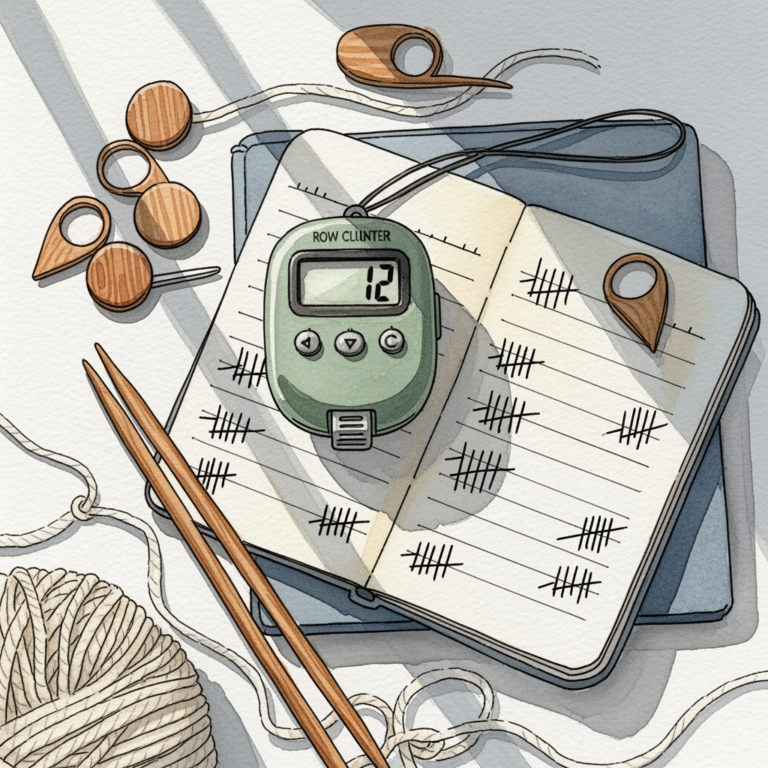
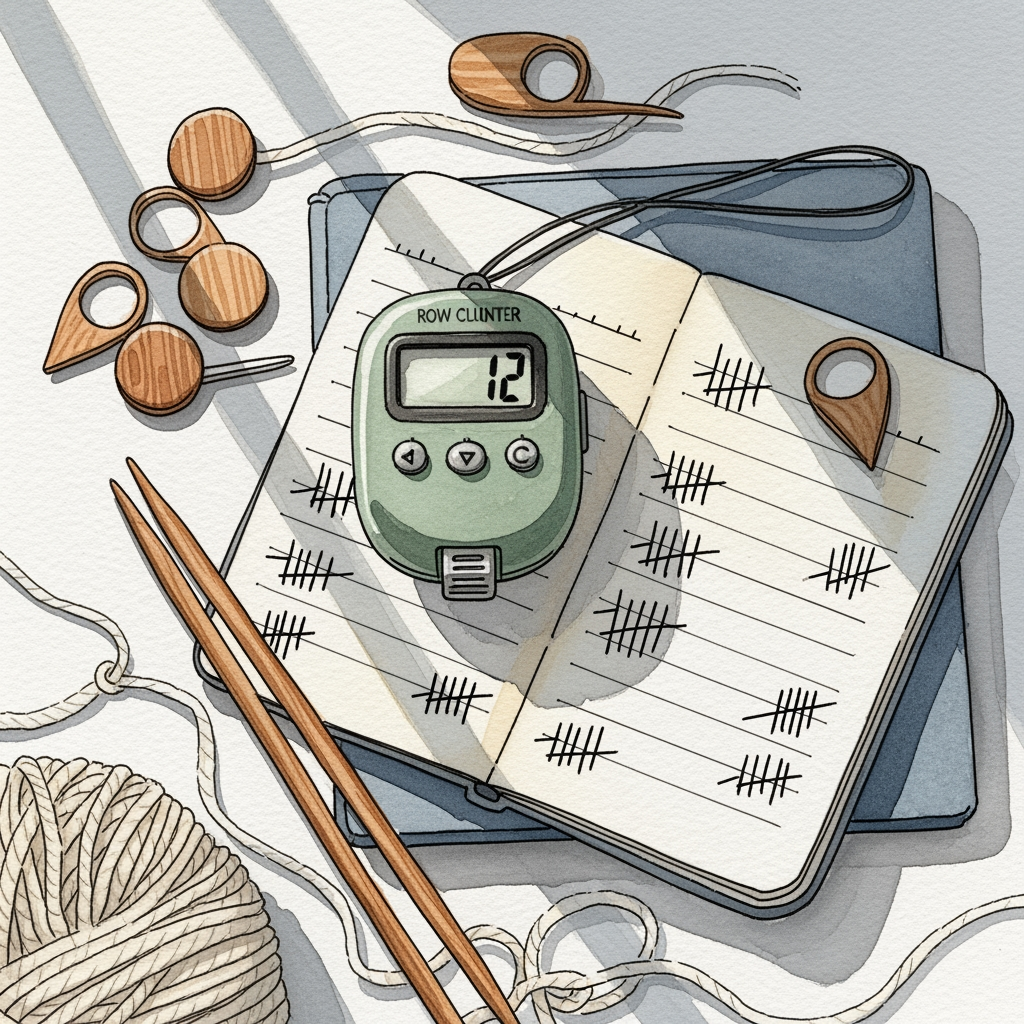
Digital finger counters offer a level of precision that manual dials sometimes lack. With a clear LCD screen, there is no ambiguity about whether you are on row 48 or 49, which is crucial for patterns with long, non-repeating sequences.
These devices strap comfortably to your finger, allowing you to click as you finish your final stitch. It’s a seamless motion that becomes muscle memory within a few rows, requiring very little cognitive load.
Be mindful that these rely on small batteries, so keep a spare on hand. If your battery dies mid-project, you might lose your place if you haven’t been double-checking your work against your written notes.
Row Counter App by Lofty Loops: Best Digital Tool
Apps like Lofty Loops turn your smartphone or tablet into a sophisticated project management hub. They allow you to track multiple projects simultaneously, which is a lifesaver for the "multi-project knitter" who has a sock project, a sweater, and a shawl on the needles at once.
The advantage here is the ability to add notes to specific rows. If you need to remind yourself, "increase on this row" or "switch to color B here," the app keeps that information tethered to the row count.
The risk, of course, is the "screen fatigue" that comes with checking your phone constantly. If you knit to escape the digital world, this might not be the right fit for your practice.
Boye Aluminum Row Counter: Best Simple Accessory
The Boye aluminum counter is the "old reliable" of the knitting world. It’s a metal dial that sits on the end of your needle, offering a robust and permanent way to track your progress.
It is virtually indestructible, which is great if you tend to throw your knitting bag into your car or travel frequently. It doesn’t require electricity or apps, making it the ultimate "grab and go" tool for a project bag.
However, the dials can sometimes be a bit stiff. If you have arthritis or find small movements difficult, you might find the turning mechanism on these metal counters to be less comfortable than a soft-touch plastic button.
ChiaoGoo Needle Gauge with Counter: Best Hybrid

This tool is a genius space-saver that combines a needle sizer with a manual row counter. It’s perfect for the knitter who likes to keep their notions bag minimalist and organized.
Having a needle gauge handy is essential when you have multiple sets of needles and occasionally forget which size you’re using. By integrating the counter, you ensure that you always have two of your most-used tools in one place.
The downside is that it isn’t attached to your work. You have to remember to pick it up and turn the dial every time you finish a row, which requires a bit more discipline than a counter that lives on your needle or finger.
How to Choose the Right Counter for Your Projects
When selecting a counter, consider the complexity of the project. If you are knitting a simple stockinette scarf, a basic manual dial is more than enough.
For intricate lace or cables, look for a tool that provides tactile or auditory feedback. You need to know you’ve registered the row without having to stop and inspect a small dial.
Think about your environment as well. If you knit in public or on the go, a wearable option or a needle-mounted counter prevents you from losing your place or your tool.
Manual vs. Digital Counters: Which One to Pick?
Manual counters are the gold standard for reliability. They never run out of battery, they aren’t prone to software glitches, and they provide a physical connection to the work that many knitters find grounding.
Digital counters excel in complexity. If you are juggling a pattern that requires tracking rows, repeats, and stitch counts simultaneously, an app or a digital finger counter provides a level of detail that a simple dial cannot match.
Ultimately, the best choice is the one you actually use consistently. If you find yourself skipping the "click" because the tool is annoying, it’s the wrong tool, regardless of its features.
Tips for Keeping Track of Complex Lace Charts
Always use a magnetic chart keeper or a highlighter tape to mark your current row on the physical pattern. Your row counter should be a secondary check, not your primary reference.
If you are working with dark-colored yarns, ensure your counter is in a well-lit spot. It is very easy to lose count when you are straining to see your stitches against a dark background, so don’t add to the difficulty by using a counter that is hard to read.
Finally, get into the habit of "syncing" your counter with your written notes every few rows. If you realize you’ve made a mistake, it’s much easier to fix it if you are only two rows off rather than twenty.
Finding the right row counter is a personal journey that evolves alongside your knitting skills and project preferences. Whether you prefer the satisfying click of a manual device or the high-tech precision of a digital app, the goal remains the same: keeping your stitches on track. Don’t be afraid to experiment with different tools until you find the one that disappears into your rhythm. Happy knitting, and may your row counts always match your charts.