6 Best Darning Mushrooms For Heel Repair Reviewed
Revive your worn socks with our expert guide. We review the 6 best darning mushrooms for seamless heel repair, focusing on durability, grip, and ease of use.
Nothing breaks a knitter’s heart quite like discovering a thinning heel on a pair of hand-knit socks that took weeks to complete. A darning mushroom is the humble, essential tool that transforms a potential tragedy into a simple maintenance task. By providing a solid surface to tension your fabric, these tools ensure your repairs are structural rather than just cosmetic. Finding the right one depends on your hand size, the weight of your socks, and how much time you spend mending.
Clover Darning Mushroom: Best Overall Choice


The Clover Darning Mushroom is a staple in many knitting kits for good reason. It features a smooth, polished finish that prevents snagging on delicate wool fibers, which is critical when you are working with fine sock yarns.
The handle is shaped to fit comfortably in the palm, allowing you to maintain steady tension without cramping your hand. This is particularly important if you are tackling a large area of thinning fabric that requires a long, rhythmic darning session.
Because of its balanced weight and universal shape, it works well for both thin fingering-weight socks and chunkier wool house slippers. If you want a reliable, no-nonsense tool that will last for decades, this is your primary candidate.
Darice Wooden Darning Mushroom: Best Value
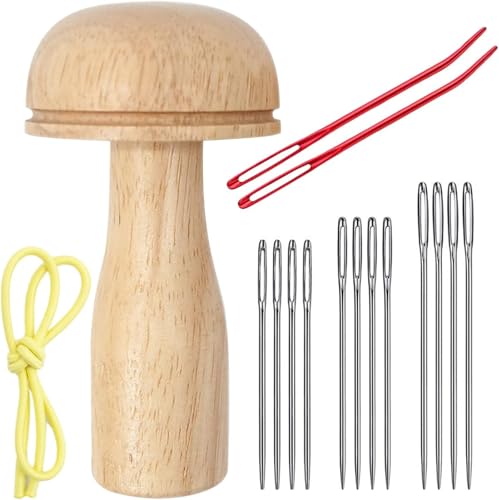
If you are just starting your darning journey, you don’t need a high-end heirloom piece to get the job done. The Darice Wooden Darning Mushroom offers a basic, functional design that does exactly what it promises at a fraction of the cost.
It features a simple, unfinished or lightly sanded wood surface that provides just enough grip to keep your sock from sliding around while you work. While it lacks the ergonomic bells and whistles of more expensive tools, its simplicity is its greatest strength.
This is the perfect choice for the knitter who keeps a mending kit in their travel bag or car. You won’t feel guilty if it gets lost, and it performs the essential task of shaping the heel perfectly well.
Lacis Turned Wood Darning Tool: Best Ergonomics

The Lacis Turned Wood Darning Tool is a favorite among knitters who suffer from hand fatigue or repetitive strain. Its handle is slightly longer and more contoured than standard mushrooms, providing a better grip that keeps your wrist in a neutral position.
The wood is polished to a high sheen, which is vital when you are using sticky, high-wool-content yarns that tend to grab onto rough surfaces. A smooth tool ensures that your darning needle glides through the fabric without catching on the wood grain.
If you have a large backlog of socks to repair, the ergonomics of this tool will save you from hand cramps. It is an investment in your long-term knitting comfort.
Schacht Spindle Company Mushroom: Best Design

Schacht is renowned for their high-quality spinning wheels, and their darning mushroom reflects that same level of craftsmanship. The shape is slightly more flattened than a traditional mushroom, which mimics the curve of a human heel more effectively.
This design choice makes it much easier to "map" your repair, as the tool holds the fabric in the exact shape it takes while worn. You aren’t just stretching the sock over a ball; you are supporting the anatomical curve of the heel.
The wood is typically sourced from beautiful hardwoods, making it as much a piece of art as it is a utility tool. It is a joy to hold, turning a mundane chore into a tactile experience.
Prym Ergonomics Darning Egg: Best for Travel

The Prym Ergonomics Darning Egg is a departure from the traditional mushroom shape, opting for an egg-like design that fits into smaller spaces. Its compact profile makes it the ultimate companion for knitters who mend on the go.
One of the standout features is the integration of a small, clever storage space for needles within the handle. You won’t have to hunt for your tapestry needles when you’re sitting in a waiting room or on a train.
Because it is made from high-quality, smooth plastic, it is incredibly lightweight and durable. It is the most modern take on a classic tool, perfect for the minimalist knitter.
CocoKnits Maker’s Keep Mushroom: Best Quality
CocoKnits has mastered the art of the "maker’s tool," and their darning mushroom is no exception. It is designed to be used in conjunction with their magnetic systems, allowing you to keep your needles and notions organized while you work.
The wood is dense and beautifully finished, feeling substantial and premium in the hand. It is clearly designed for the knitter who views mending as a craft in its own right, rather than just a chore to be finished.
While it is a premium purchase, the quality ensures that it won’t splinter or warp over time. If you want a tool that feels like an heirloom, this is the one to choose.
Essential Features for Your Darning Mushroom
When shopping for a darning mushroom, look for a surface that is completely snag-free. Any rough patch or splinter will pull at your yarn, potentially causing further damage to the sock you are trying to save.
Consider the following when making your selection:
- Material: Hardwoods are generally preferred for their durability and smooth finish.
- Handle Length: Longer handles are better for those with hand pain, while shorter ones are better for portability.
- Weight: A slightly heavier tool can help keep the sock anchored on your lap.
- Shape: A flatter dome is often better for heels, while a more rounded top is better for toes.
Avoid tools with decorative carvings on the head; these will only create uneven tension across your repair. You want a consistent, smooth surface to ensure your darning stitches are uniform.
How to Properly Use a Mushroom for Sock Heels
The secret to a good repair is tension. Place the mushroom inside the sock so that the thinning area is centered over the dome, then gently stretch the fabric until it is taut but not distorted.
Use a "weaving" motion to create a new fabric layer over the hole or thin spot. You want to pick up the healthy stitches surrounding the damaged area to anchor your repair securely.
Never pull your darning thread too tight, or you will create a hard, uncomfortable lump inside the sock. Your goal is to mimic the original gauge of the sock as closely as possible.
Selecting the Best Yarn for Durable Repairs
Never use standard sewing thread to mend wool socks; it lacks the elasticity needed for the heel area. You should always use a yarn with similar fiber content and weight to the original sock.
- Wool/Nylon Blends: These are the gold standard for durability.
- High-Twist Yarns: These resist abrasion better than single-ply or loosely twisted yarns.
- Matching Weight: Always match the WPI (wraps per inch) of your repair yarn to the sock yarn.
If you don’t have the original yarn, look for a "darning wool" that is specifically reinforced with nylon. Avoid using 100% cotton, as it lacks the "memory" and stretch required for a sock heel.
Tips for Mastering Invisible Darning Stitches
To make your repair truly invisible, follow the path of the original knit stitches. Use a blunt-tipped tapestry needle to avoid splitting the existing fibers of your sock.
Work in a good light source, and don’t be afraid to use a magnifying glass if you are working with very fine fingering-weight yarn. The more closely you replicate the original stitch pattern, the less noticeable the repair will be.
Finally, block your sock after you finish the repair. A quick soak and lay-flat dry will help the new stitches settle into the surrounding fabric, blending the repair seamlessly.
Investing in a quality darning mushroom is the mark of a knitter who respects their work and wants their hand-knits to last a lifetime. Whether you choose a simple wooden egg or an ergonomic masterpiece, the act of mending is a powerful way to connect with your craft. Take your time, choose the right yarn, and enjoy the satisfaction of restoring your favorite socks to their former glory. Happy mending!