7 Best Thread Conditioners For Durability Worth Using
Discover the top 7 thread conditioners that enhance durability and prevent fraying. Learn which essential products will elevate your sewing projects today.
Every fiber artist knows the frustration of a perfectly tensioned stitch being ruined by a fraying thread or a stubborn tangle. Thread conditioners are the unsung heroes in our notions kits, acting as a protective barrier that preserves the integrity of your fibers. Whether you are quilting, hand-sewing, or reinforcing delicate seams, choosing the right conditioner changes how your thread moves through fabric. This guide explores the best options to ensure your hard work stands the test of time.
Thread Heaven: The Gold Standard for Durability
Thread Heaven has long been the go-to for those of us who demand a smooth, frictionless sewing experience. It is a non-toxic, silicone-based conditioner that doesn’t melt or leave a residue on your fabrics.
When you are working with long, intricate embroidery or complex hand-piecing, this product prevents the thread from "shredding" as it repeatedly passes through the needle eye. It essentially coats the fibers, making them behave like a single, solid strand.
The real beauty here is that it doesn’t attract dust or lint over time. If you are working on a project that will sit in a hoop for months, this is the reliable choice for keeping your thread pristine.
Bohin Thread Conditioner: Best for Natural Fibers


Bohin’s conditioner is specifically formulated to play nice with organic materials like cotton and silk. If you’ve ever felt your thread "grab" against the fabric, this is the solution you need.
It provides just enough lubrication to allow natural fibers to glide through dense fabric layers without snapping. It is particularly effective for hand-quilting, where the thread is subjected to constant friction against batting and backing.
Be mindful that this is a softer wax, so it can be slightly tacky in high-heat environments. Keep it in a cool place to ensure it maintains its structural integrity for your next session.
Dritz Beeswax: The Classic Choice for Hand Sewing
There is a reason why beeswax has been used for centuries; it is the ultimate anchor for your thread. Dritz offers a refined version that is easy to handle and perfectly sized for a sewing box.
Using beeswax adds a slight "grip" to the thread, which is incredibly helpful when you are tying off knots or working with silk threads that tend to be slippery. It helps the thread hold its shape, making it easier to guide through the fabric.
Just remember that beeswax is a natural product and can leave a faint, pleasant scent. It is the perfect companion for heirloom-quality projects where you want to stick to traditional, time-honored methods.
Graln Thread Magic: Best for Synthetic Threads
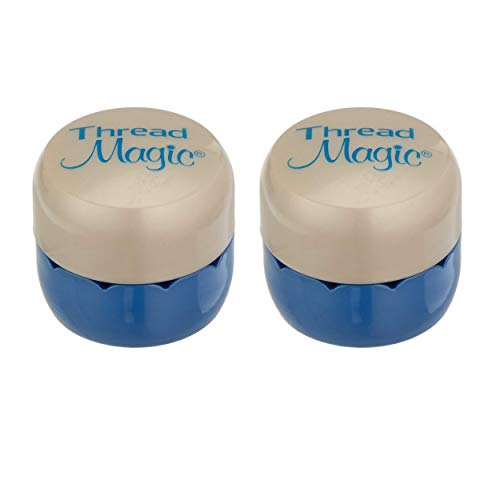
Synthetic threads, such as polyester or nylon blends, can be notoriously difficult to manage because they often have a "springy" quality. Thread Magic is engineered specifically to tame these materials.
It coats the synthetic fibers in a way that reduces static and prevents the thread from twisting into knots. If you are working on a high-speed machine or doing heavy-duty hand stitching, this conditioner keeps the thread stable and consistent.
Unlike some waxes, it is completely clear and won’t discolor even the lightest white fabrics. It is an essential tool for modern sewing where synthetic strength is required but manageability is lacking.
Sewline Glue Pen: Precision Application for Quilts
While technically a glue, the Sewline pen acts as a phenomenal stabilizer for thread placement. It’s a game-changer for quilters who need to hold appliqué pieces in place before stitching.
The precision tip allows you to apply a tiny amount of adhesive directly to the thread or the fabric edge. It dries clear and washes out completely, so you don’t have to worry about long-term stiffness in your quilt top.
If you struggle with thread shifting while you are trying to execute a tight decorative stitch, this is your best friend. It provides the control that traditional wax conditioners simply cannot offer.
Clover Thread Waxer: Best for Reducing Friction

The Clover Thread Waxer is designed with a clever internal mechanism that coats the thread evenly as you pull it through the case. You don’t have to worry about globs of wax ruining your project.
This is ideal for beginners who are still learning how much pressure to apply when conditioning their thread. It takes the guesswork out of the process, ensuring a uniform application every single time.
It is particularly effective for metallic threads, which are notorious for snapping. By reducing friction at the needle eye, you can stitch with metallic decorative threads without the constant fear of them breaking mid-row.
John James Beeswax: Best for Heirloom Projects

John James is a legendary name in the needlework world, and their beeswax is curated for the serious artisan. It is dense, pure, and provides a superior finish for delicate, high-value projects.
When you are working on an heirloom piece that needs to last for generations, you want a conditioner that is chemically stable. This wax protects the thread from environmental degradation and keeps the fibers supple over the long term.
It is an investment in your craft, but the results are undeniable. Your stitches will sit flatter, look more uniform, and be significantly more resistant to the wear and tear of time.
Why Thread Conditioning Extends Your Project Life
Every time your thread passes through fabric, it undergoes mechanical stress. Conditioning acts as a lubricant, significantly reducing the "sawing" action that wears down the thread’s outer layers.
- Fiber Protection: Prevents fraying and splitting of the thread ply.
- Tension Consistency: Ensures the thread moves smoothly through the tension discs or fabric.
- Knot Prevention: Keeps the thread from twisting back on itself and forming "bird’s nests."
By reducing this internal friction, you are effectively preventing the microscopic damage that leads to broken stitches years down the road. It is a small step that yields massive dividends in project longevity.
How to Apply Wax Without Staining Delicate Fabrics
The biggest fear most makers have is leaving a wax mark on a delicate silk or fine linen. The secret is to apply the wax to the thread, not the fabric, and then use a warm iron to "set" it.
- Light Touch: Run the thread through the wax once or twice; you don’t need a heavy coating.
- Heat Setting: After the thread is in the fabric, a quick press with a dry iron will melt any excess wax into the fibers, making it invisible.
- Test First: Always test your wax on a scrap piece of the same fabric to ensure it doesn’t leave a residue.
If you are worried about staining, stick to high-quality, clear synthetic conditioners like Thread Magic. They are specifically designed to be invisible and leave no trace behind once the project is finished.
Essential Tips for Preventing Thread Snaps and Tangles
Tangles are almost always caused by the thread twisting as it comes off the spool. If your thread is constantly knotting, try turning the spool orientation or using a thread stand to allow for a more vertical pull.
- Check Your Needle: A dull or burred needle will shred even the best-conditioned thread.
- Match the Eye: Ensure your needle eye is large enough for the thread; a tight fit creates unnecessary friction.
- Condition Often: Don’t wait until the thread starts fraying; condition it every 18-24 inches for the best results.
Remember that your thread is a fiber, just like the yarn you knit with. If it feels dry or brittle, it needs moisture and protection. Treat your thread with the same care you give your favorite wool, and your projects will be all the better for it.
Investing in a quality thread conditioner is one of the simplest ways to elevate the professional quality of your work. By reducing friction and protecting your fibers, you ensure that every stitch is as durable as it is beautiful. Take the time to experiment with these options to see which one best complements your specific sewing style. Your future self, and the future owners of your heirloom pieces, will certainly thank you.