6 Best Needle Tags For Size Identification To Use
Discover the 6 best needle tags for efficient size identification. Learn how these tools streamline organization and improve precision in your sewing projects.
Every knitter has experienced the sinking feeling of pulling a project from a project bag only to realize the needle size has rubbed off or been forgotten. Identifying your needle size is the difference between a perfectly fitting sweater and a garment that is either too stiff or frustratingly loose. Investing in reliable needle tags or gauges ensures your tension remains consistent across every session. These tools are the unsung heroes of your knitting kit, keeping your workflow smooth and your gauge accurate.
Cocoknits Colored Stitch Markers: Best Overall


These markers are a masterclass in functional design for the organized knitter. By color-coding your needle sizes, you create a visual shorthand that saves precious seconds during a cast-on or a mid-project check.
The beauty of the Cocoknits system lies in its versatility. Because they are designed as stitch markers, they don’t just sit on the needle; they help you track your pattern repeats while simultaneously acting as a size identifier.
If you are working on a complex lace shawl, having a specific color for your transition points is invaluable. The nylon-coated steel construction is durable, ensuring they won’t snag your delicate silk or mohair yarns.
ChiaoGoo Needle Size Tags: Precision Engineering

When you move into the world of interchangeable needles, precision is non-negotiable. ChiaoGoo tags are engineered to fit snugly, which prevents them from sliding down the cable and interfering with your stitches.
These tags are particularly useful if you own multiple sets of needles in similar sizes. They eliminate the guesswork when you’re switching between stainless steel and bamboo tips for different fiber types.
The trade-off here is strictly size-specific compatibility. These are designed for their own proprietary systems, so don’t expect them to fit your vintage wooden needles perfectly.
Susan Bates Knit Count Needle Gauge: Best Value
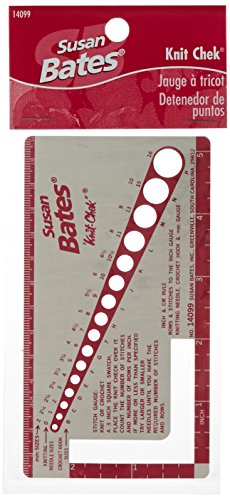
This classic plastic tool is a staple in every veteran knitter’s notions pouch for a reason. It is a no-nonsense, highly durable gauge that covers a wide range of standard needle sizes.
Using a physical gauge is often more reliable than trusting the printed markings on a needle shaft, which are prone to fading over time. Simply slide your needle through the holes until you find the snug fit.
While it lacks the "set it and forget it" convenience of a tag, it is the ultimate troubleshooting tool. If you find a mystery needle in your couch cushions, this is the first place you should look.
Knitter’s Pride Mindful Collection Size Tags

The Mindful Collection focuses on the aesthetic experience of knitting as much as the utility. These tags are designed to be elegant, featuring subtle branding that feels premium in the hand.
They offer a tactile way to keep your project organized without adding clutter to your needles. If you enjoy a curated, calm workspace, these tags fit perfectly into that philosophy.
Keep in mind that these are best for knitters who appreciate a cohesive set of tools. They provide a high-end feel that makes the process of setting up a new project feel like a ritual rather than a chore.
Clover Needle Gauge and Size Tag Essentials

Clover is synonymous with reliability in the knitting world, and their gauge tools are no exception. They offer a clear, easy-to-read scale that is perfect for beginners who are still learning to identify needle diameters by sight.
Their gauges are lightweight and thin, making them easy to slip into a small notions tin. They are also incredibly gentle on needle tips, especially if you are using delicate wooden or resin needles.
The bottom line is that Clover provides consistent, standard sizing that matches the majority of patterns written today. It is a dependable choice for any knitter’s primary tool kit.
HiyaHiya Interchangeable Needle Size Tags
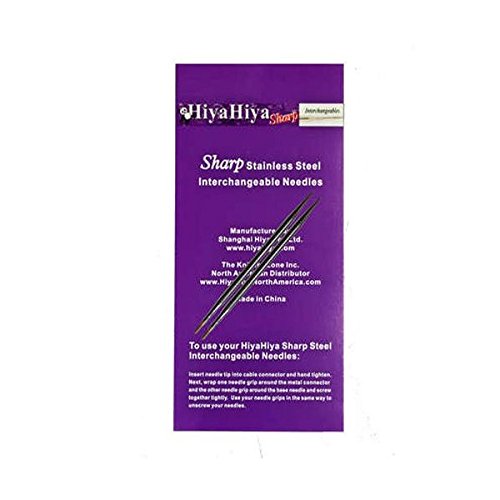
HiyaHiya tags are specifically designed for the high-performance knitter who values speed and seamless transitions. They are unobtrusive and designed to stay out of your way while you work.
These are an excellent choice if you tend to knit with very slippery yarns like bamboo or rayon. Because they are lightweight, they won’t pull on your stitches or distort your fabric while you are working in the round.
They are a fantastic example of "less is more." By keeping the tag minimal, they ensure that your focus remains entirely on your stitch tension and pattern progress.
Why Needle Size Identification Matters for Gauge
Your gauge is the blueprint of your project, and needle size is the primary tool used to control it. Even a half-millimeter difference can turn a fitted sweater into a tent or a snug-fitting sock into a painful squeeze.
When you lose track of your needle size, you risk "gauge drift." This happens when you switch needles mid-project and the new pair, despite being labeled the same, has a slightly different taper or material finish.
Always remember: your gauge is not just about the needle; it is about the interaction between the tool and the fiber. If you switch from a metal needle to a wooden one, you may need to adjust your size to account for the difference in drag.
How to Prevent Needle Size Markings From Fading
It is a universal frustration: the laser-etched size on your favorite needle disappears after a few months of heavy use. This happens because the oils from your hands and the friction of the yarn slowly erode the markings.
To prevent this, store your needles in individual sleeves or tubes rather than a jumbled pile. If you have a favorite pair, a tiny drop of clear nail polish over the marking can act as a protective sealant.
Alternatively, stop relying on the needle itself. Use a dedicated needle gauge tool every time you start a project to verify the size before you cast on.
Organizing Your Knitting Notions for Efficiency
Efficiency in knitting is about reducing the friction between having an idea and starting the work. If you have to spend twenty minutes searching for your 3.5mm needles, you are less likely to start that new project.
Use a dedicated notions bag to keep your tags, gauges, and stitch markers together. I recommend keeping a small needle gauge attached to the zipper of your main project bag at all times.
Categorize your needles by material and size. This makes it much easier to select the right tool for the specific fiber you are using, such as choosing a grippy wood for slippery silk or a slick metal for heavy wool.
Troubleshooting Mismatched Needle Size Problems
If your fabric looks uneven or "laddery," you might be using a needle size that is too large for your yarn weight. This is a common issue when knitters try to achieve a "drapey" look but end up with an unmanageable mesh.
If you suspect your needles aren’t what they say they are, use your gauge tool immediately. If they fit perfectly but the fabric is still wrong, look at your yarn’s WPI (wraps per inch).
Sometimes, the solution is not a different needle size, but a change in your own technique. If you are a tight knitter, you might actually need to go up a size to hit the pattern gauge, regardless of what the label says.
Mastering the identification of your needles is a foundational skill that elevates your knitting from a hobby to a craft. Whether you prefer the visual aid of colored markers or the precision of a metal gauge, the right tool is the one you actually use. Stay organized, keep your tools protected, and always trust your gauge swatch over the label on the ball band. Happy knitting, and may your tension always be perfectly even.